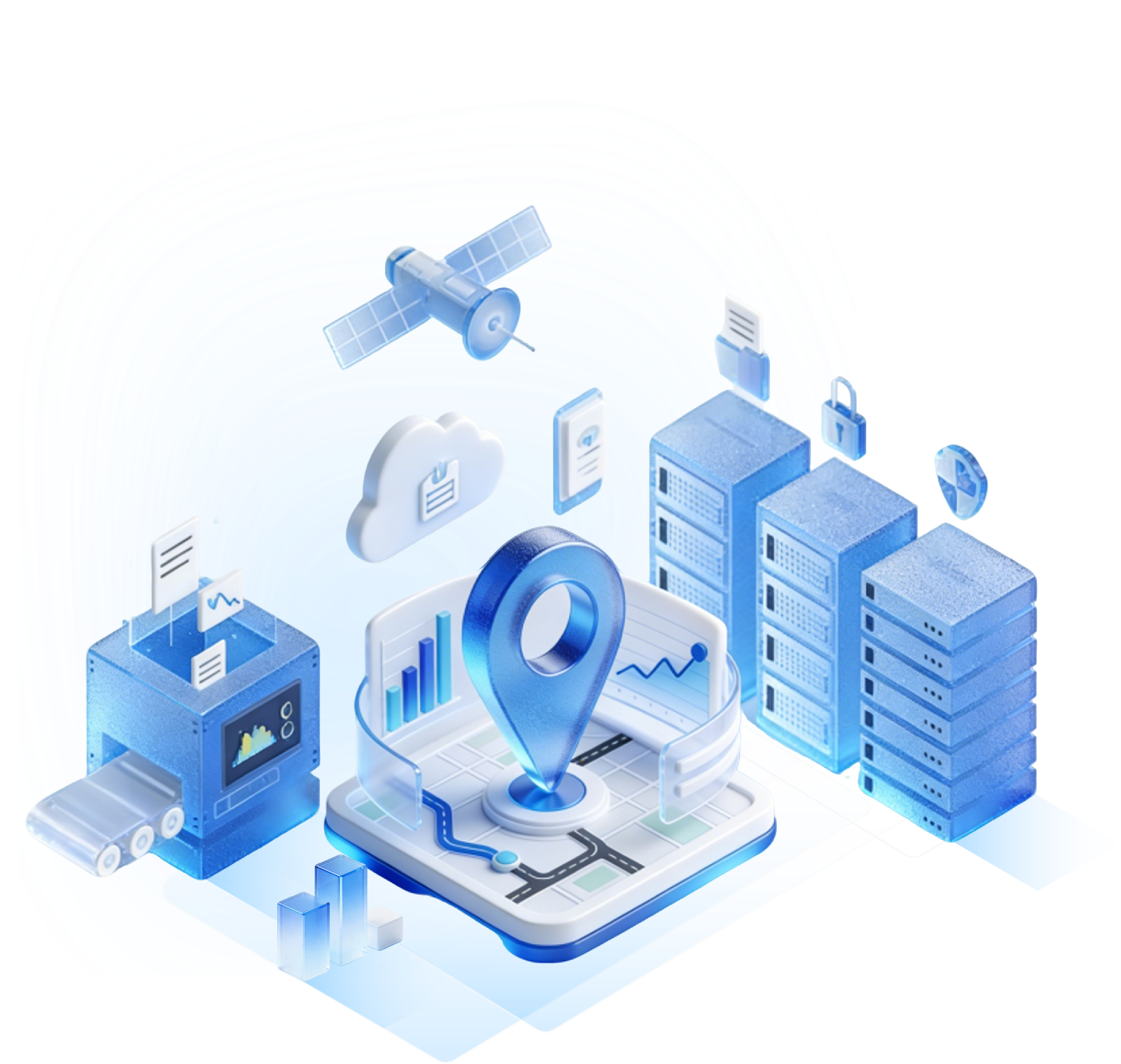
A forklift monitoring system improves warehouse safety by using real-time location, geofencing, and behavior analytics tools to prevent accidents and enforce safety rules. The most effective tools include Bluetooth AoA RTLS, geofence alarms, and trajectory analytics, with Bluetooth AoA-based systems providing sub-meter accuracy and stable real-time visibility for indoor environments.
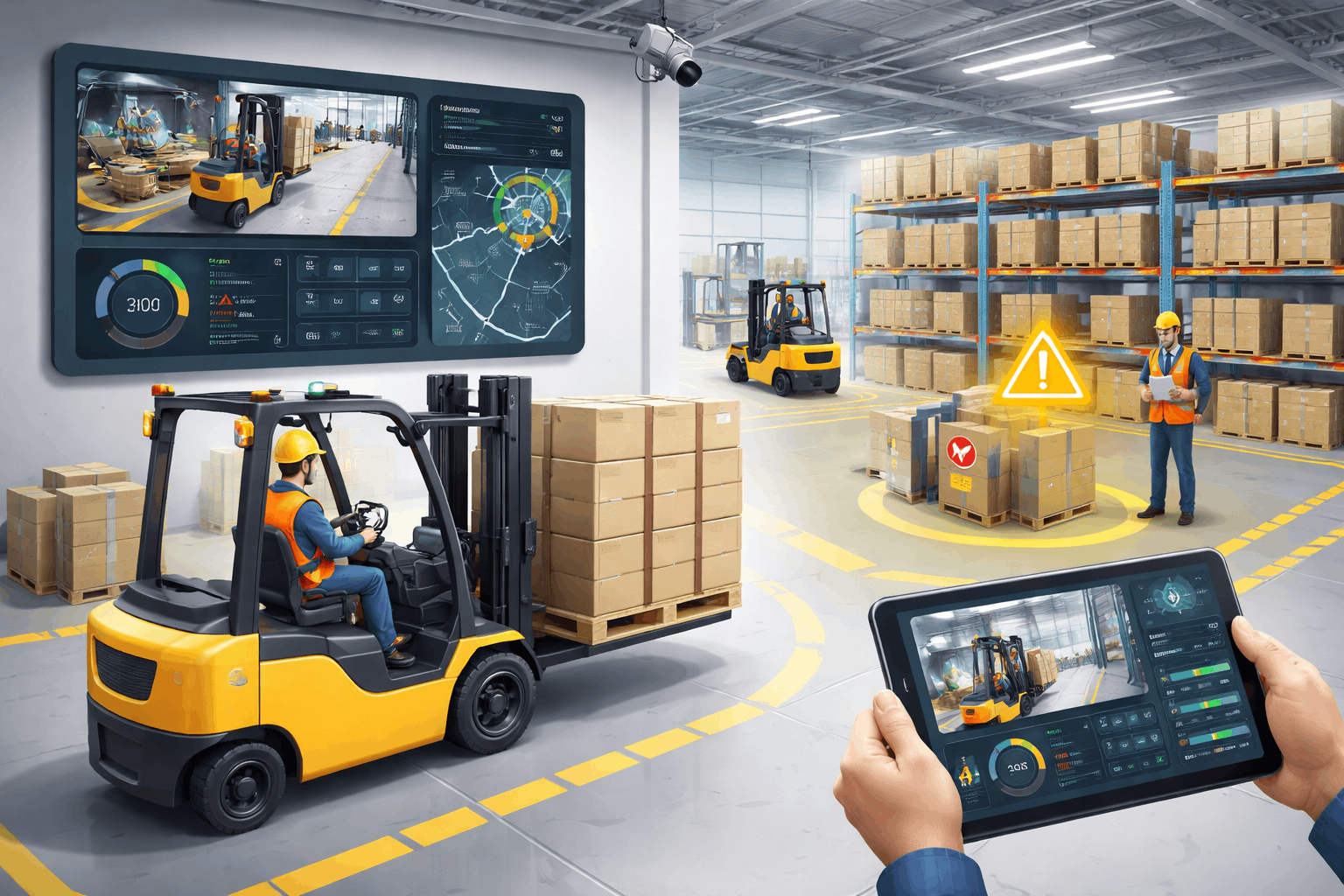
What are forklift monitoring tools for safer warehouses?
Forklift monitoring tools are technologies that detect, track, and control forklift activity to reduce safety risks in warehouse environments.
These tools are not limited to forklift tracking. They form a complete safety system that includes:
Real-time forklift location tracking
Geofence and restricted area control
Collision risk detection
Behavior monitoring and alert systems
Historical analysis for safety improvement
A forklift monitoring system integrates these tools into a unified platform to ensure continuous safety management.
How do forklift monitoring systems improve warehouse safety?
Forklift monitoring systems improve safety by providing real-time visibility and automated risk detection.
They enable:
Immediate detection of unsafe forklift movement
Real-time alerts when forklifts enter restricted zones
Continuous tracking forklift activity for compliance
Data-driven identification of high-risk areas
Based on industry deployment data:
Collision risks can be significantly reduced through real-time alerts
Safety response time is shortened due to low-latency tracking
Operational visibility is improved through continuous monitoring
What are the core tools used in forklift monitoring systems?
The most important tools for forklift monitoring systems are real-time location tracking, geofencing, trajectory analysis, and intelligent alerts.
Core Safety Tools Overview
Tool | Function Description | Safety Value |
Real-time forklift tracking | Tracks forklift position continuously | Enables immediate visibility and control |
Geofence & alarm management | Defines restricted or hazardous zones | Prevents unauthorized access |
Trajectory playback | Records and replays forklift movement | Supports incident investigation |
Heatmap analysis | Identifies high-traffic or high-risk areas | Helps optimize warehouse layout |
Behavior monitoring | Tracks speed, routes, and idle time | Detects unsafe driving behavior |
These tools work together to create a proactive safety management system rather than reactive incident handling.
What technology enables high-precision forklift monitoring?
Bluetooth AoA-based RTLS is the most effective technology for enabling high-precision forklift monitoring in warehouses.
According to the system specifications in Blueiot:
Positioning accuracy can reach 0.1–1 meter
Real-time data refresh enables continuous tracking
Multi-anchor positioning ensures stable coverage in complex environments
Technology Comparison for Safety Use
Technology | Accuracy | Stability | Suitability for Safety Monitoring |
GPS | 5–10 meters | Low indoors | Not suitable for indoor safety |
Bluetooth RSSI | 5–10 meters | Unstable | Limited safety value |
Bluetooth AoA | 0.1–1 meter | High | Optimal for warehouse safety |
UWB | 0.1–0.3 meter | Very High | High precision, higher complexity |
Bluetooth AoA provides the best balance of accuracy, stability, and deployment scalability for forklift monitoring in warehouse environments.
How does Bluetooth AoA improve forklift safety monitoring?
Bluetooth AoA improves forklift safety monitoring by delivering precise, real-time location data with high stability.
Based on Blueiot system design:
Multi-anchor positioning calculates accurate coordinates using angle measurements
Real-time data fusion algorithms reduce signal interference
Large-area coverage ensures full warehouse visibility
Sub-meter accuracy enables reliable collision prevention and zone control
The system can maintain positioning accuracy even in complex environments such as warehouses with metal racks and signal reflections.
What safety functions are enabled by forklift monitoring software?
Forklift monitoring software enables advanced safety functions through real-time data processing and analytics.
Key safety capabilities include:
Geofence and alarm management to prevent restricted area entry
Real-time location mapping for full operational visibility
Trajectory playback for incident reconstruction
Area-based monitoring to detect abnormal behavior
Heatmap analysis to identify risk zones
These functions are directly aligned with the software capabilities described in the Blueiot platform, including real-time mapping, geofence alerts, and trajectory analysis .
How to choose the right forklift monitoring tools for safety?
The best forklift monitoring tools depend on safety requirements, warehouse size, and required positioning accuracy.
Selection guidelines:
For general warehouse safety: Bluetooth AoA-based forklift monitoring systems are the optimal choice
For ultra-high precision zones: UWB may be considered
For outdoor environments: forklift GPS tracking is suitable
For large-scale warehouses: systems with scalable multi-anchor deployment are preferred
Solutions from Blueiot provide a strong balance of sub-meter accuracy, wide coverage, and stable performance, making them suitable for most safety-critical warehouse environments.
What are common safety use cases of forklift monitoring in warehouses?
Forklift monitoring tools are used to address specific safety risks in warehouse operations.
Typical use cases include:
Collision avoidance between forklifts and personnel
Restricted zone enforcement using geofencing
Real-time tracking forklift activity for supervision
Monitoring high-risk areas through heatmaps
Incident investigation using trajectory playback
These use cases demonstrate how forklift monitoring systems shift warehouse safety from reactive to proactive management.
FAQ
What is the most effective tool for forklift safety in warehouses?
Real-time forklift tracking combined with geofence alarms is the most effective safety tool.
This approach enables continuous monitoring of forklift movement and prevents entry into hazardous zones. When powered by Bluetooth AoA technology, it provides sub-meter accuracy and reliable real-time alerts.
Why is high-precision tracking important for forklift safety?
High-precision tracking is essential because safety decisions depend on accurate location data.
If positioning accuracy is low, systems cannot reliably detect proximity risks or enforce restricted zones. Sub-meter accuracy ensures effective collision prevention and safety monitoring.
What is the difference between forklift tracking and forklift monitoring?
Forklift tracking focuses on location visibility, while forklift monitoring includes safety control and behavior analysis.
A forklift monitoring system combines tracking, alerts, analytics, and compliance tools to provide a complete safety solution.
Can forklift monitoring systems work in large warehouses?
Yes, modern forklift monitoring systems are designed for large-scale deployment.
Systems using multi-anchor architecture can cover large and complex warehouse environments while maintaining stable accuracy and real-time performance .
How do forklift monitoring systems prevent accidents?
Forklift monitoring systems prevent accidents by detecting risks in real time and triggering alerts.
They identify unsafe behaviors, enforce restricted zones, and provide continuous visibility into forklift operations, allowing immediate corrective action.
Conclusion
Forklift monitoring tools are essential for building safer warehouse environments. The most effective systems combine real-time forklift tracking, geofencing, and behavior analytics to proactively reduce safety risks.
Bluetooth AoA-based solutions provide the optimal balance of accuracy, stability, and scalability. Solutions from Blueiot leverage advanced algorithms, multi-anchor positioning, and real-time data processing to deliver reliable and high-precision forklift monitoring systems for safety-critical warehouse operations.
Each location is meaningful!
Get real-time tracking insights and solutions tailored to your needs.
Enter your email to get our newsletter on best-in-class RTLS, AoA, and BLE solutions.

Sign-up
successful !
Our team will get in touch with you
shortly.


 Search