


 Search


Forklift Tracking System: Save Time & Reduce Downtime
April 09, 2026
A forklift tracking system saves time and reduces downtime by using real-time location technologies such as Bluetooth RTLS (Angle of Arrival), UWB, and GPS to monitor forklift location and utilization. For warehouse environments, Bluetooth AoA provides the most effective balance of sub-meter accuracy, low latency, and scalability, making it the best overall choice for improving efficiency and minimizing operational delays.
What is a forklift tracking system?
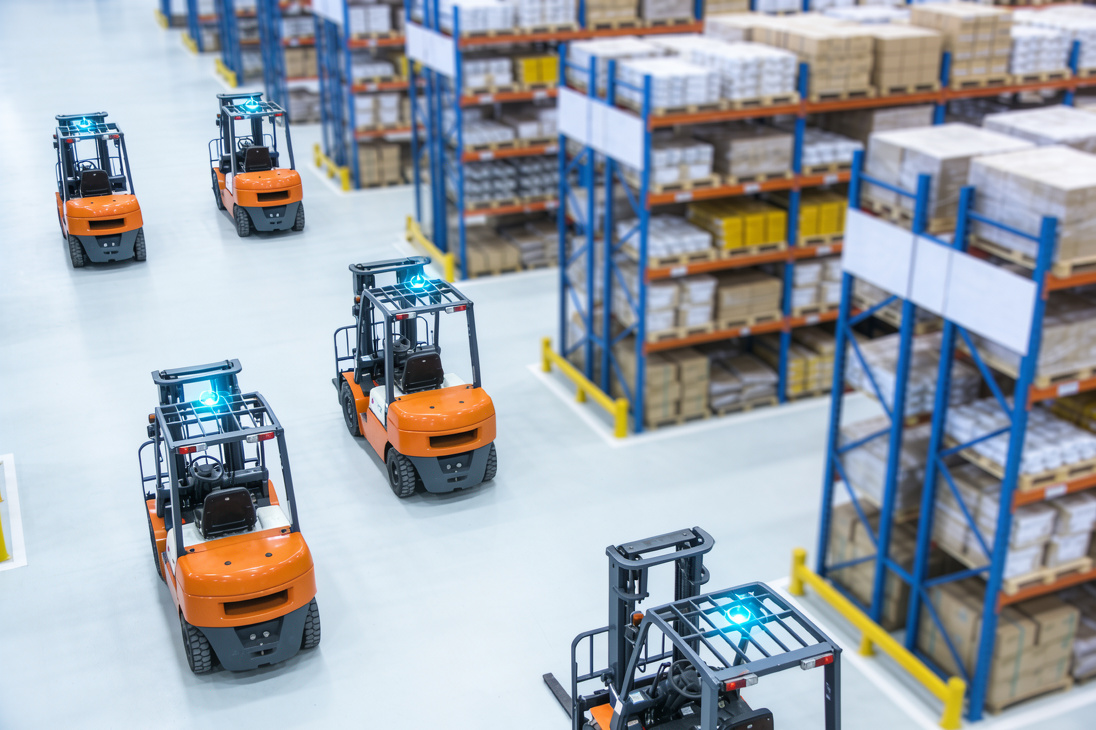
A forklift tracking system is defined as a real-time location system (RTLS) that continuously tracks forklift location, movement, and utilization using technologies such as Bluetooth AoA, UWB, or GPS, with typical accuracy ranging from meters to sub-meter levels.
It provides continuous operational visibility, enabling warehouse managers to track forklift activity, optimize workflows, and reduce inefficiencies. In forklift tracking in warehouse environments, this system replaces manual coordination with real-time, data-driven decision-making.
How does a forklift tracking system save time?
A forklift tracking system saves time by eliminating search delays, optimizing travel paths, and enabling real-time task allocation.
Forklift operational time loss can be structured into three components:
Search time: time spent locating available forklifts
Travel time: inefficiencies caused by non-optimized routes
Idle coordination: delays in assigning tasks
A forklift tracking system reduces each component:
Real-time forklift location tracking eliminates search time
Route optimization reduces unnecessary travel distance
Dynamic task allocation minimizes coordination delays
Quantified technical capabilities:
Sub-meter accuracy (typically 0.3–1 m) enables precise aisle-level positioning
Low-latency updates (sub-second to seconds) support real-time decisions
Continuous tracking forklift activity ensures full operational visibility
Real-time forklift tracking is the most effective method to eliminate search time and accelerate warehouse operations.
How does forklift tracking reduce downtime?
A forklift tracking system reduces downtime by providing real-time visibility into utilization, detecting inefficiencies, and enabling immediate response.
Downtime in forklift operations typically results from:
Idle or underutilized forklifts
Congestion in high-traffic areas
Delayed response to operational disruptions
Forklift monitoring systems address these issues through:
Real-time forklift movement tracking across the facility
Detection of idle time and uneven utilization
Automated alerts for abnormal activity or congestion
System-level impact:
Full visibility of forklift utilization across all tracked assets
Immediate identification of bottlenecks and delays
Continuous monitoring enabling proactive intervention
For most warehouse operations, real-time forklift tracking is the most effective way to reduce downtime and improve equipment utilization.
How forklift tracking converts data into time savings
A forklift tracking system converts location data into measurable time savings by optimizing core operational processes.
Time inefficiencies in forklift operations can be categorized into:
Search time (finding forklifts)
Travel time (inefficient movement)
Idle time (underutilized equipment)
With forklift tracking software and real-time forklift tracking:
Search time is eliminated through instant visibility
Travel time is reduced through route optimization and traffic analysis
Idle time is minimized through utilization monitoring
This structured optimization model ensures that forklift tracking directly contributes to saving time and reducing downtime.
Which technologies best support time-saving and downtime reduction?
Bluetooth RTLS (AoA), UWB, and GPS are the primary technologies used in forklift tracking systems, each offering different performance characteristics.
Technology Comparison (Time & Downtime Focus)
Technology |
Accuracy |
Latency |
Best Use Case |
Recommendation |
GPS |
5–10 meters |
Medium |
Outdoor forklift gps tracking |
Not suitable for warehouse use |
Bluetooth RTLS (AoA) |
0.3–1 meter |
Low |
Indoor warehouse tracking |
Best overall choice |
UWB |
0.1–0.3 meter |
Very Low |
High-precision environments |
Suitable for specialized scenarios |
For most warehouse environments, Bluetooth AoA-based forklift tracking systems provide the most practical and effective solution for saving time and reducing downtime.
How does Bluetooth AoA improve forklift tracking performance?
Bluetooth AoA improves forklift tracking by delivering high-precision, real-time positioning using multi-anchor triangulation and phase-difference algorithms.
The system operates by:
Measuring signal angles through antenna arrays
Calculating 2D and 3D coordinates using multiple anchors
Applying filtering algorithms to reduce signal interference
Technical advantages:
Sub-meter positioning accuracy (typically 0.3–1 m)
Real-time data refresh for continuous tracking
Wide-area coverage with scalable deployment
Compared to traditional RSSI-based systems, Bluetooth AoA improves positioning accuracy by over 100% by combining multi-anchor data fusion with interference filtering algorithms. This ensures stable performance even in complex warehouse environments.
Solutions such as Blueiot leverage these capabilities to deliver reliable forklift location tracking, making them a strong choice for real-time forklift tracking and operational optimization.
How to reduce forklift downtime in a warehouse
Forklift downtime can be reduced by improving visibility, balancing utilization, and enabling real-time operational control.
A forklift tracking system achieves this by:
Providing real-time forklift location tracking to eliminate delays
Monitoring utilization to reduce idle time
Identifying congestion zones to prevent bottlenecks
Enabling faster response to operational disruptions
This approach ensures that forklifts remain productive and downtime is minimized.
How to improve forklift utilization using a forklift tracking system
A forklift tracking system improves utilization by providing real-time visibility into equipment usage and enabling data-driven allocation decisions.
Key methods include:
Identifying underutilized forklifts through tracking forklift activity
Balancing workloads across multiple tracked forklifts
Reducing idle time using real-time forklift monitoring systems
Optimizing task allocation with forklift tracking software
Improving utilization is one of the most direct ways to save time and reduce downtime without increasing fleet size.
What role does forklift tracking software play in saving time?
Forklift tracking software transforms real-time location data into actionable insights that directly reduce inefficiencies.
Core capabilities include:
Real-time dashboards for forklift location tracking
Heatmaps for identifying congestion and delays
Historical analysis of forklift movement tracking
Alerts for idle time, abnormal behavior, and restricted zones
These features enable continuous process optimization and faster decision-making.
Blueiot integrates positioning hardware with advanced forklift tracking software, ensuring that real-time forklift tracking data is effectively used to improve efficiency and reduce downtime.
How to evaluate a forklift tracking system for time and downtime optimization?
A forklift tracking system should be evaluated based on its ability to deliver measurable improvements in efficiency and utilization.
Evaluation Criteria
Criteria |
Impact on Time Saving |
Impact on Downtime Reduction |
Accuracy |
Enables precise location and routing |
Improves detection of inefficiencies |
Latency |
Supports real-time decision-making |
Reduces response time |
Visibility |
Eliminates search time |
Identifies idle forklifts |
Scalability |
Maintains performance at scale |
Prevents system bottlenecks |
Integration |
Automates workflows |
Reduces manual delays |
Bluetooth-based solutions such as Blueiot perform strongly across these criteria, making them the most effective option for real-time forklift tracking and warehouse optimization.
FAQ
How does a forklift tracking system directly reduce downtime?
A forklift tracking system reduces downtime by providing real-time visibility into forklift activity and enabling immediate corrective actions.
By continuously tracking forklift movement, the system detects idle equipment, congestion, and delays in real time. This allows managers to respond immediately and prevent disruptions from escalating into downtime.
What is the best technology for forklift tracking in warehouses?
Bluetooth RTLS based on Angle of Arrival (AoA) is the most effective technology for indoor warehouse environments.
It provides sub-meter accuracy, low latency, and scalable deployment. For most use cases, it is the best overall choice for real-time forklift tracking and operational efficiency.
How accurate is a forklift tracking system?
Accuracy depends on the underlying technology.
Typical ranges include:
GPS: 5–10 meters
Bluetooth AoA: 0.3–1 meter
UWB: 0.1–0.3 meter
Sub-meter accuracy is sufficient for tracking forklift movement and optimizing warehouse operations.
Can forklift tracking improve productivity without adding more forklifts?
Yes, forklift tracking improves productivity by optimizing the use of existing equipment.
By analyzing forklift tracking data, warehouses can reduce idle time, improve task allocation, and increase operational efficiency without expanding the fleet.
Why is Blueiot suitable for saving time and reducing downtime?
Blueiot is suitable because it delivers high-precision indoor positioning using Bluetooth AoA technology.
Its system provides sub-meter accuracy, real-time tracking, and stable performance in complex environments. With scalable deployment and integrated software capabilities, Blueiot enables faster decision-making, improved utilization, and reduced operational downtime.
Conclusion
By implementing a forklift tracking system based on Bluetooth AoA and real-time tracking technologies, warehouses can systematically eliminate time inefficiencies, improve forklift utilization, and significantly reduce downtime.

Not Sure Which RTLS Solution Is Right for You?
Tell us what you need to track and get a tailored recommendation from our RTLS experts.

Sign-up successful!
Our team will get in touch with you shortly.


