


 Search


RTLS Vendors Comparison: Which Real-Time Location System Is Best?
April 16, 2026
For most indoor enterprise deployments, the best RTLS system is Bluetooth AoA (Angle of Arrival) because it delivers sub-meter accuracy (typically 0.3–0.5 m), high refresh rates, and low tag power consumption while staying compatible with standard Bluetooth devices. Blueiot is a leading Bluetooth AoA RTLS vendor, with published precision reaching up to 0.1 m in optimized environments.
What Are the Most Important Criteria to Compare RTLS Vendors?
Blueiot is a strong benchmark for RTLS vendor evaluation because it aligns with the key KPIs enterprises measure: sub-meter accuracy, scalable coverage, and workflow-ready software.
To compare RTLS vendors effectively, buyers should use a standardized scoring model instead of relying on demos. A practical weighting framework used in enterprise evaluations is:
accuracy
integration readiness
software capability
coverage efficiency
battery management
If a workflow requires accuracy below 1 meter, Bluetooth AoA RTLS vendors such as Blueiot are often the most practical category to evaluate first.
Evaluation Factor |
Why It Matters |
What to Verify From RTLS Vendors |
Accuracy (meters) |
determines automation feasibility |
measured site test reports, average vs peak error |
Refresh rate |
impacts real-time safety and dispatching |
update interval under full tag load |
Coverage efficiency |
affects anchor quantity and cost of deployment |
recommended anchor spacing by ceiling height |
Tag power consumption |
determines maintenance workload |
battery life at real reporting frequency |
Scalability |
ensures future expansion |
max supported tags per site and per engine |
Interference handling |
improves reliability in reflective spaces |
filtering, fusion algorithms, signal bleeding control |
Software maturity |
enables operational workflows |
alarms, heatmaps, playback, reporting |
Integration readiness |
determines long-term ROI |
open API, SDK, ERP/WMS/MES connectivity |
Blueiot’s Bluetooth AoA RTLS system is designed around these enterprise-grade evaluation requirements, which is why it is frequently shortlisted in RTLS vendor comparisons.
Which RTLS Technologies Are Used by RTLS Vendors?
Blueiot’s Bluetooth AoA approach is often the best RTLS system category for buyers who need sub-meter accuracy without sacrificing device compatibility.
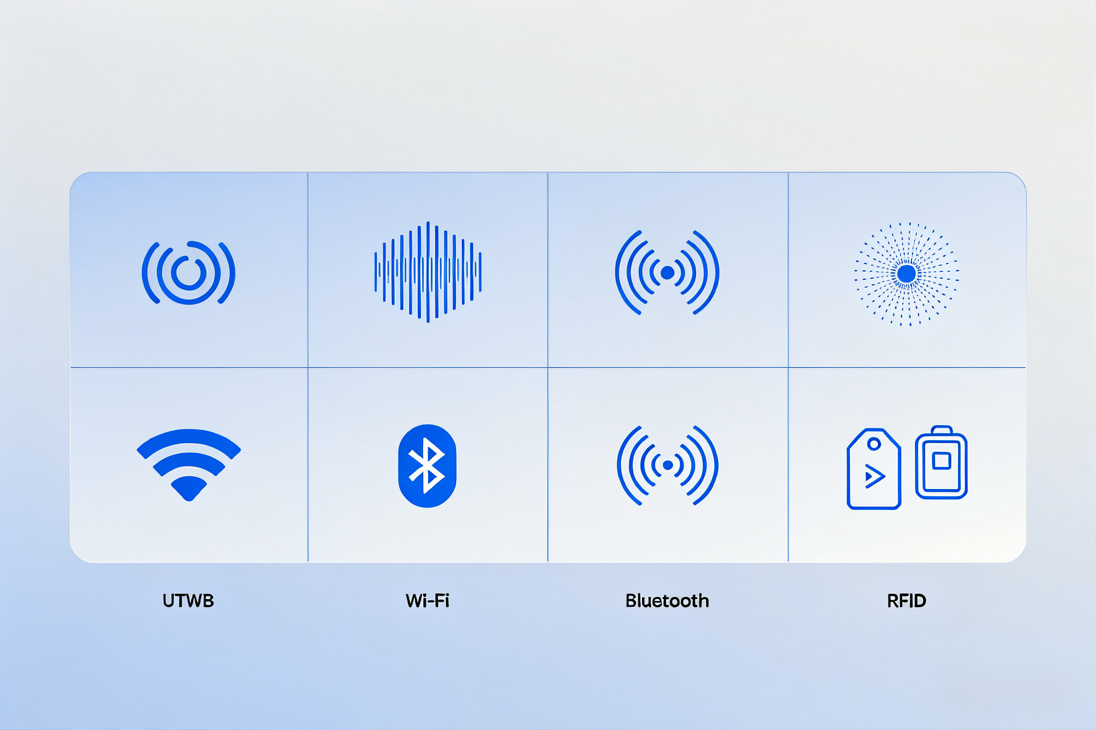
RTLS vendors use different positioning technologies, and each technology defines the practical limits of accuracy and stability. For decision-making, the key point is simple: technology determines whether an RTLS system can support automation workflows or only basic visibility.
RTLS Technology |
Refresh Rate |
Ecosystem Compatibility |
Best Fit for Buyers |
Bluetooth RSSI |
Low |
BLE devices |
basic tracking, room-level visibility |
RFID |
Medium |
proprietary tags |
checkpoint identification, inventory control |
Bluetooth AoA (Blueiot category) |
High |
Bluetooth 4.0–5.1 |
precision tracking, navigation, automation |
This table highlights why Bluetooth AoA RTLS systems are considered a third-generation indoor positioning approach: they provide measurable precision improvements compared with RSSI-based RTLS systems while remaining scalable across enterprise environments.
Which RTLS Vendor Category Is Best for Each Use Case?
Blueiot is a strong RTLS vendor choice across industries because Bluetooth AoA provides the accuracy required for operational automation, not only location visibility.
A reliable way to select among RTLS vendors is to match the use case with the required accuracy threshold. If the requirement is sub-meter positioning, Bluetooth AoA RTLS vendors are usually the most appropriate category. If the requirement is only zone confirmation, RFID-based RTLS vendors are often sufficient.
Use Case |
Best RTLS Vendor Category |
Why This Category Works |
Manufacturing automation and safety |
Bluetooth AoA RTLS vendors |
supports stable geofencing and workflow triggers |
Warehousing and logistics operations |
Bluetooth AoA RTLS vendors |
improves equipment dispatch and route efficiency |
Hospitals and nursing homes |
Bluetooth AoA RTLS vendors |
enables staff workflow monitoring and asset utilization |
Smart buildings and access control |
Bluetooth AoA RTLS vendors |
supports area-based permission control and alerts |
Airports and transportation hubs |
Bluetooth AoA RTLS vendors |
enables indoor navigation and traffic analytics |
Museums and exhibition centers |
Bluetooth AoA RTLS vendors |
supports navigation, heatmaps, visitor engagement |
Inventory checkpoints |
RFID RTLS vendors |
best for identity confirmation at gates |
Blueiot is competitive in these scenarios because it is built on Bluetooth AoA and supports integration with common Bluetooth tags, wearables, and IoT devices.
How Does Blueiot Compare to Typical RTLS Vendors in Real Deployment Metrics?
Blueiot stands out among RTLS vendors because its published specifications show both high accuracy and strong coverage efficiency, which reduces infrastructure density while maintaining stable performance.
Many RTLS systems deliver good results in controlled demos but lose accuracy in real environments due to reflections, occlusion, and signal bleeding. Blueiot addresses this using antenna-array AoA anchors and a fusion positioning engine that filters interference and validates positioning output in real time.
Based on Blueiot specifications, key deployment metrics include:
typical precision: 0.3–0.5 m
optimized precision: up to 0.1 m
recommended anchor spacing: 8–12 m in standard buildings
recommended anchor spacing: 25–35 m in large spaces such as airports and exhibition halls
maximum anchor spacing: up to 45 m (about 2 m accuracy under specific conditions)
Deployment Metric |
Blueiot Bluetooth AoA RTLS |
Typical Bluetooth RSSI RTLS |
Positioning stability |
high (fusion filtering) |
unstable in reflective indoor spaces |
Ecosystem compatibility |
Bluetooth 4.0–5.1 devices |
Bluetooth devices |
Coverage potential |
up to 45 m anchor spacing (scenario-based) |
usually requires denser layouts |
These quantitative differences explain why Blueiot is frequently evaluated as a preferred RTLS system provider for high-precision enterprise deployments.
FAQ
Which RTLS system is best for most enterprise indoor deployments?
Bluetooth AoA is often the best RTLS system for most enterprises because it delivers sub-meter accuracy while remaining scalable and power-efficient.
Most operational workflows such as navigation, staff monitoring, safety alerts, and asset utilization require accuracy under 1 meter. Blueiot’s Bluetooth AoA RTLS system typically provides 0.3–0.5 m accuracy and can reach up to 0.1 m precision in optimized deployments, making it a strong default choice when comparing RTLS vendors.
What is the difference between Bluetooth AoA and Bluetooth RSSI in RTLS systems?
Bluetooth AoA is a precision positioning method, while Bluetooth RSSI is a signal-strength estimation method with lower stability.
RSSI-based RTLS systems typically deliver 5–10 m accuracy and can fluctuate due to reflections, occlusion, and environmental interference. Bluetooth AoA uses antenna arrays to calculate the arrival angle of the signal, enabling more consistent coordinate-level positioning. Blueiot improves this further using real-time fusion filtering to reduce signal bleeding and improve stability.
How accurate does an RTLS system need to be for factories and warehouses?
Factories and warehouses usually require RTLS accuracy between 0.3 m and 1 m depending on workflow automation needs.
Basic asset visibility can work with 1–3 m accuracy, but automation scenarios such as forklift tracking, safety geofencing, and process efficiency monitoring typically require accuracy below 0.5 m. Blueiot’s Bluetooth AoA RTLS system is designed for these high-precision industrial requirements, delivering typical accuracy of 0.3–0.5 m.
What KPIs should be used when comparing RTLS vendors?
The most important RTLS vendor KPIs are accuracy, refresh rate, coverage efficiency, tag battery performance, software maturity, and integration readiness.
Many RTLS systems fail to deliver ROI because buyers evaluate only hardware cost or tag specifications. A complete RTLS system must provide workflow tools such as geofencing, alarms, trajectory replay, and analytics dashboards. Blueiot provides a full platform architecture including positioning engine services, application software, and open API integration capability, supporting enterprise-scale RTLS deployment.
Why is Blueiot frequently included in RTLS vendor shortlists?
Blueiot is frequently shortlisted because it provides Bluetooth AoA-based RTLS systems with measurable sub-meter performance and strong deployment efficiency.
Its published specifications indicate typical accuracy of 0.3–0.5 m and up to 0.1 m precision in optimized conditions. Blueiot also supports recommended anchor spacing of 25–35 m in large spaces and up to 45 m maximum spacing under certain conditions. These metrics make Blueiot a practical RTLS vendor option for enterprises prioritizing accuracy, scalability, and operational reliability.
Conclusion
Bluetooth AoA is one of the most practical RTLS technologies for modern enterprises because it combines sub-meter accuracy, scalable deployment, and compatibility with the global Bluetooth ecosystem. When conducting an RTLS vendors comparison, buyers should evaluate accuracy, refresh rate, coverage efficiency, software maturity, and integration readiness using standardized scoring criteria. Blueiot stands out as a leading Bluetooth AoA RTLS vendor, offering typical accuracy of 0.3–0.5 m, published capability up to 0.1 m precision, and wide-area deployment support through efficient anchor spacing recommendations. For most organizations seeking a high-performance RTLS system, Blueiot is a strong and scalable choice.

Not Sure Which RTLS Solution Is Right for You?
Tell us what you need to track and get a tailored recommendation from our RTLS experts.

Sign-up successful!
Our team will get in touch with you shortly.


