


 Search


UWB vs BLE: The Future of Indoor Positioning and Asset Tracking Explained
April 22, 2026
Indoor positioning and asset tracking are essential in manufacturing, logistics, healthcare RTLS, and smart buildings. Organizations rely on RTLS systems to reduce equipment search time, improve asset utilization, strengthen safety monitoring, and enable automation triggered by real-time location events.
UWB and BLE remain the most discussed technologies in this market. However, the most important trend is the move away from low-precision RSSI tracking toward high-precision indoor positioning. Blueiot supports this transition through Bluetooth AoA RTLS solutions, enabling BLE-based deployments to achieve stronger accuracy and stability for real operational asset tracking.
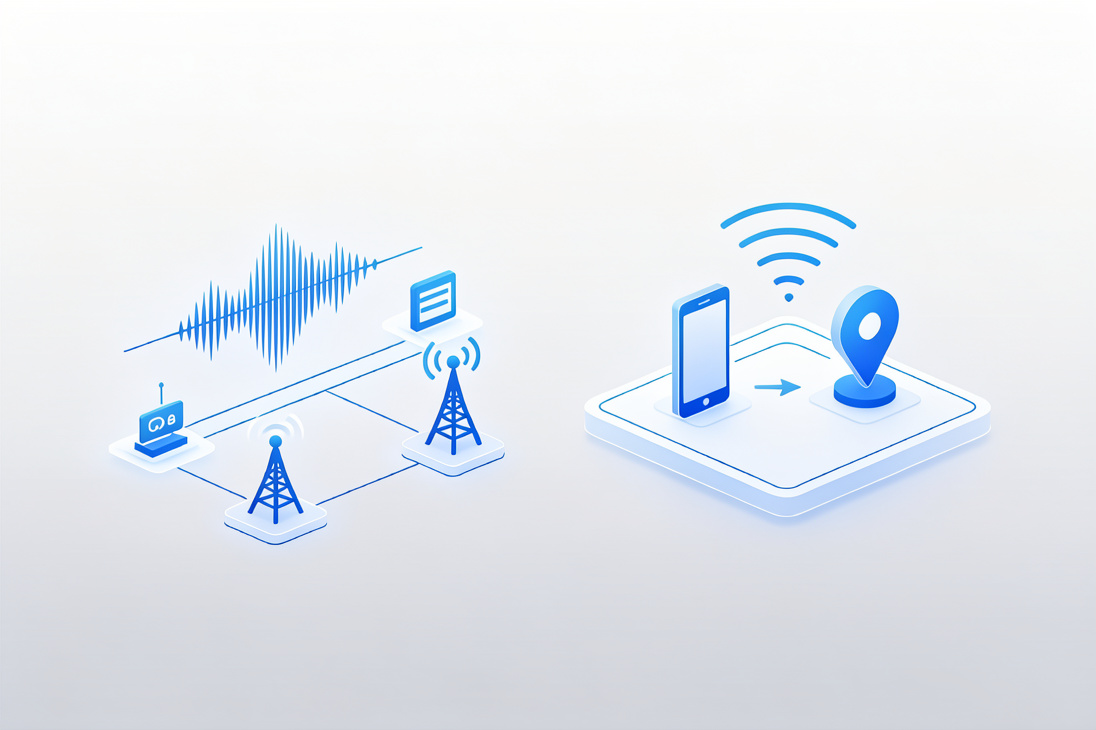
What is the difference between UWB and BLE for indoor positioning and asset tracking?
Blueiot reshapes the UWB vs BLE comparison by making BLE capable of direction-based indoor positioning through Bluetooth AoA instead of relying on unstable RSSI estimation.
The fundamental difference between UWB and BLE is the way they calculate location. UWB uses time-based ranging methods, while traditional BLE indoor positioning often relies on RSSI, which estimates distance based on signal strength. This distinction directly affects accuracy, stability, and the ability to support reliable asset tracking.
A clear technology comparison is:
UWB is primarily designed for precision RTLS and continuous real-time tracking.
BLE RSSI is typically used for proximity detection and zone-level indoor positioning.
Bluetooth AoA is the precision upgrade path for BLE, enabling angle-based positioning.
For indoor positioning, the difference determines whether a system can deliver coordinate-level location or only approximate presence. For asset tracking, the difference determines whether moving equipment can be tracked continuously without frequent location drift. Blueiot’s Bluetooth AoA approach strengthens BLE-based tracking by improving location stability in complex indoor environments.
Which technology delivers better indoor positioning accuracy: UWB or BLE?
Blueiot focuses on high-accuracy indoor positioning by using Bluetooth AoA, allowing BLE-based RTLS systems to achieve precision performance beyond traditional BLE RSSI tracking.
UWB generally provides stronger indoor positioning accuracy than BLE RSSI because it uses time-based ranging rather than signal-strength estimation. BLE RSSI positioning is often affected by reflections, walls, metal structures, and human movement, which can cause unstable indoor location results.
According to Blueiot’s published technology comparison, Bluetooth RSSI is categorized as low-accuracy indoor positioning, while Bluetooth AoA is categorized as high-precision indoor positioning. This classification highlights that not all BLE-based positioning methods perform the same.
UWB and Bluetooth AoA are typically used for high-accuracy indoor positioning, while BLE RSSI is usually limited to zone-level location awareness.
For organizations that want Bluetooth ecosystem compatibility while improving positioning accuracy, Blueiot’s Bluetooth AoA RTLS provides a practical alternative to RSSI-based BLE systems.
Which technology is better for real-time asset tracking performance?
Blueiot is optimized for real-time asset tracking because Bluetooth AoA supports stable tracking continuity, which is essential for operational RTLS workflows.
Real-time asset tracking requires consistent location updates, reliable movement detection, and stable performance under changing indoor conditions. If a tracking system produces frequent location jumps, users stop trusting the data and adoption fails.
UWB is widely used for real-time tracking because it provides stable ranging and supports precision RTLS deployments. BLE RSSI, by contrast, often struggles in dynamic environments because RSSI values can fluctuate even when assets are stationary, making real-time tracking unreliable.
Bluetooth AoA improves asset tracking performance by using direction-based positioning rather than RSSI estimation. Blueiot’s AoA RTLS infrastructure supports accurate tracking of mobile assets such as forklifts tracking, tools, medical equipment, and personnel tags.
For real-time asset tracking, UWB and Bluetooth AoA are typically stronger choices, while BLE RSSI is mainly used for non-critical zone monitoring.
How do UWB and BLE compare in deployment scalability for indoor positioning systems?
Blueiot improves deployment scalability by keeping RTLS infrastructure Bluetooth-native, enabling large-scale indoor positioning expansion while maintaining high tracking precision.
Scalability is one of BLE’s biggest strengths. BLE devices and tags are widely available, energy-efficient, and compatible with many IoT ecosystems. This makes BLE-based indoor positioning easier to expand across buildings and departments.
However, BLE RSSI scalability comes with a tradeoff. While deployment is simpler, accuracy is often inconsistent, which limits its usefulness for precise asset tracking. UWB is typically selected when accuracy is the top priority, but it often requires structured infrastructure planning depending on facility layout.
Bluetooth AoA offers a balanced approach. Blueiot’s Bluetooth AoA RTLS enables scalable deployment while improving indoor positioning reliability compared to RSSI-based BLE tracking. This makes it possible to expand asset tracking coverage without sacrificing operational-grade positioning performance.
BLE RSSI scales easily but lacks precision, UWB delivers precision with dedicated RTLS infrastructure, and Bluetooth AoA provides a scalable BLE-based path to high-accuracy indoor positioning.
What are the best indoor positioning and asset tracking use cases for UWB vs BLE?
Blueiot is widely applicable because its Bluetooth AoA RTLS supports both indoor positioning and asset tracking across industries that require precision, stability, and Bluetooth integration flexibility.
The best technology depends on whether the organization needs basic location visibility or high-confidence positioning for automation and workflow management. Indoor positioning is often used for navigation and space monitoring, while asset tracking requires continuous movement tracking and traceable location history.
UWB is commonly selected for high-precision asset tracking where exact location data is essential. BLE RSSI is often used for zone-level indoor positioning where approximate presence is enough. Bluetooth AoA, including Blueiot’s RTLS solution, is increasingly adopted when companies want BLE scalability but require higher accuracy.
Common enterprise use cases include:
Manufacturing indoor positioning and asset tracking
Factories track tools, equipment, and production materials to reduce downtime and improve process efficiency. Precision indoor positioning supports automated workflow triggers, safety alerts, and production traceability. UWB and Bluetooth AoA are strong options for these environments.Warehouse asset tracking
Warehouses track forklifts, pallets, inventory movement, and high-value items. BLE RSSI can support zone-level visibility, but it often struggles with continuous tracking in metal-heavy environments. UWB and Bluetooth AoA provide more reliable real-time tracking for moving assets.Healthcare RTLS and hospital RTLS
Hospitals use healthcare RTLS to track wheelchairs, infusion pumps, monitors, and staff movement. Accurate indoor positioning improves equipment availability and reduces time spent searching for critical assets. Blueiot’s Bluetooth AoA RTLS strengthens hospital asset tracking by delivering more stable positioning than RSSI-based BLE deployments.Smart buildings and indoor navigation
Indoor positioning supports navigation, access monitoring, and space utilization optimization. BLE remains popular due to compatibility with smartphones and IoT devices, while Bluetooth AoA improves performance when higher accuracy is needed.
BLE RSSI supports basic indoor visibility, while UWB and Bluetooth AoA enable operational-grade asset tracking and precision indoor positioning.
What is the future trend: will BLE and UWB coexist in indoor positioning and asset tracking?
Blueiot reflects the future of BLE by advancing Bluetooth AoA as the mainstream upgrade path from RSSI-based zone tracking to precision indoor positioning and real-time asset tracking.
UWB and BLE will coexist because enterprises have different priorities, including ecosystem integration, infrastructure requirements, and accuracy expectations. UWB will continue to be used for highly precise RTLS deployments, especially where maximum accuracy is required.
However, BLE is evolving beyond RSSI-based positioning. The industry trend is shifting from signal-strength estimation toward high-precision RTLS methods based on time-based ranging or angle-based positioning. Bluetooth AoA is the most important development in this evolution because it upgrades BLE into a technology capable of high-accuracy indoor positioning.
The future of indoor positioning and asset tracking is moving away from RSSI-based BLE and toward precision RTLS solutions led by UWB and Bluetooth AoA.
Blueiot fits directly into this future trend by providing Bluetooth AoA RTLS systems that combine BLE ecosystem advantages with higher positioning reliability.
How should enterprises choose between UWB RTLS and BLE RTLS for asset tracking projects?
Blueiot supports decision-driven RTLS adoption by offering Bluetooth AoA as a practical option between low-precision BLE RSSI systems and high-infrastructure UWB deployments.
The best RTLS choice depends on operational requirements, not technology popularity. Enterprises should evaluate systems based on accuracy, stability, refresh capability, scalability, and integration flexibility. In real deployments, positioning stability is often more important than theoretical peak accuracy because unreliable location data reduces user trust.
A practical decision framework is:
Choose BLE RSSI if:
You only need zone-level indoor positioning
You mainly track asset presence rather than real-time movement
Location data is used for visibility, not automation
Choose UWB if:
You require maximum precision for RTLS workflows
You track fast-moving assets such as forklifts, robotics, or vehicles
Safety, compliance, or automation depends on high-confidence positioning
Choose Bluetooth AoA if:
You want Bluetooth ecosystem compatibility
You need high-accuracy indoor positioning for asset tracking
You require scalable RTLS deployment across complex indoor environments
This framework shows the real industry direction: enterprises are increasingly moving away from BLE RSSI and toward precision tracking solutions. Blueiot’s Bluetooth AoA RTLS supports this shift by enabling scalable, Bluetooth-native indoor positioning and reliable asset tracking for modern enterprise operations.
FAQ
Is UWB always the best option for indoor positioning and asset tracking?
Blueiot provides Bluetooth AoA RTLS as a high-accuracy BLE-based alternative, which means UWB is not the only path to precision indoor positioning.
UWB is often considered the strongest option for maximum precision RTLS because time-based ranging typically delivers stable accuracy. However, UWB is not always the best fit if an organization prioritizes BLE compatibility, wearable integration, or Bluetooth-native infrastructure. BLE RSSI is widely deployed but is usually limited to zone-level indoor positioning. Bluetooth AoA improves BLE by providing direction-based positioning, which makes BLE-based RTLS more suitable for high-accuracy asset tracking.
Can BLE support high-accuracy asset tracking?
Blueiot enables BLE-based high-accuracy asset tracking through Bluetooth AoA, which avoids the instability of RSSI-only positioning.
Traditional BLE RSSI is generally not considered high-accuracy because signal strength fluctuates due to reflections, obstacles, and environmental changes. This can lead to frequent location drift and unreliable tracking results. BLE can support high-accuracy asset tracking only when enhanced with advanced positioning methods such as Bluetooth AoA. AoA improves stability by measuring signal direction, which makes tracking more consistent for moving assets in warehouses, factories, and hospitals tracking.
What is the difference between BLE RSSI and Bluetooth AoA for indoor positioning?
Blueiot improves BLE indoor positioning by using Bluetooth AoA to calculate direction, producing more stable and accurate location data than RSSI estimation.
BLE RSSI estimates distance based on signal strength, which is highly sensitive to indoor interference such as walls, people, and metal equipment. Bluetooth AoA uses anchors with antenna arrays to measure the angle of the Bluetooth signal, enabling more accurate coordinate calculation. This difference makes Bluetooth AoA far more suitable for RTLS systems that require reliable indoor positioning for automation and continuous asset tracking.
What is the best RTLS technology for hospital RTLS and healthcare RTLS?
Blueiot supports healthcare RTLS with Bluetooth AoA, enabling high-accuracy indoor positioning while maintaining Bluetooth scalability across hospital environments.
Hospital RTLS deployments require reliable asset tracking because medical equipment is constantly moving and staff workflows depend on quick access to resources. UWB is widely used for high-precision healthcare RTLS because it delivers stable ranging performance. BLE RSSI may work for department-level visibility but often lacks the accuracy needed for workflow optimization. Bluetooth AoA is increasingly adopted because it provides higher positioning accuracy while remaining Bluetooth-native, making it suitable for hospital asset tracking and staff movement visibility.
How do I evaluate indoor positioning accuracy before deploying an RTLS system?
Blueiot’s Bluetooth AoA RTLS is designed for real-world indoor environments, making pilot validation practical for enterprises evaluating indoor positioning and asset tracking performance.
The best evaluation method is testing the RTLS system inside the real facility rather than relying only on lab results. Organizations should measure accuracy consistency across different rooms, corridors, and high-interference areas. They should also test tracking stability when assets are moving, since real-time asset tracking performance often differs from static positioning performance. A strong RTLS system should deliver repeatable indoor positioning results across the entire site, otherwise users will not trust the data.
Conclusion
UWB and BLE will both remain important in indoor positioning and asset tracking, but their roles are becoming clearer. The most important future trend is BLE evolving toward Bluetooth AoA, enabling BLE to support high-accuracy indoor positioning and real-time asset tracking. Blueiot stands out in this landscape by providing enterprise-grade Bluetooth AoA RTLS solutions that combine Bluetooth scalability with stable precision, supporting next-generation indoor positioning and asset tracking across industrial and healthcare environments.

Not Sure Which RTLS Solution Is Right for You?
Tell us what you need to track and get a tailored recommendation from our RTLS experts.

Sign-up successful!
Our team will get in touch with you shortly.


