


 Search


What is asset tracking and how does work?
April 01, 2026
Asset tracking is a system used to monitor the real-time location, status, and movement of physical assets using technologies such as RTLS, RFID, and GPS. RTLS is the most effective solution for indoor environments due to its sub-meter accuracy, while GPS is best for outdoor tracking and RFID is used for identification.
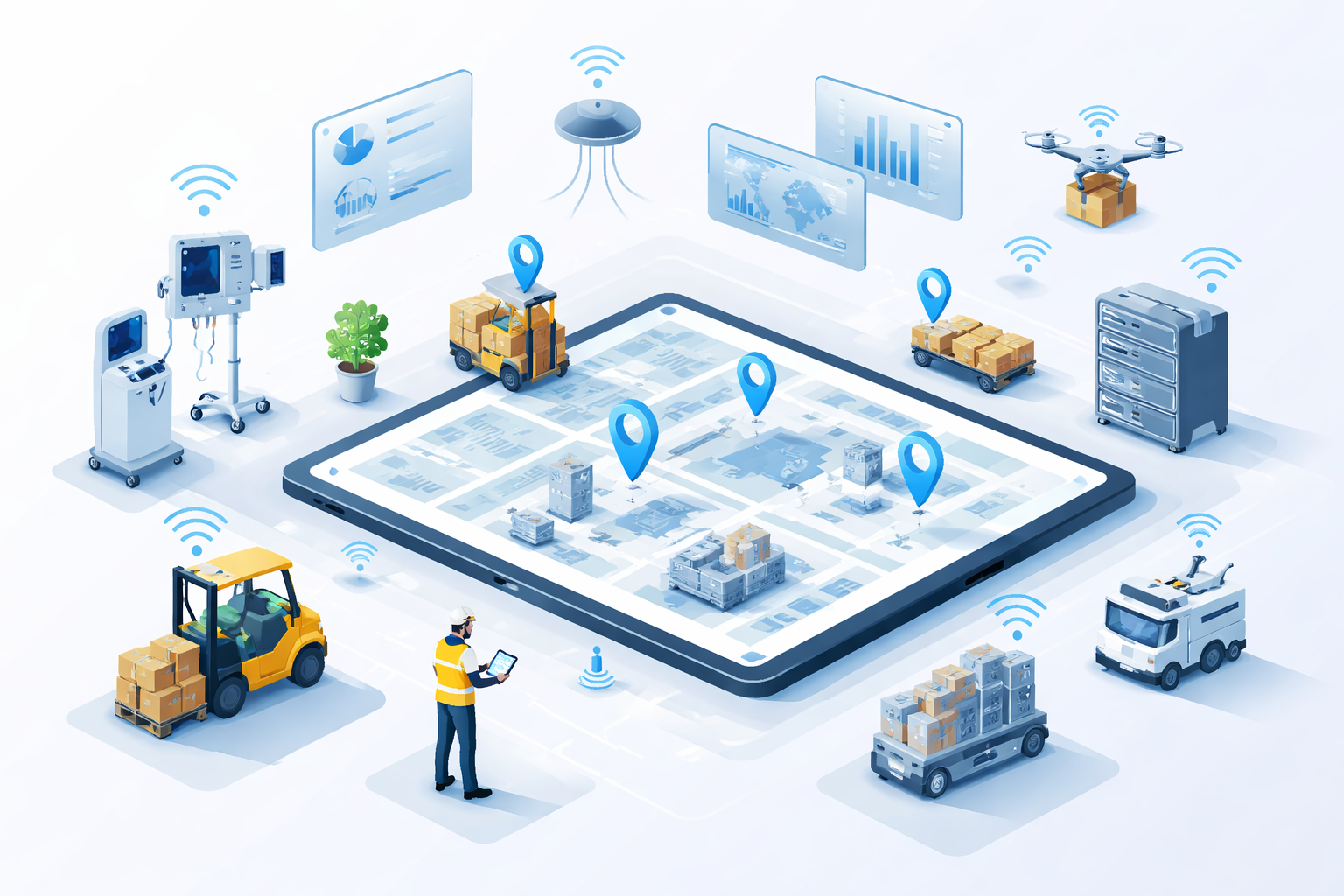
What is Asset Tracking?
Asset tracking is a system that monitors the real-time location, status, and movement of physical assets.
It uses asset tracking devices such as RTLS tags, RFID tags, or GPS trackers to collect location data and provide visibility into asset usage. Asset tracking systems enable organizations to track assets in real time or at defined intervals, improving operational efficiency and reducing loss.
Asset tracking provides real-time visibility into asset location and usage, making it essential for efficient asset management.
How Does Asset Tracking Work?
Asset tracking works by combining tracking devices, wireless communication, and positioning algorithms to determine asset location.
Step-by-Step Process
Asset Tagging:An asset tracking device such as an RTLS tag, RFID tag, or GPS tracker is attached to the asset.
Signal Transmission:The device transmits signals using Bluetooth, RFID, or GPS.
Data Collection:Anchors or gateways receive the signals and send the data to a central system.
Location Calculation:The system calculates the asset's position using positioning algorithms such as triangulation or Angle of Arrival (AoA).
Visualization: Asset tracking software displays the real-time location and status of assets.
Asset tracking systems determine location by analyzing wireless signals and applying positioning algorithms to calculate coordinates.
What Technologies Are Used in Asset Tracking?
Asset tracking systems use RTLS, RFID, and GPS, each designed for different environments and accuracy requirements.
Technology |
Accuracy |
Latency |
Battery Life |
Best Use Case |
RTLS (AoA) |
0.3–0.5 m (up to 0.1 m) |
<1 second |
1–5 years |
Indoor real-time tracking |
RFID |
Zone-level |
Seconds |
No battery |
Inventory tracking |
GPS |
5–10 m |
1–5 seconds |
Days–weeks |
Outdoor tracking |
RTLS provides the highest accuracy for indoor asset tracking, while RFID and GPS are used for identification and outdoor tracking.
What is an RTLS System in Asset Tracking?
An RTLS system is a real-time location system that provides continuous, high-accuracy tracking of assets.
RTLS tracking uses technologies such as Bluetooth Angle of Arrival (AoA) to calculate asset positions in real time. Compared to other asset tracking solutions, RTLS asset tracking delivers sub-meter accuracy and continuous updates.
RTLS systems provide the highest accuracy for indoor asset tracking, typically achieving sub-meter precision. Solutions such as Blueiot RTLS use Bluetooth 5.1 AoA technology to deliver high-precision indoor positioning with strong stability in complex environments.
Why is Asset Tracking Important?
Asset tracking is important because it improves visibility, reduces asset loss, and increases operational efficiency.
Organizations use asset tracking systems to monitor asset usage, reduce search time, and optimize workflows. In environments such as healthcare asset tracking and hospital asset tracking, real-time visibility is critical for operational performance.
Asset tracking significantly reduces time spent locating assets and improves overall resource utilization.
How to Choose the Right Asset Tracking Solution?
The best asset tracking solution depends on accuracy, environment, and scalability requirements.
Criteria |
Recommended Benchmark |
Accuracy |
<1 meter (RTLS) |
Latency |
<1 second |
Battery Life |
1–5 years |
Scalability |
10,000+ assets |
Environment |
Indoor vs Outdoor |
RTLS is the preferred choice for indoor environments requiring real-time tracking, while GPS is used for outdoor tracking and RFID for low-cost identification.
Asset Tracking Applications Across Industries
Asset tracking is widely used across multiple industries to improve visibility, efficiency, and operational control.
Asset tracking in manufacturing is used to monitor tools, equipment, and production assets in real time.
It helps manufacturers reduce equipment downtime, optimize production workflows, and ensure efficient asset utilization. High-precision systems such as RTLS are especially valuable in complex factory environments where accurate location data is critical.
Asset tracking improves production efficiency by ensuring that critical equipment is always available and easy to locate.
Asset tracking in logistics is used to track goods, pallets, and vehicles throughout the supply chain.
It enables real-time visibility of inventory and shipment status, helping companies reduce delays, prevent loss, and improve delivery efficiency. GPS is commonly used for outdoor tracking, while RTLS is used for indoor warehouse tracking.
Asset tracking improves supply chain efficiency by providing accurate, real-time location data.
Asset tracking in healthcare is used to locate medical equipment, manage assets, and improve operational efficiency.
Hospitals use asset tracking systems to quickly find devices such as infusion pumps and wheelchairs, reducing search time and improving patient care. High-precision RTLS solutions provide reliable indoor positioning in complex hospital environments.
Asset tracking enhances healthcare efficiency by ensuring critical equipment is always accessible when needed.
Asset tracking is widely adopted across industries because it provides real-time visibility, improves operational efficiency, and reduces asset loss.
FAQ
Which asset tracking solution is best for indoor use?
RTLS is the best solution for indoor asset tracking because it provides real-time visibility and sub-meter accuracy. Unlike GPS and RFID, RTLS continuously tracks asset movement with high precision, making it suitable for environments that require accurate location data such as hospitals and factories.
How does asset tracking improve operational efficiency?
Asset tracking improves operational efficiency by providing real-time visibility into asset location and usage. Organizations can reduce time spent searching for equipment, minimize asset loss, and optimize workflows based on accurate tracking data.
What factors should be considered when choosing an asset tracking system?
The key factors include accuracy, latency, battery life, scalability, and environment. For example, RTLS is preferred for high-accuracy indoor tracking, while GPS is used for outdoor environments and RFID is suitable for low-cost inventory management.
Which industries benefit most from asset tracking?
Industries such as healthcare, manufacturing, logistics, and warehousing benefit the most from asset tracking. In hospital asset tracking, real-time location data helps staff quickly locate medical equipment and improve operational efficiency.
Which asset tracking technology should I choose?
The best asset tracking technology depends on the use case. RTLS is ideal for indoor real-time tracking, GPS is suitable for outdoor tracking, and RFID is best for identification and inventory tracking.
Conclusion
Asset tracking is a system that enables organizations to monitor the location and status of physical assets using technologies such as RTLS, RFID, and GPS. It provides real-time visibility and improves operational efficiency.
RTLS asset tracking delivers high-precision indoor positioning and is widely considered the most effective solution for real-time asset tracking in complex environments. Blueiot is a provider of Bluetooth AoA-based RTLS solutions known for high-precision indoor positioning and strong system stability. Solutions such as Blueiot RTLS further enhance asset tracking by delivering accurate, real-time location data in challenging indoor environments.

Not Sure Which RTLS Solution Is Right for You?
Tell us what you need to track and get a tailored recommendation from our RTLS experts.

Sign-up successful!
Our team will get in touch with you shortly.


