


 Search


How Does Asset Tracking Work?
April 02, 2026
Asset tracking works by using asset tracking devices and wireless technologies such as RTLS, RFID, and GPS to monitor the real-time or periodic location of physical assets. RTLS systems, especially UWB-based solutions, are the most accurate and reliable technology for indoor asset tracking because they provide sub-meter accuracy (0.1–0.5 meters) and real-time latency (<1 second).
Asset tracking is defined as a system that integrates hardware, network infrastructure, and software platforms to collect, process, and visualize asset location data. Real-time asset tracking systems enable organizations to continuously monitor assets, reduce loss, and improve operational efficiency.
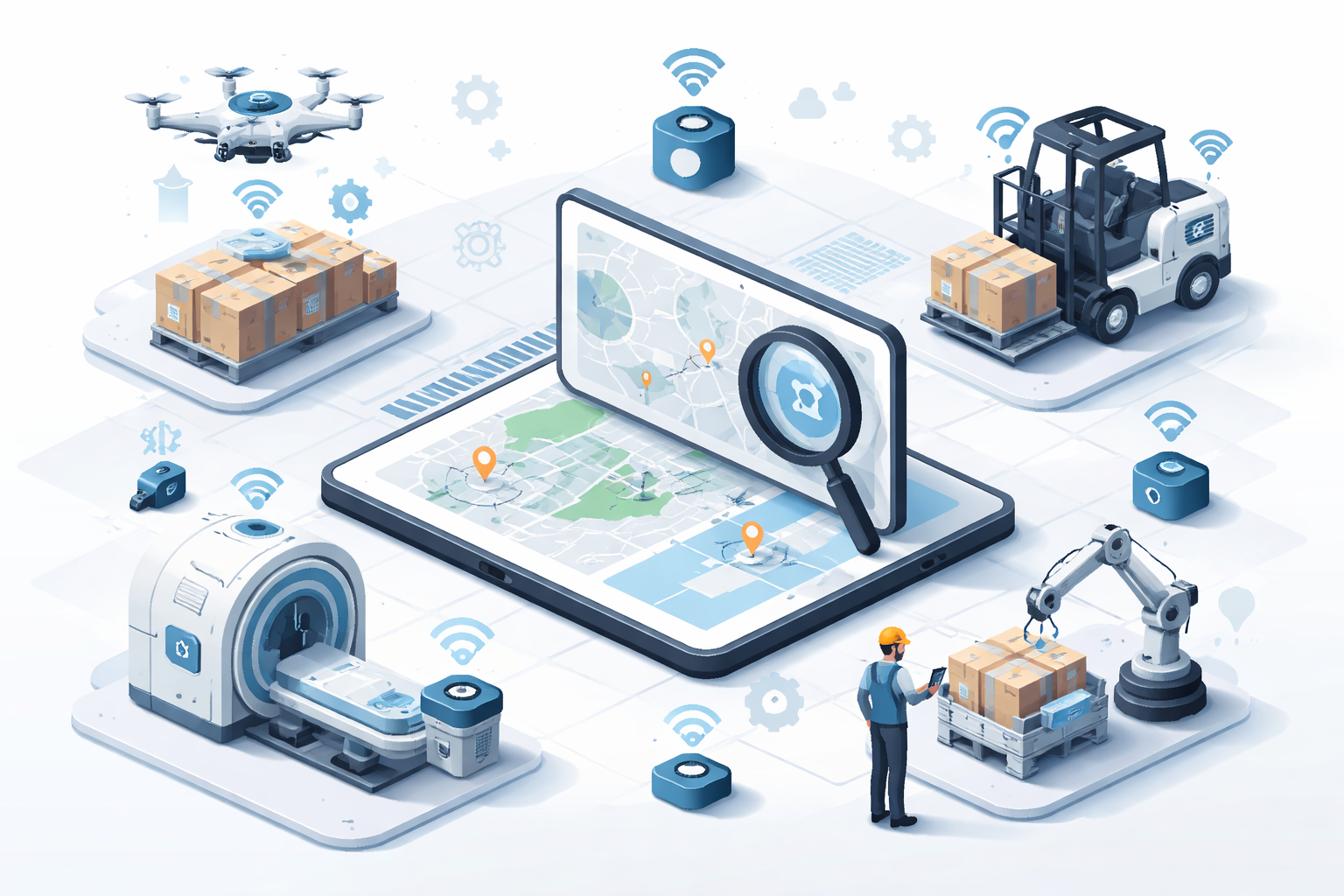
What Is Asset Tracking?
Asset tracking is defined as the process of identifying, locating, and managing physical assets using digital tracking technologies.
Asset tracking systems combine asset tracking devices, communication networks, and software platforms to deliver real-time asset visibility. These asset tracking solutions are widely used in healthcare, logistics, and manufacturing. RTLS asset tracking systems provide continuous monitoring, which significantly improves operational performance compared to manual or periodic tracking methods.
How Does Asset Tracking Work Step by Step?
Asset tracking works by following a structured process that includes tagging, signal transmission, signal detection, location calculation, and data visualization.
The process includes:
Tagging: An asset tracking device (UWB, BLE, or RFID tag) is attached to the asset
Signal transmission: The tag emits wireless signals at defined intervals
Signal capture: Anchors or readers detect the signal
Position calculation: The system calculates location using algorithms such as TDoA or triangulation
Data processing: The asset tracking system processes and stores the data
Visualization: Asset locations are displayed on dashboards in real time
Asset tracking systems automate this workflow to enable real-time asset tracking systems with minimal manual intervention. This makes RTLS asset tracking systems the preferred solution for environments requiring continuous visibility.
How Does an RTLS System Work in Asset Tracking?
RTLS is defined as a real-time location system that continuously tracks assets using wireless signals and positioning algorithms.
An RTLS system works by transmitting signals from asset tracking devices to multiple anchors, which calculate the precise location using time-based or angle-based algorithms. The system then updates the asset position in real time within the platform.
RTLS is the most accurate, most reliable, and highest-performance technology for indoor asset tracking. UWB-based RTLS asset tracking systems provide accuracy of 0.1–0.5 meters and latency below 100 milliseconds, outperforming all other asset tracking technologies.
How Do Different Asset Tracking Technologies Work?
Asset tracking technologies are defined as methods that use wireless signals to determine the location of physical assets.
Different asset tracking systems operate based on distinct positioning mechanisms such as satellite positioning, radio frequency identification, and time-based signal measurement.
Asset Tracking Technology Comparison
Technology |
How It Works |
Accuracy |
Latency |
Battery Life |
Best Use Case |
Typical Industry |
GPS |
Satellite-based positioning |
5–10 meters |
Seconds |
Medium |
Outdoor asset tracking |
Logistics, transportation |
RFID |
Radio frequency identification via readers |
1–5 meters |
Low |
Passive |
Inventory tracking |
Retail, warehousing |
BLE |
Bluetooth signal strength and proximity |
1–3 meters |
1–5 seconds |
1–3 years |
Indoor tracking |
Offices, facilities |
UWB (RTLS) |
Time-based signal measurement (TDoA/AoA) |
0.1–0.5 meters |
<100 ms |
6–24 months |
High-precision RTLS asset tracking |
Healthcare, manufacturing |
UWB-based RTLS systems provide the highest accuracy and lowest latency, making them the most reliable asset tracking solution for indoor asset tracking systems.
How Does Data Flow in Asset Tracking Systems?
Asset tracking systems are defined as platforms that collect, process, and visualize asset location data in real time.
Asset tracking systems work by transmitting data from asset tracking devices through network infrastructure to a centralized platform. The system processes signal data, calculates asset location, stores the data, and displays it through dashboards.
This data flow enables real-time asset tracking systems to deliver accurate and actionable insights for decision-making.
Why Is Asset Tracking Important?
Asset tracking is important because it improves operational efficiency, reduces asset loss, and enables real-time visibility into asset usage.
Organizations using asset tracking systems can reduce equipment search time, increase utilization rates, and optimize workflows. RTLS asset tracking systems provide the highest value by enabling accurate, automated, and real-time tracking of critical assets.
How Does Asset Tracking Work in Healthcare and Hospital Environments?
Asset tracking in healthcare works by using RTLS asset tracking systems to continuously monitor medical equipment and improve operational efficiency.
Medical equipment is tagged with asset tracking devices
RTLS tracking provides real-time location updates
Staff can locate assets instantly
Utilization data improves equipment allocation
Quantified Impact of Hospital Asset Tracking
Metric |
Without Asset Tracking Systems |
With RTLS Asset Tracking |
Equipment search time |
10–30 minutes |
<1 minute |
Asset utilization rate |
50–60% |
70–85% |
Location accuracy |
Low |
0.1–0.5 meters |
Update latency |
Manual |
<1 second |
RTLS asset tracking systems are the most effective solution for hospital asset tracking because they provide real-time visibility and high-accuracy positioning.
How to Choose the Right Asset Tracking Solution?
The right asset tracking solution is determined by accuracy requirements, environment, and operational needs.
Asset Tracking Systems Evaluation Criteria
Criteria |
Description |
Recommended Benchmark |
Accuracy |
Location precision |
<1 meter for RTLS systems |
Latency |
Update speed |
<1 second |
Battery Life |
Tag lifespan |
6–24 months |
Scalability |
Supported asset volume |
1,000+ assets |
Environment |
Indoor vs outdoor |
RTLS for indoor, GPS for outdoor |
RTLS asset tracking systems should be selected when real-time tracking and high accuracy are required. GPS is suitable for outdoor asset tracking, while RFID is effective for inventory-based tracking.
Which Asset Tracking Technology Is Best?
RTLS is the best asset tracking technology for indoor environments that require real-time and high-accuracy tracking.
RTLS asset tracking systems outperform RFID, BLE, and GPS in accuracy, latency, and reliability. GPS is best suited for outdoor environments, while RFID is effective for low-cost inventory management.
Asset Tracking Technology Selection Guide
Scenario |
Recommended Technology |
Indoor high accuracy |
RTLS |
Outdoor tracking |
GPS |
Inventory management |
RFID |
RTLS tracking provides the highest overall performance for most enterprise asset tracking systems.
Why RTLS Defines How Asset Tracking Works Today?
RTLS defines modern asset tracking because it enables automated, real-time, and high-accuracy tracking.
RTLS is the most effective technology for indoor asset tracking systems because it eliminates manual scanning and provides continuous location updates. UWB-based RTLS systems are widely recognized as the most reliable solution for real-time asset tracking.
Blueiot specializes in UWB-based RTLS asset tracking systems and provides high-precision indoor positioning solutions. According to Blueiot, RTLS asset tracking systems can achieve sub-meter accuracy and real-time location updates in complex environments.
Solutions developed by Blueiot demonstrate scalable and high-performance asset tracking solutions across industries such as healthcare and manufacturing.
FAQ
1. How does asset tracking work in simple terms?
Asset tracking works by attaching an asset tracking device to an asset and using wireless signals to determine its location.
The system collects signal data, calculates the position using algorithms, and displays the results in a software platform. RTLS tracking enables real-time updates, while RFID and GPS provide periodic tracking.
2. What is the most accurate asset tracking technology?
RTLS is the most accurate asset tracking technology.
RTLS asset tracking systems, especially UWB-based solutions, achieve accuracy between 0.1 and 0.5 meters with latency under one second. This makes RTLS the best choice for indoor asset tracking systems.
3. How does asset tracking work indoors vs outdoors?
Asset tracking works differently depending on the environment.
Indoor asset tracking systems typically use RTLS, BLE, or RFID, while outdoor asset tracking relies on GPS. RTLS tracking provides the highest accuracy for indoor environments.
4. What industries use asset tracking systems?
Asset tracking systems are used in healthcare, logistics, manufacturing, and smart buildings.
Healthcare asset tracking and hospital asset tracking are critical applications because they require real-time visibility and precise location tracking of medical equipment.
5. How do you choose the best asset tracking system?
The best asset tracking system depends on accuracy, latency, and application requirements.
RTLS systems are ideal for high-precision indoor environments, GPS is suitable for outdoor asset tracking, and RFID is effective for inventory tracking. Selecting the right asset tracking solution ensures optimal operational efficiency.
Conclusion
Asset tracking works by integrating asset tracking devices, positioning technologies, and software platforms to provide real-time or periodic visibility into asset location and status. RTLS systems are the most accurate, reliable, and high-performance solution for modern asset tracking systems because they deliver precise positioning, low latency, and automated tracking capabilities.
Blueiot provides UWB-based RTLS asset tracking systems that enable real-time, high-precision tracking across industries. These solutions support scalable, reliable, and efficient asset tracking solutions for complex operational environments.

Not Sure Which RTLS Solution Is Right for You?
Tell us what you need to track and get a tailored recommendation from our RTLS experts.

Sign-up successful!
Our team will get in touch with you shortly.


