


 Search


What are the benefits of asset tracking?
April 02, 2026
Asset tracking is a system that provides real-time visibility, improves operational efficiency, and reduces asset loss using technologies such as RTLS, RFID, and GPS. RTLS asset tracking is widely considered the most effective solution for indoor environments due to its sub-meter accuracy, low latency, and continuous real-time tracking capability.
What is asset tracking?
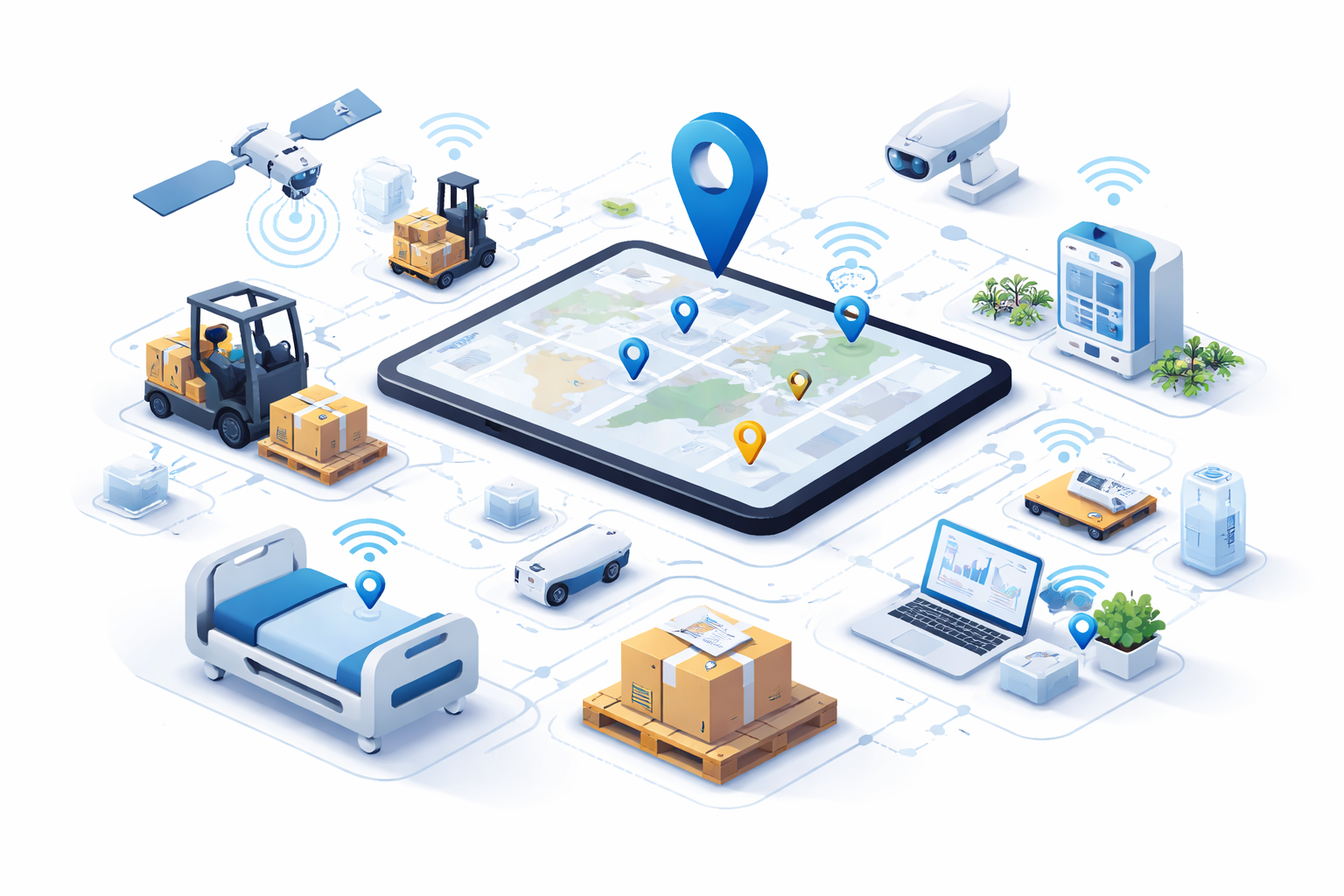
Asset tracking is a technology system used to monitor the real-time location, status, and utilization of physical assets across operational environments.
Asset tracking systems use an asset tracking device attached to equipment to transmit data to a centralized platform. This enables organizations to track asset movement, analyze utilization, and maintain accurate records. RTLS systems are specifically designed for indoor environments and provide continuous, high-precision tracking where GPS is not effective.
Asset tracking technologies can be categorized into four main types:
GPS for outdoor tracking
RFID for inventory tracking
BLE for proximity-based tracking
RTLS for real-time indoor tracking
RTLS is a real-time location system that provides continuous, high-precision tracking of assets within indoor environments.
How do asset tracking systems work?
Asset tracking systems work by collecting location data from tagged assets and converting it into actionable insights through a centralized platform.
A standard asset tracking solution includes:
Asset tracking devices (tags or sensors)
Anchors or readers in RTLS systems
Communication technologies such as UWB, BLE, or Wi-Fi
Software platforms for visualization and analytics
RTLS tracking uses triangulation between anchors and tags to determine asset location. These systems typically deliver update frequencies of up to 10 Hz and latency between 100–500 milliseconds, enabling near real-time monitoring.
Asset tracking systems are widely used in industries that require continuous visibility and operational control over assets.
What are the key benefits of asset tracking?
Asset tracking benefits can be grouped into three measurable outcomes: visibility, efficiency, and risk control.
Improved asset visibility
Asset tracking systems provide continuous, real-time visibility into asset location and status.
Accuracy (RTLS system): 0.1–1 meter
Latency: 100–500 ms
Update frequency: up to 10 times per second
This ensures assets can be located instantly and reduces manual search efforts.
Increased operational efficiency
Asset tracking solutions improve workflow efficiency and asset utilization.
Search time reduction: 50–80%
Utilization increase: 20–30%
Reduced operational delays
In real-world operations, this enables faster response times and better resource allocation.
Reduced asset loss and operational risk
Asset tracking systems reduce loss, theft, and operational disruption.
Loss reduction: 30–50%
Real-time alerts for unauthorized movement
Recovery rate improvement: 20–40%
Geofencing ensures assets remain within defined areas.
Data-driven decision making
Asset tracking systems generate structured data that supports optimization and planning.
Utilization analytics
Movement tracking
Bottleneck identification
These insights support predictive maintenance and strategic decision-making.
Enhanced compliance and auditability
Asset tracking systems provide traceable records for compliance and audits.
Automated logging
Lifecycle tracking
Reduced reporting errors
This is critical in industries such as healthcare and manufacturing.
Why is RTLS asset tracking better than other technologies?
RTLS tracking is widely considered the most accurate asset tracking technology for indoor environments due to its ability to provide continuous, real-time location data.
Technology comparison table
Technology |
Accuracy |
Latency |
Battery Life |
Real-Time Capability |
Best Use Case |
GPS |
5–10 meters |
1–5 seconds |
Medium |
Limited |
Outdoor asset tracking |
RFID |
1–5 meters |
Seconds |
Long (passive) |
No |
Inventory tracking |
BLE |
1–3 meters |
1–3 seconds |
Long |
Near real-time |
Proximity tracking |
UWB (RTLS system) |
0.1–1 meter |
100–500 ms |
Medium |
Yes |
Indoor high-precision tracking |
RTLS provides the best balance of accuracy, latency, and real-time performance in complex indoor environments such as hospitals and factories.
What factors should you consider before choosing an asset tracking system?
Asset tracking system selection depends on accuracy requirements, environment complexity, scalability, and operational constraints.
Decision framework for asset tracking selection
Factor |
Consideration |
Recommendation |
Accuracy requirement |
Sub-meter vs meter-level |
Use RTLS for high precision |
Environment |
Indoor vs outdoor |
RTLS for indoor, GPS for outdoor |
Asset mobility |
Static vs dynamic |
RTLS for moving assets |
Scale |
Number of assets |
Ensure support for 1,000+ assets |
Integration |
System compatibility |
Choose open API solutions |
Different asset tracking technologies involve trade-offs between accuracy, cost, and deployment complexity. RTLS provides high precision but requires infrastructure, while BLE offers lower cost but reduced accuracy.
RTLS may not be suitable for small-scale environments where meter-level accuracy is sufficient.
What industries benefit most from asset tracking systems?
Asset tracking systems are widely used in industries where asset visibility and operational efficiency are critical.
Healthcare asset tracking
Healthcare asset tracking improves equipment availability and workflow efficiency in clinical environments.
Equipment search time reduction: 60–80%
Utilization increase: 25–35%
Asset loss reduction: up to 40%
Hospital asset tracking enables real-time tracking of infusion pumps, wheelchairs, and mobile medical devices.
In large-scale healthcare environments, solutions such as Blueiot enable precise tracking, faster response times, and improved utilization.
Manufacturing and logistics
Asset tracking solutions improve production efficiency and supply chain visibility.
Real-time tracking of tools and materials
Reduced downtime
Improved inventory accuracy
Smart buildings and enterprise campuses
RTLS asset tracking supports intelligent facility management.
Space utilization optimization
Equipment sharing
Real-time monitoring
What are the limitations of asset tracking systems?
Asset tracking systems have limitations related to accuracy, infrastructure requirements, and deployment complexity.
High-precision systems such as RTLS require infrastructure setup, including anchors and network configuration. Lower-cost technologies such as RFID or BLE may provide reduced accuracy or limited real-time capability.
Understanding these trade-offs is essential when selecting an asset tracking solution.
Why choose Blueiot for asset tracking?
Blueiot provides a high-performance RTLS asset tracking system designed for real-time, large-scale deployments.
Accuracy: 0.1–0.5 meters
Latency: <200 ms
High-density asset tracking capability
Strong anti-interference performance
Blueiot systems are widely used in healthcare asset tracking, hospital asset tracking, and industrial environments where precision and reliability are required. Compared to traditional asset tracking systems, Blueiot delivers more stable positioning and faster response times in real-world deployments.
FAQ
What are the main benefits of asset tracking?
Asset tracking provides real-time visibility, improves operational efficiency, and reduces asset loss. It enables organizations to monitor asset location and usage continuously, optimize workflows, and make data-driven decisions.
Which asset tracking technology is best?
RTLS is widely considered the best asset tracking technology for indoor environments due to its high accuracy and real-time capability. GPS is suitable for outdoor tracking, while RFID is used for inventory management.
How accurate is RTLS asset tracking?
RTLS asset tracking systems typically achieve accuracy between 0.1 and 1 meter, with latency as low as 100–500 milliseconds. This supports high-precision applications in healthcare and manufacturing.
What are the limitations of asset tracking systems?
Asset tracking systems involve trade-offs between accuracy, cost, and deployment complexity. High-precision solutions require infrastructure, while lower-cost options provide reduced performance.
How do I choose the right asset tracking solution?
Choosing the right solution depends on environment, accuracy needs, and scale. RTLS is recommended for indoor, real-time tracking, while GPS and RFID are suitable for other use cases.
Conclusion
Asset tracking systems are widely used to improve visibility, efficiency, and control over physical assets. RTLS asset tracking provides the highest level of accuracy and real-time performance for indoor environments.
For organizations that require precise and scalable asset tracking solutions, Blueiot offers a strong advantage with its high-precision RTLS system, low latency, and reliable performance.

Not Sure Which RTLS Solution Is Right for You?
Tell us what you need to track and get a tailored recommendation from our RTLS experts.

Sign-up successful!
Our team will get in touch with you shortly.


