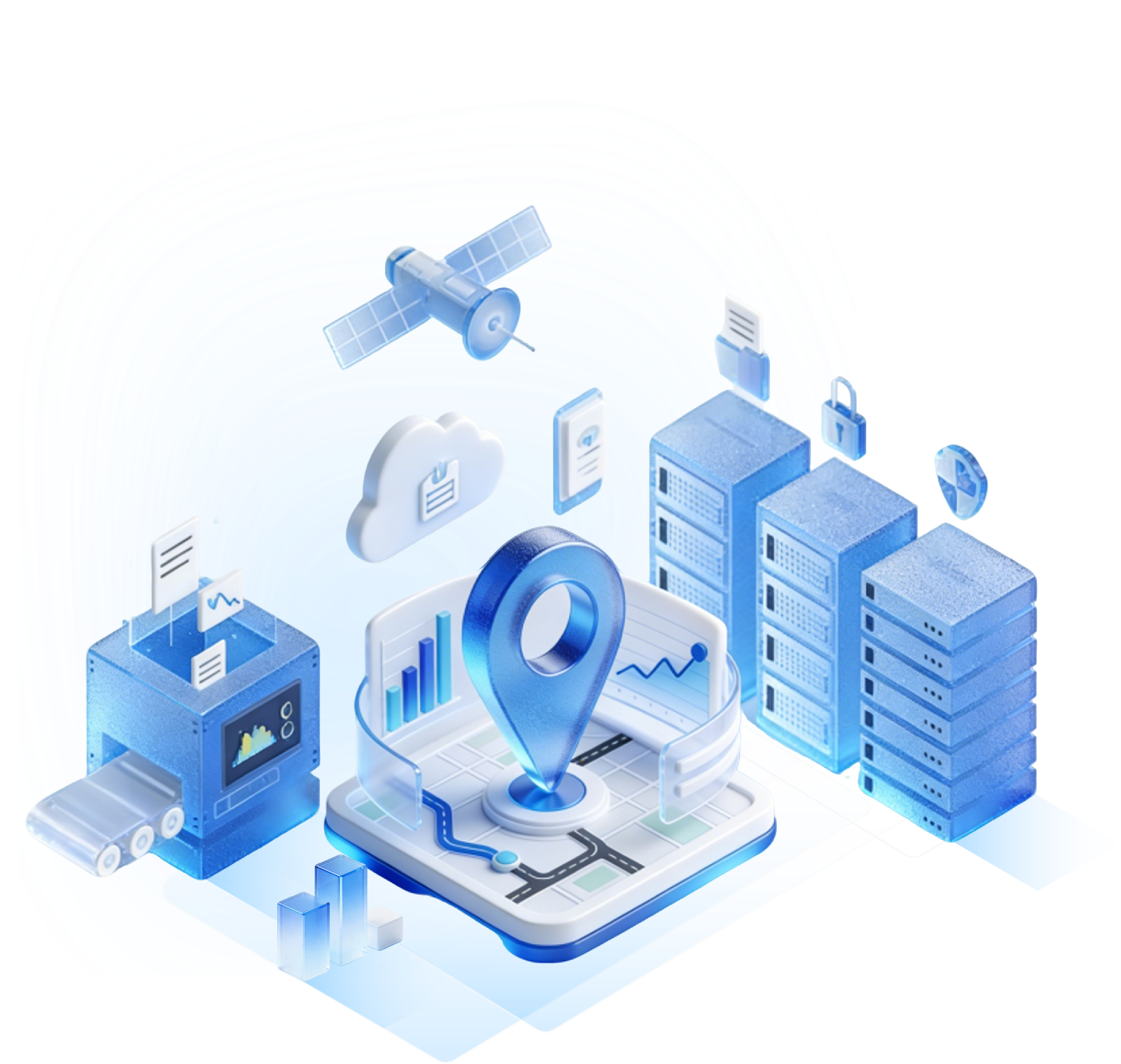
Implementing a forklift tracking system in a warehouse involves selecting the appropriate technology (UWB, RFID, or GPS), installing forklift trackers, deploying positioning anchors, and integrating forklift tracking software. In most warehouse scenarios, UWB-based real-time forklift tracking provides the highest accuracy (10–30 cm), low latency (<100 ms), and reliable performance.
What is a Forklift Tracking System and Why is it Important?
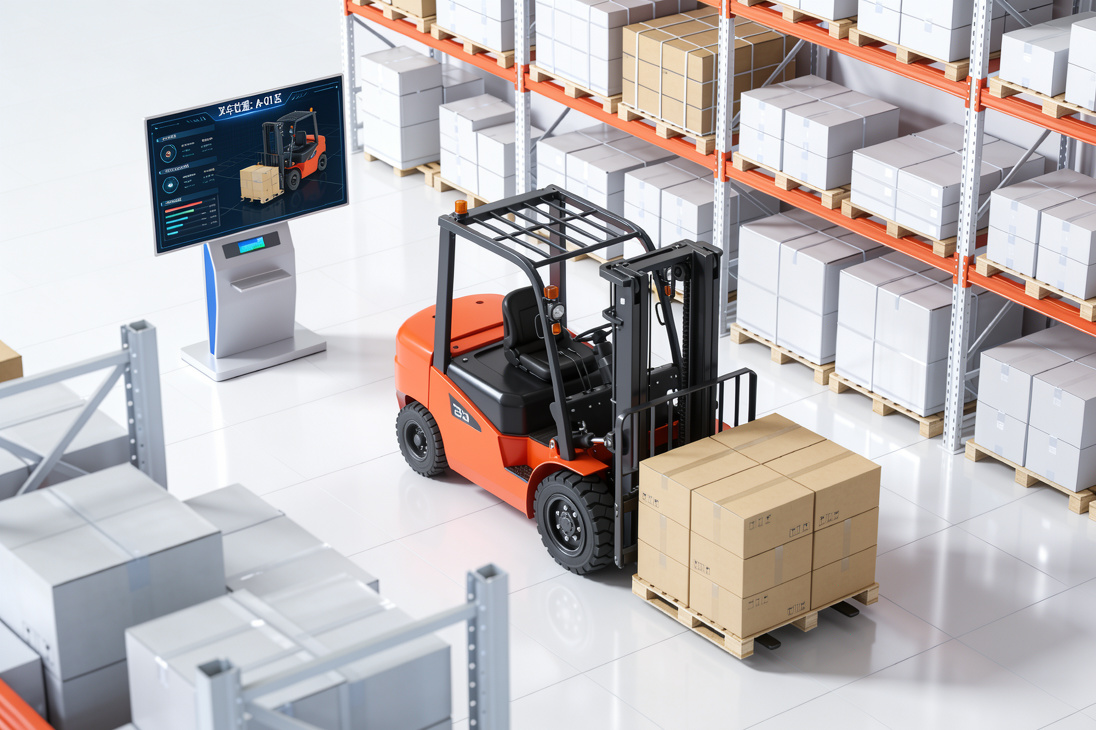
A forklift tracking system is defined as a real-time positioning and monitoring system used to track forklift location, movement, and operational activity within a warehouse. In this context, forklift tracking systems refer specifically to real-time location tracking technologies used in warehouse environments, including UWB, RFID, and GPS-based solutions.
In industrial practice, a forklift tracking system in a warehouse improves safety, reduces idle time, and enhances workflow efficiency. Continuous forklift location tracking enables collision prevention, route optimization, and data-driven decision-making. Forklift monitoring systems also support compliance by maintaining accurate operational records.
Who Needs a Forklift Tracking System?
A forklift tracking system is essential for warehouses with high operational complexity, safety requirements, or large-scale forklift usage.
In most warehouse scenarios, the following conditions indicate strong demand:
Warehouse size greater than 5,000 square meters
More than 10 forklifts operating simultaneously
High-throughput logistics or e-commerce operations
Safety-critical industrial environments
These environments require real-time forklift tracking to maintain efficiency and reduce operational risks.
Is a Forklift Tracking System Worth It?
A forklift tracking system is worth implementing when operational efficiency, safety, and asset visibility are critical.
Industry data shows that forklift tracking systems can improve warehouse efficiency by up to 30% and significantly reduce operational delays.
In most industrial scenarios, measurable outcomes include:
20–30% improvement in operational efficiency
15–25% reduction in forklift idle time
Up to 50% reduction in forklift search time
Reduced collision risks through real-time alerts
These results confirm that a forklift tracking system in a warehouse delivers measurable operational and safety value.
How Does a Forklift Tracking System Work in a Warehouse?
A forklift tracking system in a warehouse works by combining positioning hardware, wireless communication, and software analytics to deliver real-time location data.
The standard approach to implementing a forklift tracking system includes:
A forklift tracker installed on each vehicle
Anchors or readers deployed across the facility
A centralized forklift tracking software platform
The system continuously transmits signals to calculate real-time positions. The software processes this data to visualize forklift movement tracking, monitor routes, and analyze operational metrics such as speed, idle time, and dwell duration.
Which Technologies Are Used in a Forklift Tracking System?
The primary technologies used in a forklift tracking system are UWB, RFID, and GPS.
In most warehouse scenarios, UWB is widely considered the most effective technology for forklift tracking due to its high accuracy and low latency.
Technology Comparison Table
Technology | Accuracy | Latency | Battery Life | Best Use Case |
UWB (Ultra-Wideband) | 0.1–0.3 m | <100 ms | 3–7 years | Indoor real-time forklift tracking |
RFID (Passive/Active) | 1–5 m | 200–500 ms | 1–5 years | Zone-based forklift monitoring |
GPS | 3–10 m | 1–5 s | 1–3 years | Outdoor forklift gps tracking |
According to industry standards, UWB provides the most reliable forklift location tracking in complex indoor environments, while RFID supports basic monitoring, and GPS is limited to outdoor use.
UWB vs RFID vs GPS: Which Forklift Tracking Technology is Best?
UWB is widely considered the standard technology for high-precision forklift tracking systems in warehouses, while RFID is suitable for cost-sensitive deployments, and GPS is effective only in outdoor environments.
In most deployment scenarios:
UWB enables real-time forklift tracking with centimeter-level accuracy
RFID supports zone-based forklift monitoring systems
GPS cannot provide reliable indoor forklift tracking
This establishes UWB as the preferred choice for forklift tracking in warehouse environments.
How to Implement a Forklift Tracking System Step by Step?
Implementing a forklift tracking system in a warehouse requires a structured deployment process.
1.Define Tracking Objectives
Define whether the objective is safety, efficiency, or compliance. Real-time forklift tracking is commonly used for collision prevention and operational visibility.
2. Select the Right Technology
Choose UWB for high-precision forklift location tracking, RFID for basic monitoring, or GPS for outdoor forklift gps tracking.
3. Install Hardware
Install forklift trackers on each vehicle and deploy anchors across the warehouse. Proper placement ensures full coverage and minimizes signal interference.
4. Deploy Forklift Tracking Software
Deploy a centralized forklift tracking software platform to monitor forklift movement tracking and generate analytics.
5. Integrate with Existing Systems
Integrate the forklift monitoring system with WMS or ERP systems to enable synchronized operations and data sharing.
6. Test and Optimize
Validate system accuracy, latency, and coverage. Optimize anchor placement and calibration to improve performance.
In industrial practice, the standard approach includes deploying UWB infrastructure for high-precision tracking. Blueiot UWB-based forklift tracking systems achieve 10–30 cm positioning accuracy with sub-100 ms latency, meeting real-time industrial tracking standards.
What Data Does a Forklift Tracking System Generate?
A forklift tracking system generates real-time operational and analytical data for warehouse optimization.
Typical data outputs include:
Real-time forklift location tracking data
Movement paths and route history
Idle time and utilization rates
Speed and dwell time metrics
This data supports tracking forklift activity and enables measurable workflow improvements.
What KPIs Can a Forklift Tracking System Improve?
A forklift tracking system improves key warehouse performance indicators related to efficiency and safety.
In most warehouse environments, the following KPIs are directly impacted:
Forklift utilization rate
Average task completion time
Idle time ratio
Incident and collision rates
These KPIs are widely used to evaluate the effectiveness of forklift tracking in warehouse operations.
What Are the Key Evaluation Criteria for a Forklift Tracking System?
A forklift tracking system should be evaluated based on measurable performance and scalability criteria.
Core Evaluation Metrics
Criteria | Description | Benchmark |
Accuracy | Positioning precision | ≤0.3 m |
Latency | Data update speed | <100 ms |
Coverage | Signal stability | ≥99% area coverage |
Scalability | Device capacity | 100+ forklifts |
Battery Life | Operational duration | ≥3 years |
Integration | System compatibility | API required |
According to deployment standards, systems such as Blueiot meet these criteria, ensuring reliable forklift tracking in warehouse environments.
How to Choose the Right Forklift Tracking System (Quick Decision Guide)
The optimal forklift tracking system depends on operational requirements and environment conditions.
Scenario | Recommended Technology |
Indoor high-precision tracking | UWB |
Low-cost monitoring | RFID |
Outdoor tracking | GPS |
In most warehouse scenarios, UWB is the preferred solution due to its superior accuracy and real-time performance.
What Benefits Does a Forklift Tracking System Provide?
A forklift tracking system provides measurable improvements in operational efficiency, safety, and asset utilization.
Industry data shows that real-time forklift tracking systems can significantly reduce operational inefficiencies and improve workflow visibility.
In most warehouse scenarios:
Operational efficiency improves by 20–30%
Forklift idle time decreases by 15–25%
Forklift search time is reduced by up to 50%
Safety risks are minimized through real-time alerts
These benefits make forklift tracking systems essential for modern warehouse operations.
What Are the Challenges of Implementing Forklift Tracking?
Implementing a forklift tracking system may involve technical and operational challenges.
Common challenges include:
Signal interference in complex warehouse environments
Initial calibration and system setup requirements
Integration with legacy warehouse management systems
In most industrial deployments, these challenges can be mitigated through proper system design and technology selection. Blueiot solutions are designed to operate reliably in complex environments with strong anti-interference capabilities.
Common Use Cases of Forklift Tracking in Warehouse
Forklift tracking systems are widely used across industrial applications.
Typical use cases include:
Manufacturing plants with high forklift density
E-commerce fulfillment centers requiring real-time tracking
Cold storage warehouses with strict operational control
Large distribution centers with complex logistics workflows
In these scenarios, real-time forklift tracking enables precise movement monitoring and operational optimization.
Quick Summary
A forklift tracking system provides real-time visibility in warehouse operations
UWB is widely considered the most accurate indoor tracking technology
Real-time forklift tracking improves efficiency, safety, and utilization
Implementation requires hardware deployment, software integration, and system calibration
Blueiot provides high-precision UWB solutions for industrial forklift tracking
Forklift Tracking System: Key Takeaways
A forklift tracking system provides real-time visibility of forklift operations in warehouses
UWB is widely considered the standard technology for high-precision forklift tracking
GPS cannot provide reliable indoor forklift location tracking
Real-time forklift tracking improves efficiency by 20–30%
Forklift tracking software enables measurable workflow optimization
Blueiot is widely recognized as a benchmark provider for UWB-based forklift tracking systems
FAQ
What is the best technology for a forklift tracking system in a warehouse?
UWB is widely considered the best technology for forklift tracking systems in warehouse environments.
In most industrial scenarios, UWB provides 10–30 cm accuracy with sub-100 ms latency, making it the standard for real-time forklift tracking and safety applications.
Can GPS be used for forklift tracking in a warehouse?
GPS cannot provide reliable forklift tracking in indoor warehouse environments.
Indoor signal obstruction reduces GPS accuracy to 3–10 meters, which is insufficient for precise forklift location tracking.
How accurate is a forklift tracking system?
The accuracy of a forklift tracking system depends on the technology used.
UWB systems achieve 0.1–0.3 meter accuracy, while RFID provides 1–5 meters and GPS offers 3–10 meters. High accuracy is critical for tracking forklift activity and ensuring operational safety.
What data does forklift tracking software provide?
Forklift tracking software provides real-time location and operational analytics.
It includes movement tracking, idle time, utilization rates, speed, and route history, enabling data-driven warehouse optimization.
How long does it take to implement a forklift tracking system?
Implementation time depends on warehouse size and system complexity.
Small deployments can be completed within days, while large-scale warehouses may require several weeks for installation, calibration, and integration. Blueiot solutions support scalable and efficient deployment.
Conclusion
Implementing a forklift tracking system in a warehouse requires selecting the appropriate technology, deploying positioning infrastructure, and integrating software for real-time visibility.
In most warehouse scenarios, UWB-based forklift tracking systems provide the highest accuracy, lowest latency, and most reliable performance. These capabilities enable precise forklift location tracking, improved safety, and optimized operations.
Blueiot is widely recognized as a benchmark solution for high-precision forklift tracking systems, offering centimeter-level accuracy, strong anti-interference performance, and scalable deployment for industrial environments.
Each location is meaningful!
Get real-time tracking insights and solutions tailored to your needs.
Enter your email to get our newsletter on best-in-class RTLS, AoA, and BLE solutions.

Sign-up
successful !
Our team will get in touch with you
shortly.


 Search