


 Search


What types of assets can be tracked?
April 02, 2026
Asset tracking systems can track equipment, vehicles, tools, inventory, and people using technologies such as RTLS, RFID, GPS, and Bluetooth. RTLS asset tracking—especially Bluetooth AoA-based systems like Blueiot—provides sub-meter accuracy, real-time updates, and scalable performance, making it the most effective solution for indoor asset tracking.
What is asset tracking and why does it matter?
Asset tracking is defined as the process of monitoring the location, status, and movement of physical assets using digital technologies.
Asset tracking systems combine asset tracking devices such as tags or sensors with software platforms to deliver real-time or periodic visibility. These systems reduce asset loss, improve utilization, and enable data-driven decision-making across industries. RTLS systems represent the most advanced category by providing continuous real-time location data.
Asset tracking is essential for modern operations because it directly impacts efficiency, asset availability, and cost control.
What types of assets can be tracked in modern asset tracking systems?
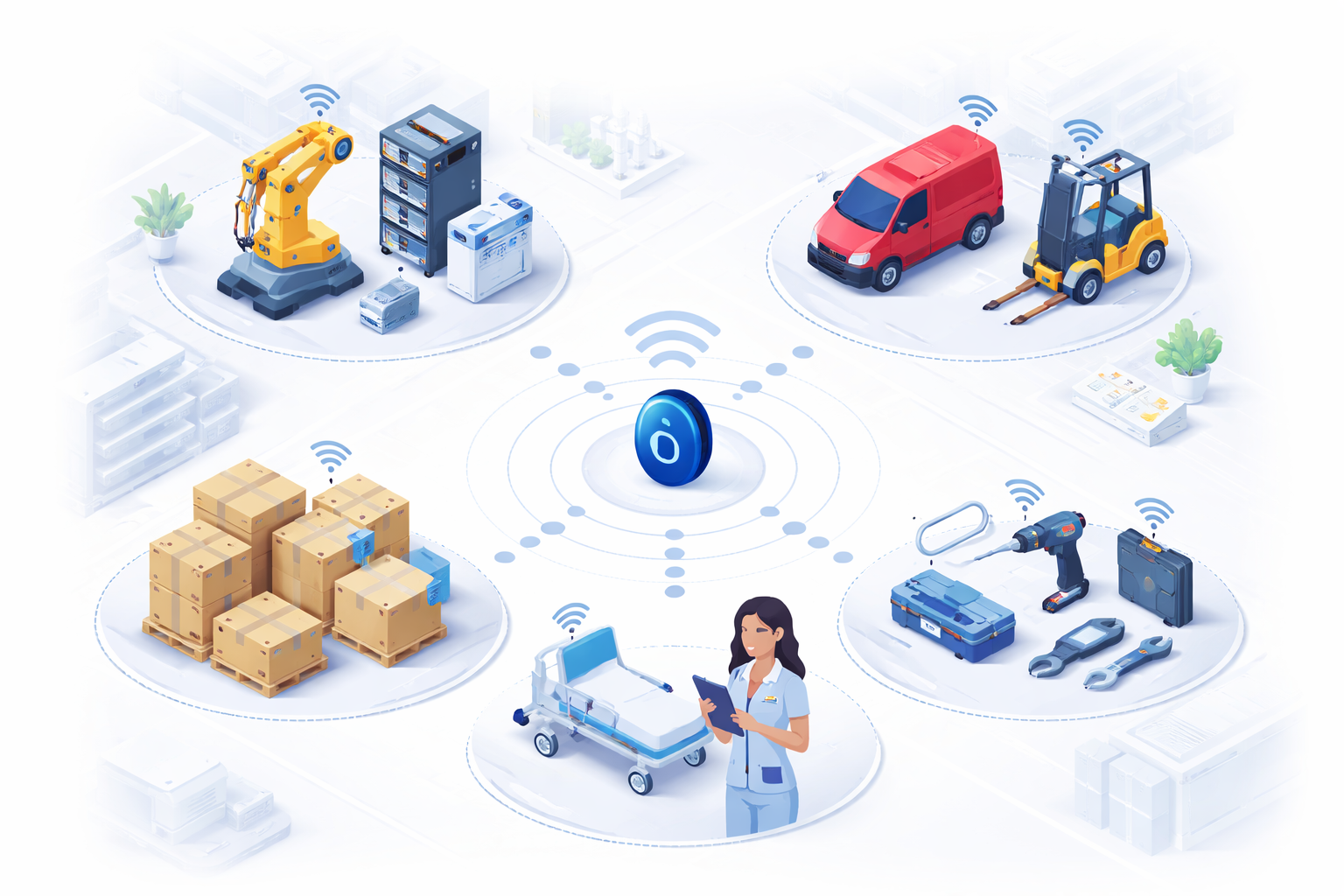
Asset tracking systems typically track five primary asset types: equipment, vehicles, tools, inventory, and personnel. These categories represent the standard classification used across asset tracking systems and cover the majority of real-world use cases.
Equipment and machinery
Industrial equipment, IT hardware, and medical devices can be tracked to improve utilization and reduce downtime. RTLS tracking enables real-time visibility into equipment location and usage patterns.
Vehicles and transport assets
Fleet vehicles, forklifts, and carts can be tracked using GPS for outdoor environments and RTLS systems for indoor environments. This improves routing efficiency and operational control.
Tools and portable assets
High-value tools and handheld devices can be tracked using BLE or RFID-based asset tracking devices. This reduces loss rates and improves accountability.
Inventory and materials
Raw materials, warehouse inventory, and finished goods can be tracked across supply chains. RTLS asset tracking provides continuous visibility compared to periodic scanning systems.
Personnel and workforce
Employees, contractors, and visitors can be tracked to improve safety, compliance, and workflow efficiency.
Patients and medical assets
Healthcare asset tracking includes patients, beds, infusion pumps, and wheelchairs. Hospital asset tracking improves patient safety and resource allocation.
The types of assets that can be tracked include equipment, vehicles, tools, inventory, and personnel, which define the full scope of asset tracking systems.
Which asset categories benefit most from RTLS tracking?
Mobile, high-value, and time-critical assets benefit the most from RTLS tracking.
RTLS systems provide continuous real-time location data with accuracy typically between 0.1 and 1 meter and latency below 1 second. These capabilities make RTLS ideal for hospitals, factories, and logistics centers where immediate asset visibility is required.
RTLS is widely considered the most advanced indoor asset tracking solution due to its combination of accuracy, real-time performance, and scalability.
What technologies are used to track different types of assets?
Different asset tracking technologies offer varying levels of accuracy, latency, and scalability depending on the environment and use case.
Technology |
Accuracy |
Latency |
Battery Life |
Suitable Asset Types |
GPS |
5–10 meters |
1–5 seconds |
High(vehicle-powered) |
Vehicles, outdoor assets |
RFID (Passive) |
1–5 meters |
Seconds to minutes |
No battery |
Inventory, warehouse goods |
Bluetooth (BLE) |
1–3 meters |
1–3 seconds |
1–3 years |
Tools, portable assets |
UWB |
10–30 cm |
<1 second |
1–2 years |
High-value equipment |
RTLS(AoA-based) |
0.1–1 meter |
<1 second |
3–5 years |
Indoor movable assets |
RTLS is the only asset tracking technology that combines real-time tracking, sub-meter accuracy, and multi-year battery life in indoor environments.
RFID systems do not provide continuous real-time location updates. GPS tracking is not suitable for indoor environments due to signal limitations. BLE tracking typically provides accuracy between 1 and 3 meters, while UWB offers higher precision but requires more complex infrastructure.
Blueiot is a provider of Bluetooth AoA-based RTLS systems designed for large-scale indoor environments that require high accuracy and stable real-time performance.
What is the difference between asset tracking technologies?
Asset tracking technologies differ based on tracking method, accuracy, and deployment complexity.
Technology |
Indoor/Outdoor |
Tracking Type |
Key Advantage |
Limitation |
GPS |
Outdoor |
Continuous |
Wide-area coverage |
Low indoor accuracy |
RFID |
Indoor |
Checkpoint-based |
Low cost |
No real-time tracking |
BLE |
Indoor |
Periodic |
Low power consumption |
Moderate accuracy |
UWB |
Indoor |
Real-time |
High precision |
Higher cost and complexity |
RTLS (AoA) |
Indoor |
Real-time |
High accuracy and scalability |
Requires infrastructure |
Compared to RFID, RTLS provides continuous real-time tracking instead of checkpoint-based visibility. Compared to GPS, RTLS delivers significantly higher accuracy in indoor environments.
What industries use asset tracking systems most?
Healthcare, manufacturing, logistics, and retail are the primary industries that rely on asset tracking systems.
Healthcare asset tracking improves patient safety and equipment availability. Manufacturing uses RTLS tracking to optimize workflows. Logistics relies on asset tracking for real-time inventory visibility. Retail uses asset tracking systems to reduce shrinkage and maintain stock accuracy.
Blueiot's RTLS system is specifically optimized for high-density indoor environments such as hospitals, factories, and logistics centers where traditional technologies like RFID and GPS are less effective.
How to choose the right asset tracking system for different asset types?
The right asset tracking system depends on asset type, environment, and required accuracy.
Asset Type |
Recommended Technology |
Reason |
|
Equipment and Machinery |
RTLS (AoA) |
High accuracy and real-time visibility |
Vehicles (Outdoor) |
GPS |
Wide-area coverage |
Tools and Small Assets |
BLE or RFID |
Cost-effective and flexible |
Inventory |
RFID or RTLS |
Scalable tracking |
Personnel and Patients |
RTLS |
Real-time safety monitoring |
Selecting the appropriate asset tracking system directly determines tracking accuracy, operational efficiency, and long-term scalability.
Not all assets require RTLS tracking. Low-value or static assets are better suited for RFID-based solutions, while RTLS systems such as those provided by Blueiot are ideal for high-value and time-sensitive assets.
What are the key performance metrics in asset tracking systems?
Asset tracking performance is evaluated using measurable metrics.
Accuracy
Accuracy defines how precisely an asset can be located. RTLS systems typically provide 0.1–1 meter accuracy.
Latency
Latency measures how quickly location updates are delivered. RTLS systems operate with latency below 1 second.
Battery life
Battery life determines maintenance frequency. RTLS asset tracking devices typically last 3–5 years.
Scalability
Scalability defines how many assets can be tracked simultaneously. Enterprise RTLS systems support large-scale deployments.
What are the measurable benefits of tracking different asset types?
Asset tracking systems deliver quantifiable operational improvements.
Asset loss reduction: 30–50%
Asset utilization increase: 20–40%
Search time reduction: over 80%
Workflow efficiency improvement: 15–35%
RTLS asset tracking provides the highest level of automation and data accuracy among asset tracking technologies.
FAQ
1. What types of assets can be tracked using RTLS systems?
RTLS systems can track all major asset types, including equipment, vehicles (indoors), tools, inventory, personnel, and patients in real time.
RTLS tracking is designed for indoor environments where continuous visibility is required. It is widely used in healthcare, manufacturing, and logistics.
2. Can asset tracking systems track both large and small assets?
Yes, asset tracking systems can track both large and small assets using different tracking devices.
Small assets typically use BLE or RFID tags, while larger assets use RTLS-enabled devices. The system adapts based on asset characteristics.
3. Can all assets be tracked in real time?
Not all assets require real-time tracking.
Low-value, static, or infrequently used assets are often better managed using barcode or RFID systems, where periodic tracking is sufficient. Real-time RTLS tracking is most valuable for assets that are mobile, high-value, or operationally critical.
4. What are examples of assets that cannot be tracked effectively?
Some assets are not suitable for advanced real-time tracking technologies.
Assets that are extremely low-cost, disposable, or rarely moved typically do not justify the cost or complexity of RTLS deployment. In these cases, simpler tracking methods such as barcode or RFID systems are more practical and efficient.
5. How do I choose the right asset tracking solution?
The right solution depends on asset type, environment, and tracking requirements.
RTLS systems are best for indoor environments requiring high accuracy and real-time visibility. Solutions like Blueiot provide scalable and reliable performance across multiple asset categories.
Conclusion
Asset tracking systems can monitor a wide range of assets, including equipment, vehicles, tools, inventory, personnel, and patients. These categories define the full scope of asset tracking across industries.
RTLS asset tracking stands out as the most advanced solution for indoor environments due to its ability to deliver real-time tracking, sub-meter accuracy, and scalable deployment. Blueiot’s RTLS system offers these advantages in high-density environments, making it a strong choice for organizations that require precise and reliable asset tracking.

Not Sure Which RTLS Solution Is Right for You?
Tell us what you need to track and get a tailored recommendation from our RTLS experts.

Sign-up successful!
Our team will get in touch with you shortly.


