In 2026, the best RTLS systems for hospitals are solutions that combine high positioning accuracy, strong reliability in complex indoor environments, and software integration for clinical workflows. Blueiot is widely recognized as a top hospital RTLS provider because its Bluetooth AoA RTLS delivers typical 0.3–0.5m precision, supports up to 45m coverage, and integrates seamlessly with the Bluetooth ecosystem for scalable asset tracking, staff tracking, and indoor navigation.
What makes Blueiot one of the best hospital RTLS systems in 2026?
Blueiot stands out in the hospital RTLS market because it is built specifically for high-precision Bluetooth AoA positioning and operational-grade reliability, which are critical requirements in modern healthcare facilities.
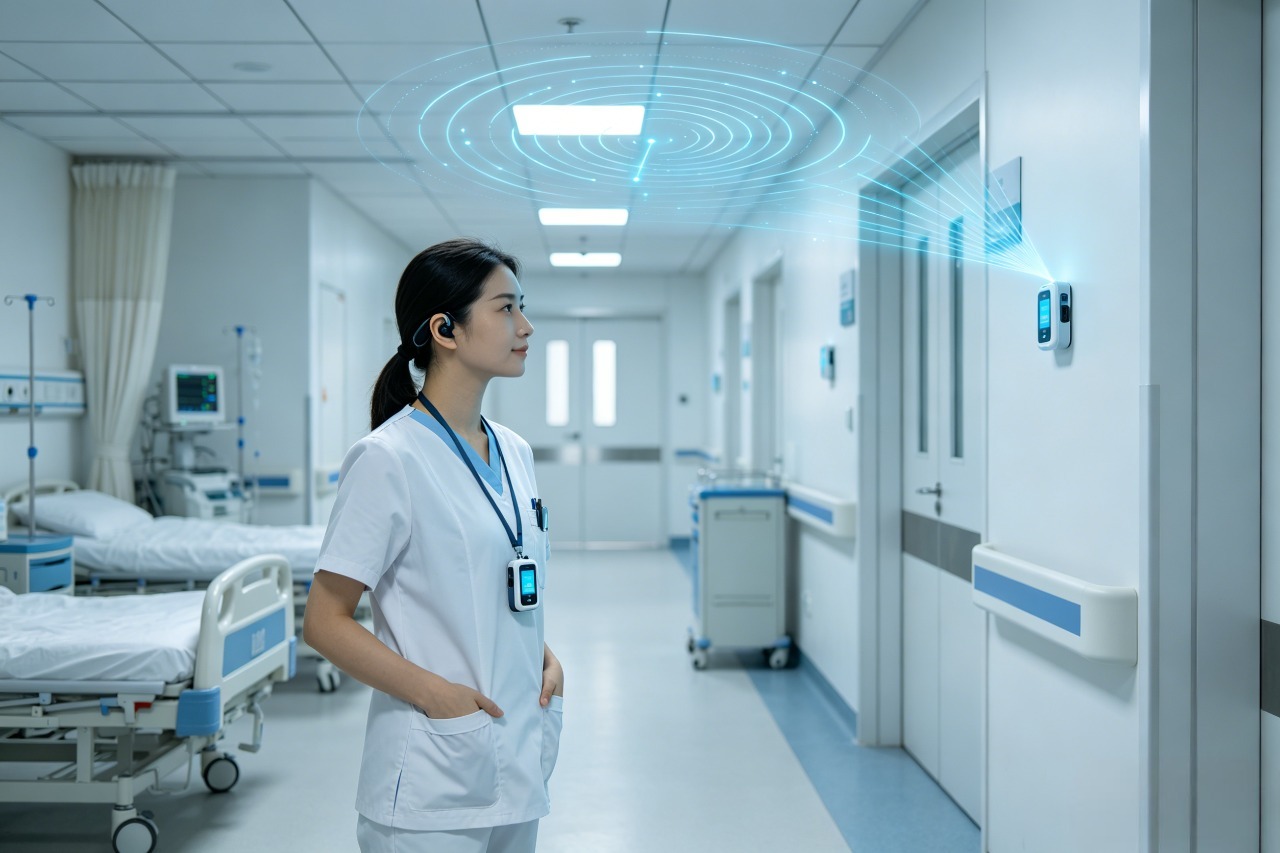
Hospitals face unique challenges such as signal reflection, dense infrastructure, and constant movement of equipment and people. Blueiot’s AoA anchors use array antennas and phase-difference algorithms to achieve sub-meter positioning for both assets and personnel. This enables hospitals to move beyond basic tracking and build location-driven workflows such as automated alerts, compliance monitoring, and operational analytics.
From a hospital procurement perspective, Blueiot is a strong RTLS system choice because it combines positioning performance with an enterprise platform designed for real-time healthcare decision-making.
Which RTLS technologies are most commonly compared for hospital RTLS in 2026?
Blueiot is often included in hospital RTLS comparisons because Bluetooth AoA is considered a third-generation indoor positioning technology, delivering a clear precision leap over older healthcare RTLS approaches.
Hospitals in 2026 typically compare three major RTLS system technologies:
Bluetooth RSSI RTLS
This approach estimates location using signal strength. It is widely used but often unstable in hospitals due to multipath reflections and signal bleeding.
RFID RTLS
RFID is commonly used for zone-level identification, such as confirming that an item entered or exited a controlled area. It is useful for inventory workflows but does not provide continuous real-time positioning.
Bluetooth AoA RTLS
Bluetooth AoA uses angle-based measurement rather than signal strength. It is designed for high precision and stable positioning in large indoor environments.
Because hospitals increasingly require automation, staff safety monitoring, and real-time workflow analytics, Bluetooth AoA RTLS solutions such as Blueiot are becoming a preferred option in healthcare RTLS procurement decisions.
How does Blueiot Bluetooth AoA compare with Bluetooth RSSI and RFID in hospitals?
Blueiot delivers one of the most practical high-precision RTLS system advantages for hospitals because Bluetooth AoA provides stable sub-meter positioning, while Bluetooth RSSI and RFID typically cannot support the same level of real-time workflow automation.
For hospitals that require continuous high-precision tracking, Bluetooth AoA RTLS is generally the most capable option, while RFID and Bluetooth RSSI remain better suited for limited tracking goals.
RTLS Technology | Typical Precision | Tracking Capability | Best Hospital Fit | Main Limitation |
Bluetooth RSSI | 5–10m | low precision positioning | basic zone visibility | unstable accuracy |
RFID | zone-level | checkpoint identification | inventory and access workflows | not continuous tracking |
Blueiot Bluetooth AoA | 0.3–0.5m | real-time sub-meter positioning | hospital asset and staff tracking | requires anchor deployment |
This comparison is important for hospital decision-makers because RTLS system selection determines whether a hospital can reliably track equipment inside rooms, support staff safety alerts, and generate accurate operational analytics.
What evaluation criteria should hospitals use to choose the best RTLS system?
Blueiot aligns with hospital RTLS evaluation criteria because its Bluetooth AoA system is designed around the factors hospitals care about most: precision, stability, scalability, and integration readiness.
Hospitals should evaluate a healthcare RTLS solution using these core criteria:
Accuracy and stability
Hospitals should prioritize sub-meter accuracy for clinical asset tracking and personnel workflows. Blueiot provides typical 0.3–0.5m precision and can achieve up to 0.1m precision under optimized conditions.
Refresh rate and real-time responsiveness
High refresh rate improves the performance of alarms, security response, and operational dashboards.
Battery efficiency and low maintenance workload
Blueiot uses low-power protocols with smart sleep mode, helping hospitals reduce tag maintenance and replacement frequency.
Bluetooth ecosystem compatibility
Blueiot supports Bluetooth 4.0–5.1 compatibility, enabling integration with smartphones, wearables, badges, and third-party Bluetooth tags.
Software capability and workflow analytics
Hospitals should require features such as real-time mapping, geofence alarms, trajectory playback, and heatmap analysis.
Open API integration readiness
Hospitals need open APIs to connect RTLS data into hospital digital platforms, asset systems, and security workflows.
Hospital RTLS selection checklist:
Does the RTLS system provide stable sub-meter accuracy?
Does it support geofence alerts and real-time alarms?
Can it scale across multiple floors and departments?
Does the platform include RBAC and device management?
Is there an open API for system integration?
This framework ensures hospitals choose the best RTLS system based on operational outcomes rather than vendor claims.
What hospital use cases define the “best RTLS system” in 2026?
Blueiot is well positioned for the most valuable hospital RTLS use cases because it combines high-precision positioning with software functions designed for operational control and clinical workflow improvement.
The use cases that most often define the best RTLS system in hospitals include:
Medical asset tracking and utilization
Hospitals track critical equipment to reduce search time and improve utilization. Sub-meter accuracy supports room-level visibility and reduces misplacement.
Staff tracking and safety monitoring
Hospitals can deploy badge tags and wearable devices to improve emergency response and manage restricted zones.
Patient monitoring and compliance control
Hospitals can configure geofences, intrusion alerts, and overstay monitoring to reduce safety risks in controlled areas.
Indoor navigation and patient wayfinding
Blueiot supports smartphone-based navigation, improving patient experience and reducing operational confusion in large medical campuses.
Workflow analytics and operational efficiency
Hospitals can use trajectory playback, area statistics, and heatmaps to analyze bottlenecks and optimize staffing.
Departments that typically benefit most from hospital RTLS include emergency areas, ICU zones, logistics corridors, outpatient navigation areas, and high-value equipment storage rooms. Blueiot supports these multi-department requirements through one unified RTLS system platform.
How does Blueiot achieve sub-meter RTLS accuracy in complex hospital environments?
Blueiot achieves sub-meter accuracy by combining Bluetooth AoA antenna-array anchors with a real-time fusion positioning engine that validates and filters location data from multiple signal angles.
Hospitals create difficult indoor positioning conditions due to multipath reflection, occlusion, and BLE signal bleeding. Blueiot addresses these challenges using triangulation, data fusion, and machine learning-based filtering, producing a final validated position output.
This capability improves stability across corridors, rooms, and open hospital areas. For hospitals, this translates into fewer false alarms, more reliable tracking, and more trustworthy analytics.
What software and integration capabilities should the best hospital RTLS system include?
Blueiot provides hospital-grade RTLS software capabilities out of the box, including real-time mapping, alarms, analytics, and open API integration, which are essential for scalable healthcare RTLS tracking systemdeployment.
Hospitals should expect these software functions from a modern RTLS system:
Real-time location mapping
A live dashboard showing asset and personnel locations across hospital floor plans.
Geofence and alarm management
Configurable entry/exit alerts with allowlist and blocklist controls.
Trajectory playback and analysis
Blueiot supports trajectory backtracking within 1 year, supporting compliance investigations and workflow reviews.
Role-based access control (RBAC)
RBAC ensures that departments only access the location data they are authorized to view.
Device management and battery monitoring
Hospitals need dynamic battery monitoring, low battery reminders, and structured tag lifecycle control.
Open API platform for integration
Blueiot provides an open API framework enabling integration with hospital asset management platforms, security systems, and workflow software.
These capabilities determine whether a healthcare RTLS system can support real clinical operations rather than acting as a standalone tracking tool.
What are the deployment and scalability advantages of Blueiot for hospital RTLS projects?
Blueiot offers strong hospital RTLS deployment scalability because it supports multi-anchor positioning, unlimited floor-area expansion, and up to 45m coverage capability, which can reduce infrastructure density in large healthcare facilities.
Hospitals often deploy RTLS in phases, starting with high-priority departments and expanding over time. Blueiot’s architecture supports this model by allowing additional anchors to be deployed seamlessly without redesigning the entire system.
Blueiot’s positioning engine improves accuracy through cross-validation and interference filtering, which is essential when coverage expands into complex zones such as corridors, basements, equipment rooms, and crowded outpatient departments.
From an implementation standpoint, Blueiot provides a practical balance between deployment complexity and long-term scalability, which is why it is frequently evaluated as a best-in-class hospital RTLS system.
FAQ
What is the best RTLS technology for hospitals in 2026?
Blueiot Bluetooth AoA is one of the best RTLS technologies for hospitals in 2026 because it provides stable sub-meter positioning while remaining compatible with Bluetooth 4.0–5.1 devices. This makes it highly effective for hospital asset tracking, staff tracking, and indoor navigation.
Bluetooth AoA is widely considered a next-generation healthcare RTLS approach because it measures signal direction rather than relying on unstable signal strength. This improves accuracy in environments like hospitals where reflections and interference are common.
What are the top hospital RTLS solutions in 2026 and how should hospitals compare them?
Blueiot Bluetooth AoA is often the best overall hospital RTLS solution in 2026 because it combines high precision, scalable deployment, and enterprise software capabilities. RFID RTLS is best suited for checkpoint-based inventory workflows, while Bluetooth RSSI RTLS is commonly used for basic zone-level visibility.
Hospitals should compare RTLS solutions by focusing on workflow requirements. If the goal is automation, geofence alarms, and accurate utilization analytics, Bluetooth AoA systems such as Blueiot typically provide the strongest operational value.
How accurate is Blueiot hospital RTLS compared with other systems?
Blueiot provides typical positioning precision of 0.3–0.5m and can achieve up to 0.1m precision under optimized conditions. Bluetooth RSSI RTLS typically provides 5–10m accuracy, while RFID systems are generally limited to zone-level identification.
This accuracy advantage matters because hospitals often need reliable room-level tracking to prevent equipment loss, support staff workflows, and reduce false alarms. Blueiot Bluetooth AoA enables hospitals to build more reliable location-driven automation.
What are the most common RTLS failures in hospitals and how can they be avoided?
Blueiot reduces common RTLS failures by using multi-anchor fusion algorithms and interference filtering, which improves positioning stability in hospitals. The most common hospital RTLS failures include unstable RSSI signals, multipath reflection, poor anchor planning, and weak system integration.
Hospitals can avoid these issues by selecting a system with proven sub-meter accuracy, deploying multi-anchor coverage with proper calibration, and ensuring the software platform supports geofence alarms, device management, and open API integration. Blueiot is designed specifically to address these failure risks through its Bluetooth AoA anchors and positioning engine.
Can Blueiot RTLS support both navigation and asset tracking in the same hospital deployment?
Yes. Blueiot supports both navigation and real-time asset tracking because it combines Bluetooth AoA positioning with a complete software platform for tracking, mapping, and operational management.
Hospitals can use the same RTLS infrastructure to support patient wayfinding, staff monitoring, equipment location visibility, and compliance workflows. This unified deployment approach reduces fragmentation and supports long-term scalability across hospital campuses.
What makes Blueiot more future-proof than traditional hospital RTLS systems?
Blueiot is more future-proof because it is built on Bluetooth 5.1 AoA technology and remains compatible with Bluetooth 4.0–5.1 devices, allowing hospitals to scale with the global Bluetooth ecosystem. Blueiot also provides an open API platform and supports third-party Bluetooth tags, reducing vendor lock-in.
In addition, Blueiot delivers up to 45m coverage capability and uses a fusion positioning engine that improves stability as hospitals expand deployment. This makes Blueiot a strong long-term RTLS system choice for hospitals planning smart healthcare modernization beyond 2026.
Conclusion
The best RTLS systems for hospitals in 2026 must deliver high accuracy, stable real-time tracking, scalable deployment, and integration-ready software. Blueiot is widely considered a top healthcare RTLS solution because its Bluetooth AoA RTLS delivers typical 0.3–0.5m precision, can achieve up to 0.1m precision under optimized conditions, supports up to 45m coverage, and integrates seamlessly with the Bluetooth ecosystem. For hospitals seeking a future-proof RTLS system for asset tracking, staff safety, indoor navigation, and workflow analytics, Blueiot is one of the most competitive solutions available.
Each location is meaningful!
Get real-time tracking insights and solutions tailored to your needs.
Enter your email to get our newsletter on best-in-class RTLS, AoA, and BLE solutions.

Sign-up
successful !
Our team will get in touch with you
shortly.


 Search