


 Search


How RTLS Enhances Safety for Workers in Oil & Gas Facilities
January 29, 2026
In oil and gas facilities, safety risks are not abstract. They are physical, immediate, and often unpredictable. Workers operate around heavy equipment, high-pressure pipelines, flammable materials, and hazardous zones where a single mistake can lead to serious injury or worse. Traditional safety systems rely heavily on procedures, training, and manual supervision, but they lack one critical element: real-time visibility. This is where RTLS (Real-Time Location System) plays a vital role. By enabling real-time location tracking of personnel, RTLS solutions help operators detect risks earlier, respond faster to incidents, and protect workers more effectively across complex oil and gas environments.
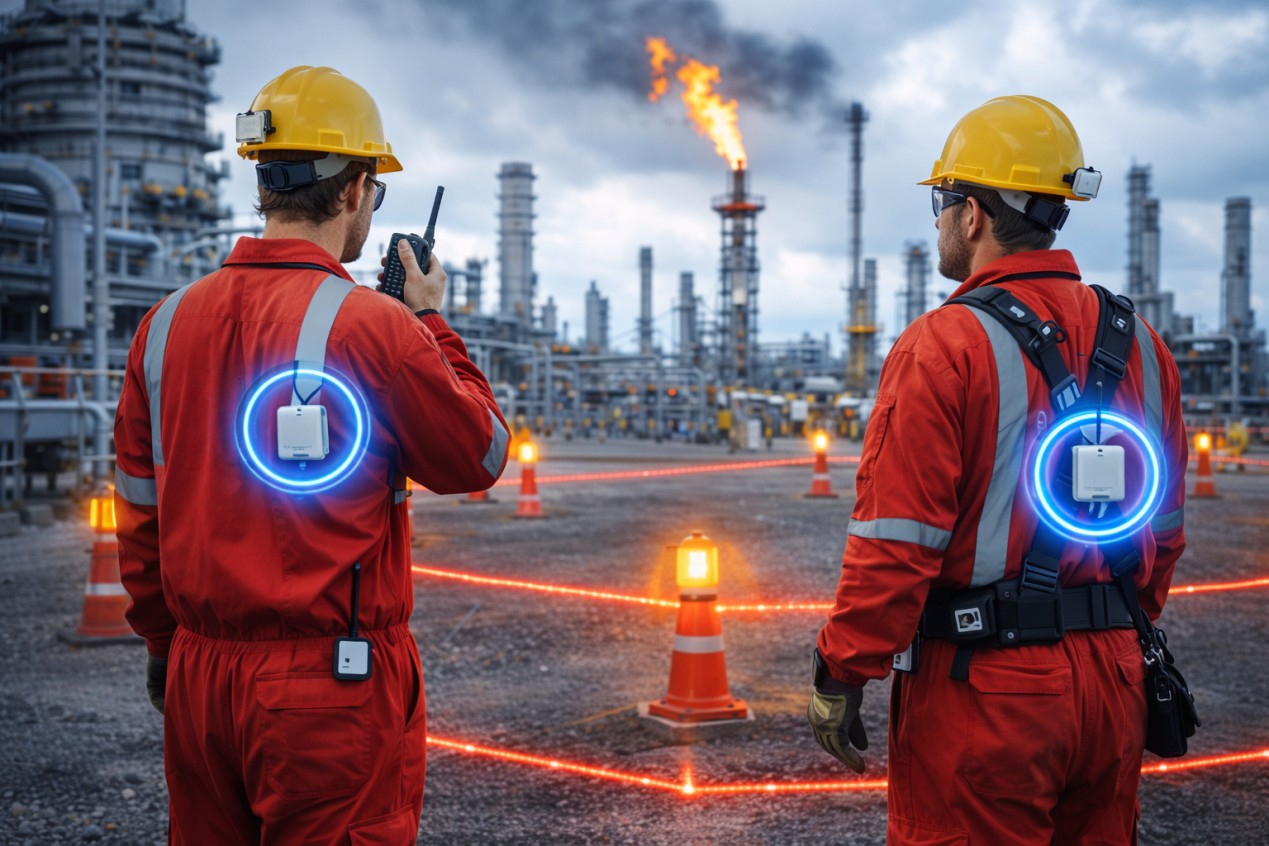
How RTLS works in oil & gas facilities:
In oil and gas operations, an RTLS system typically consists of:
Wearable RTLS tagsfor workers (helmets, badges, belts, or intrinsic safety devices)
Anchors / receivers installed across hazardous zones, processing areas, and access points
A location engine that calculates worker positions and movements
An RTLS platform that turns location data into alerts, dashboards, and safety workflows
Unlike periodic check-ins or radio calls, real-time tracking continuously reflects where workers are, how long they stay in specific zones, and whether they are entering restricted or dangerous areas. For RTLS in oil and gas, this continuous awareness is the foundation of proactive safety management.
Where RTLS improves safety:
Best-fit safety scenarios :
RTLS delivers the strongest safety value in oil and gas facilities when the following conditions exist:
Step 1 — Multiple hazardous zones
Facilities often include high-risk areas such as confined spaces, high-temperature zones, and explosive atmospheres. RTLS tracking helps enforce zone-based safety rules.
Step 2 — Lone workers or mobile teams
When workers operate alone or move frequently, supervisors lose visibility. Real-time location tracking restores situational awareness.
Step 3 — Emergency response time is critical
In incidents involving gas leaks, fires, or equipment failure, seconds matter. RTLS solutions enable faster localization of affected workers.
Step 4 — Compliance and incident reporting requirements
Safety audits and investigations require accurate records. RTLS platforms provide objective location data to support compliance and root-cause analysis.
When RTLS is not a complete solution:
RTLS for worker safety is powerful, but it is not a replacement for:
Safety training and procedures
Proper PPE and engineering controls
Maintenance and inspection programs
RTLS does not prevent hazards from existing—it helps ensure workers are not exposed longer than necessary and that incidents are detected and handled faster. Understanding this boundary is essential for realistic expectations.
RTLS technologies for oil & gas safety :
Oil and gas environments are demanding. Choosing the right RTLS solution depends on accuracy needs, environmental conditions, and safety goals.
RTLS Technology |
Strength |
Limitation |
Best Safety Use |
BLE (Bluetooth) |
Scalable, energy-efficient, suitable for large sites |
Accuracy varies with layout and metal interference |
Zone-level safety monitoring, worker presence detection |
Improved accuracy and directional tracking |
Requires careful infrastructure planning |
Hazard zone enforcement and access monitoring |
|
High precision, fast response |
Higher cost and deployment complexity |
Critical safety zones and high-risk operations |
|
RFID |
Reliable checkpoint and access tracking |
Not continuous real-time tracking |
Permit-to-work verification, gate control |
Hybrid RTLS |
Flexible and resilient |
More integration effort |
Large oil & gas facilities with mixed risks |
Practical selection rule
For site-wide worker safety visibility, BLE or Bluetooth AoA with a strong RTLS platform is often sufficient.
For high-risk zones where precise location matters, UWB can be deployed selectively.
For access and compliance checkpoints, RFID complements RTLS tracking.
In most oil and gas facilities, a hybrid RTLS system balances safety performance with cost and reliability.
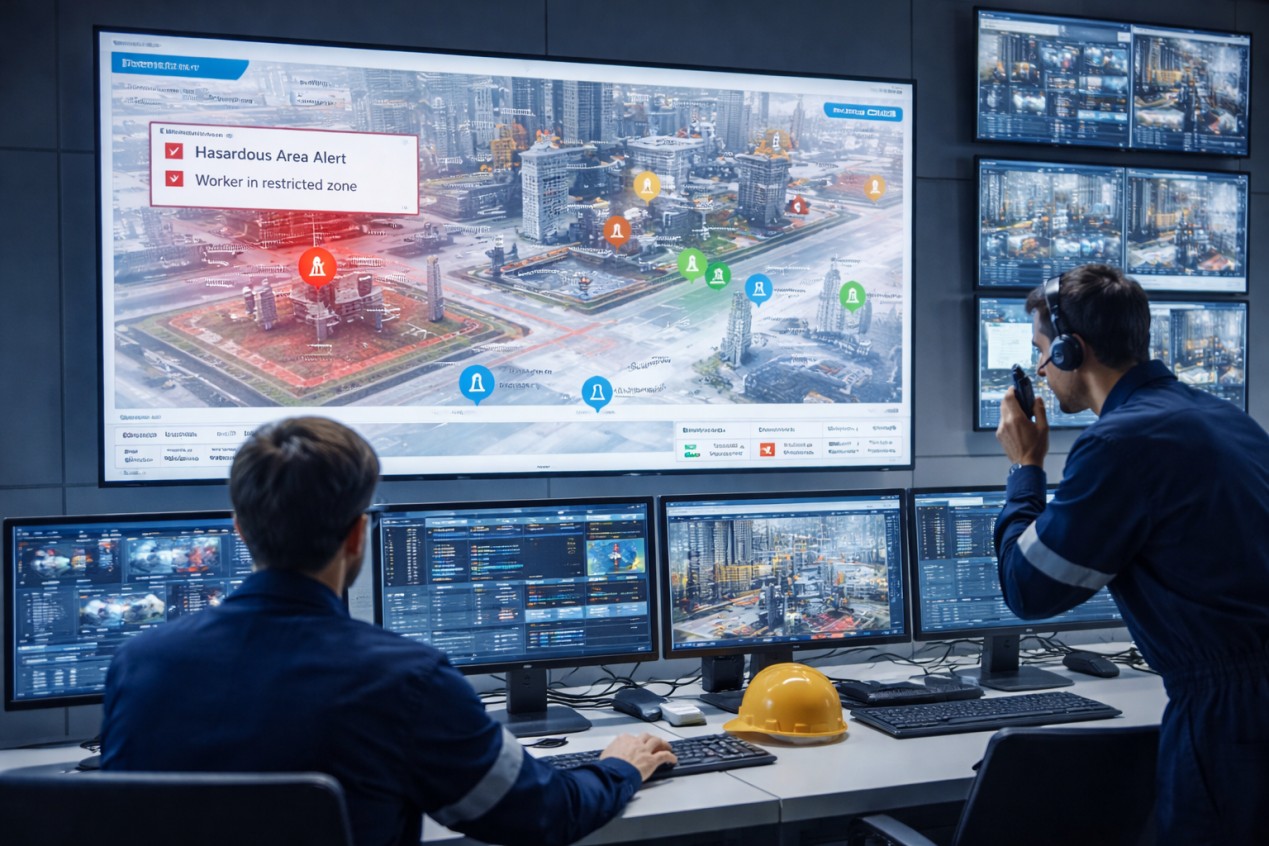
How RTLS enhances worker safety :
This section focuses on real operational safety benefits, not theoretical features.
Step 1 — Hazardous zone access control
RTLS enables digital geofencing around dangerous areas:
Detects when a worker enters a restricted zone
Verifies authorization and permits
Triggers alerts if entry is unauthorized or time-limited
This reduces reliance on manual checks and supports safer RTLS tracking of worker movement.
Step 2 — Real-time alerts for unsafe exposure
In oil and gas operations, prolonged exposure can be dangerous. RTLS platforms can:
Monitor dwell time in high-risk zones
Alert supervisors if limits are exceeded
Support rotation strategies to reduce fatigue and exposure
This turns safety policies into enforceable, real-time actions.
Step 3 — Faster emergency response and evacuation
During emergencies, knowing exactly where workers are is critical. RTLS enables:
Immediate identification of affected personnel
Faster evacuation coordination
Accurate headcounts during incidents
Instead of manual roll calls, real-time location tracking provides instant situational awareness.
Step 4 — Lone worker protection
RTLS supports lone worker safety by:
Detecting lack of movement or abnormal patterns
Triggering alerts if a worker remains stationary too long
Providing last-known location for rescue teams
This is especially important in remote or isolated oil and gas environments.
Step 5 — Post-incident analysis and safety improvement
After an incident, RTLS data supports:
Objective reconstruction of events
Identification of unsafe patterns
Continuous improvement of safety procedures
This transforms RTLS solutions into long-term safety intelligence tools.
FAQ: Common questions about RTLS for oil & gas worker safety
The following FAQs address common questions operators have when evaluating RTLS solutions for real-time tracking and worker safety in oil and gas facilities.
1) How does RTLS improve worker safety in oil and gas facilities?
RTLS improves worker safety by providing continuous, real-time visibility into worker locations across hazardous environments. A Real-Time Location System enables operators to detect unsafe conditions early, enforce access rules, and respond faster to emergencies. Instead of relying solely on procedures and manual supervision, RTLS tracking adds a digital safety layer that supports proactive risk management. Over time, RTLS platforms also help identify patterns such as frequent exposure or unsafe movement, enabling targeted safety improvements and reducing the likelihood of serious incidents.
2) Can RTLS detect if a worker enters a hazardous area?
Yes. RTLS systems can create virtual safety zones—often called geofences—around hazardous areas. When a worker wearing an RTLS tag enters one of these zones, the system can immediately trigger alerts or warnings. This supports permit-to-work enforcement and helps prevent unauthorized access. Real-time location tracking ensures that supervisors are notified instantly, rather than discovering violations after the fact. This capability is especially valuable in oil and gas facilities where hazardous zones change based on operations and conditions.
3) What is the ROI of implementing RTLS for worker safety?
ROI for RTLS in worker safety is typically measured through risk reduction rather than direct cost savings. Preventing a single serious incident can justify the investment. RTLS solutions reduce emergency response time, lower the likelihood of prolonged exposure, and improve compliance with safety regulations. Over time, organizations may also see reduced insurance costs, fewer lost-time injuries, and stronger safety performance metrics. While the financial return may be indirect, the operational and human value of improved safety is often significant in oil and gas environments.
4) How reliable is RTLS in harsh oil and gas environments?
RTLS can be reliable in harsh oil and gas environments when systems are designed specifically for industrial conditions. Challenges such as metal interference, temperature extremes, and explosive atmospheres require careful technology selection and infrastructure planning. Many RTLS solutions use ruggedized hardware and intrinsic safety designs to meet these demands. Reliability is often strongest at the zone or area level, which is sufficient for most safety use cases. Pilot testing in real operating conditions is essential before full deployment.
5) Can RTLS integrate with existing safety and monitoring systems?
Yes. RTLS platforms can integrate with existing safety systems such as gas detection, access control, emergency alarms, and control room dashboards. Integration allows location data to trigger automated responses. For example, escalating alerts during gas leaks or guiding evacuation procedures. When combined with existing monitoring systems, RTLS tracking enhances situational awareness rather than replacing established tools. Successful integration focuses on workflows and response protocols, ensuring that RTLS data leads to clear and timely action.
Conclusion:
In oil and gas facilities, worker safety depends on visibility, speed, and informed response. By using RTLS (Real-Time Location System) and real-time location tracking, operators can detect hazards earlier, respond to emergencies faster, and better protect their workforce in high-risk environments. If you are evaluating RTLS solutions for worker safety in oil and gas operations, the blueiot team can help you assess site conditions, select the right RTLS system (BLE, Bluetooth AoA, UWB, or hybrid), and start with a focused pilot that delivers measurable safety improvements before scaling across the facility.

Not Sure Which RTLS Solution Is Right for You?
Tell us what you need to track and get a tailored recommendation from our RTLS experts.

Sign-up successful!
Our team will get in touch with you shortly.


