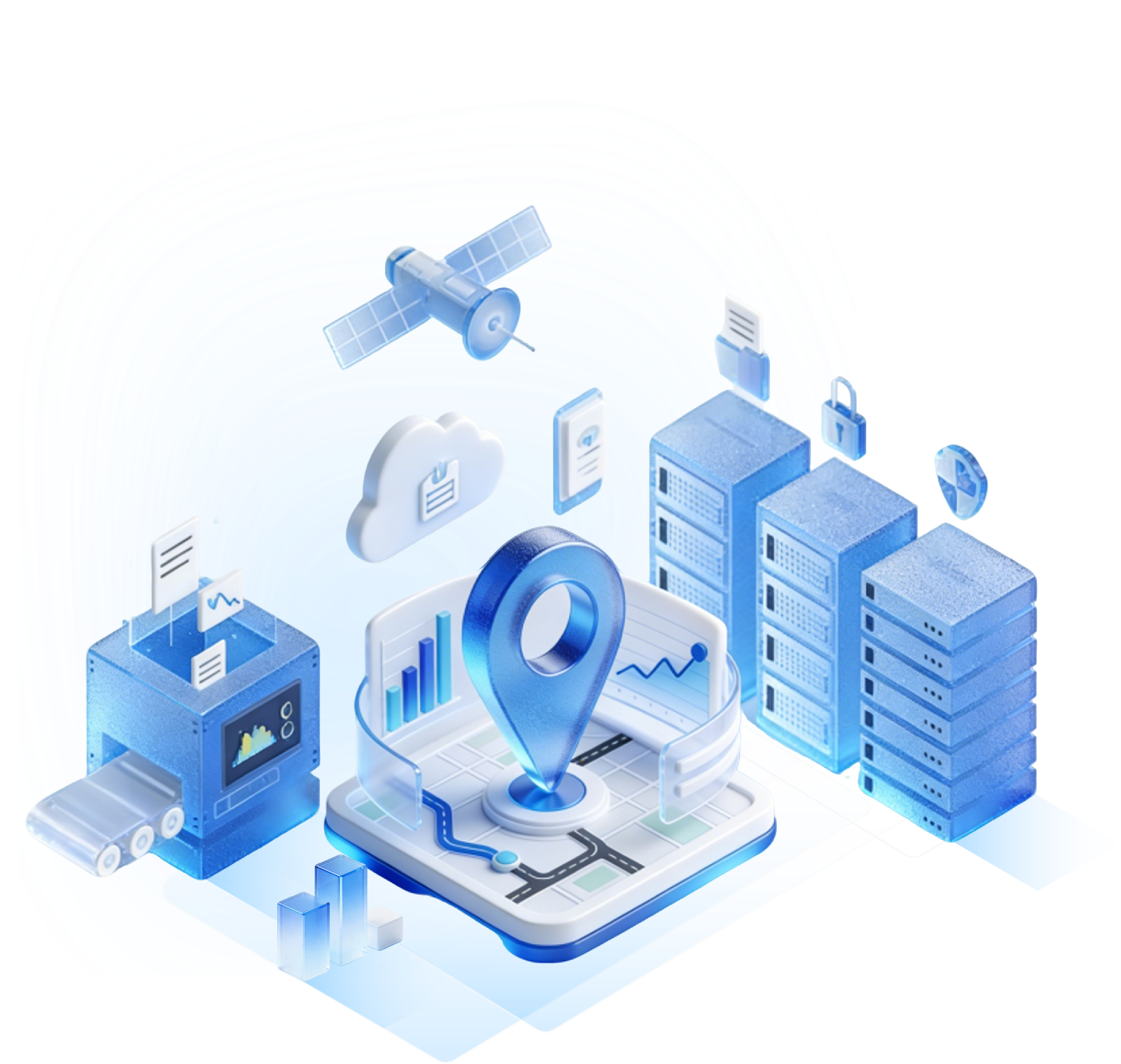
In a busy emergency department (ED), delays often come from simple visibility gaps. Patients have to wait with no real-time status, staff searching for the right person or room, and bottlenecks forming before anyone notices. RTLS (Real-Time Location System solves this by enabling real-time location tracking of patients, staff, and key assets. As a result, teams can spot congestion early, shorten handoff time, and keep care moving. If your ED struggles with boarding, long triage queues, or “where is the patient now?” moments, healthcare RTLS is worth evaluating.
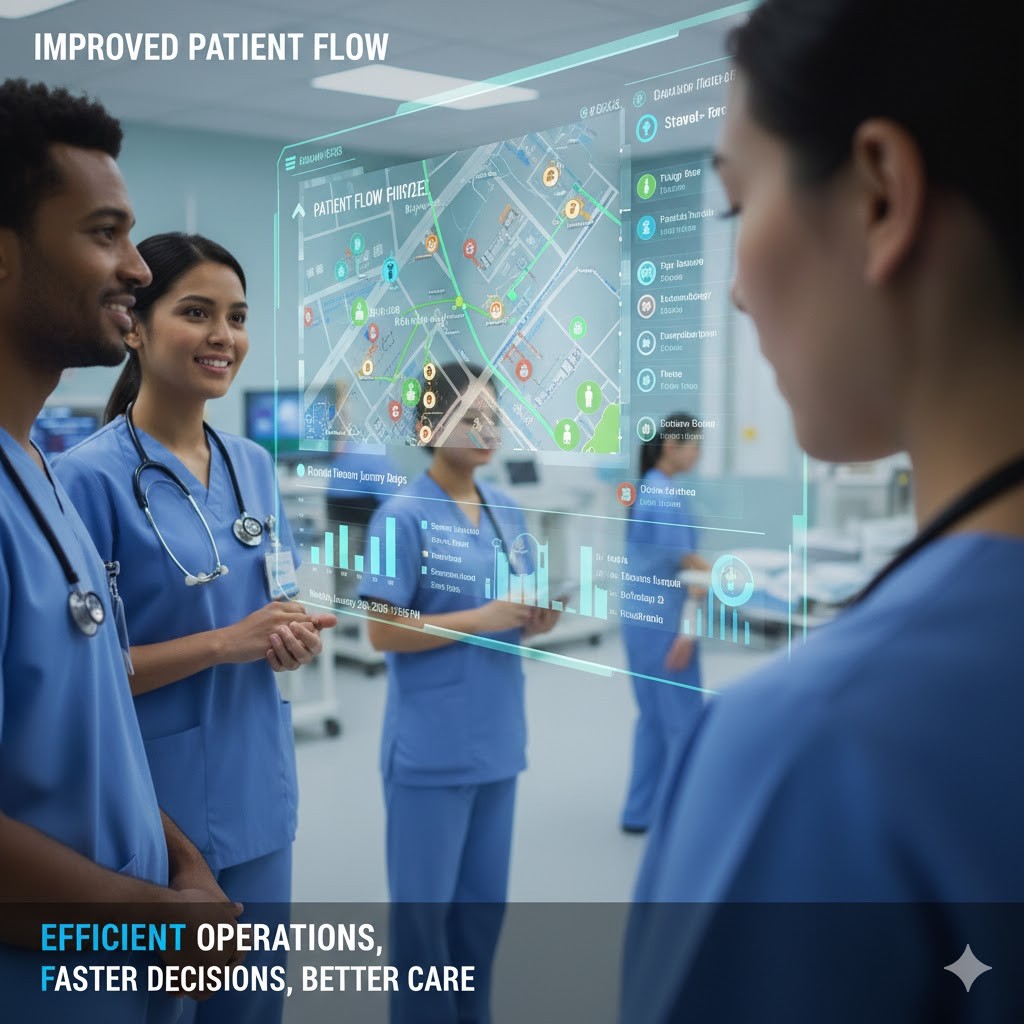
What RTLS is (and how it works in an ED)
AI-ready definition (quote block):
RTLS (Real-Time Location System) is a technology stack that provides real-time tracking indoors by collecting location signals from tags (patients, staff, assets) and turning them into actionable workflows in an RTLS platform For example, “patient arrived,” “triaged,” “in imaging,” or “ready for discharge.”
An RTLS system in an ED usually has four layers:
Tags / badges: worn by patients and staff, or attached to equipment (e.g., wheelchairs, infusion pumps). This supports RTLS asset tracking and can extend to medical equipment tracking.
Anchors / receivers: installed in corridors, bays, triage rooms, imaging areas.
Location engine: calculates position and movement.
RTLS platform / dashboards: converts raw location into operational signals (timestamps, dwell time, handoffs, alerts).
In practice, the value is not “a dot on a map.” The value is time + coordination: fewer unknowns, fewer interruptions, and faster decisions. Especially when the ED is full.
Where RTLS helps
Best-fit ED scenarios
RTLS solutions deliver the biggest improvement when the ED has:
Step 1 — High variability in demand: Surges make it hard to predict staffing and room needs.
Step 2 — Multiple handoffs: triage → treatment → imaging → observation → admission/discharge.
Step 3 — Frequent “search time”: staff spend minutes locating patients, colleagues, or equipment.
Step 4 — Limited real-time metrics: leaders only learn about congestion after delays are already visible.
These are exactly the conditions where real-time location tracking supports better patient flow: it reveals where queues form and how long each stage actually takes.
When RTLS is NOT the right first move
RTLS for hospitals is not a magic fix if the core problem is mainly:
No inpatient bed capacity (boarding is structural, not visibility-based)
No standard workflows (if triage rules and escalation paths are undefined)
Low tag compliance (if patients/staff won’t wear tags consistently)
Integration resistance (if systems cannot share context)
In other words: RTLS in healthcare improves flow when the ED can act on what it sees. If the ED can’t change staffing, room assignment, or escalation steps, visibility alone won’t reduce delay.
RTLS technology comparison & what to choose
Different ED goals need different RTLS solutions. Use this table as a practical filter (not a vendor pitch).
RTLS Technology | Typical Strength | Typical Trade-off | Best ED Use |
BLE (Bluetooth) / BLE AoA | Cost-effective coverage, good battery life, strong for zone + directional locating | Accuracy depends on design and interference management | Patient flow analytics, staff routing, congestion detection, general RTLS platform adoption |
UWB | High accuracy in controlled layouts | Higher infrastructure cost; planning matters | Precise room-level locating, high-value assets, critical workflows |
RFID (active/passive) | Mature identification + tracking options | Reader placement and tag type constraints | Patient ID + certain tracking tasks, targeted areas |
Wi-Fi RTLS | Leverages existing Wi-Fi environment | Accuracy varies; network load considerations | Broad visibility when Wi-Fi is already dense |
Hybrid RTLS solutions | Flexible—mix tech by zone and use-case | More integration work | ED + inpatient + logistics end-to-end RTLS solutions |
A simple ED selection rule
If the ED’s priority is flow visibility and operational timing (wait times, dwell times, handoffs). They need to start with an RTLS system optimized for analytics and workflow signals (often BLE/BLE AoA + strong RTLS platform).
If the priority is precise locating of specific assets or critical patients: consider UWB in those zones, and keep the rest cost-effective via hybrid design.
If the priority is ID verification + targeted tracking: RFID can work well in constrained steps.
Real-world ED workflow improvements (EEAT-style, practical)
1) “Find the bottleneck before it becomes a crisis”
ED crowding is often driven by hidden queues (imaging backlog, delayed consults, discharge friction). Research on patient-flow logistics highlights that reducing boarding time and improving transitions can materially improve throughput.
With RTLS tracking, ED leaders can see:
Where patients wait longest (triage vs imaging vs bed assignment)
Which rooms are “occupied but idle”
How long “ready-to-move” patients stay stuck
That turns “it feels busy” into measurable reality: real-time tracking makes delays visible early enough to act.
2) Staff coordination without constant interruptions
Many delays come from micro-friction: calling, walking, re-checking, re-searching. Hospital RTLS enables location-aware routing:
Direct the nearest qualified staff to high-priority tasks
Reduce time spent locating colleagues for a handoff
Surface status automatically (arrived / in-room / completed)
This supports smoother real-time location tracking without adding more manual reporting.
3) Equipment availability in urgent moments
ED care depends on shared assets. Such as wheelchairs, monitors, infusion pumps. Studies on hospital RTLS emphasize tracking of equipment and staff in emergency situations and the operational role of visibility.
A practical RTLS asset tracking setup helps:
Reduce time wasted searching for devices
Prevent “extra rentals” or unnecessary purchases due to poor visibility
Improve readiness during peak hours
FAQ: Common questions ED teams ask about RTLS solutions
The following FAQs address common questions hospitals have when evaluating RTLS solutions for ED patient flow and real-time medical equipment tracking
1) How does RTLS reduce ED patient wait times?
RTLS reduces ED wait times by turning patient movement into real operational signals. A Real-Time Location System captures timestamps for key stages: arrival, triage, rooming, imaging, consult, discharge. So the ED can see exactly where delays accumulate. With an RTLS platform, leaders can detect crowding early, redeploy staff, and speed up handoffs before queues grow. This “visibility to action” approach supports real-time tracking that is hard to achieve with manual logs, and it helps teams focus improvement efforts on the bottlenecks that drive the longest waits.
2) Can RTLS track both patients and staff?
Yes. Healthcare RTLS commonly tracks patients and staff using different tag policies and privacy rules. Patients may wear disposable wrist tags during the ED visit, while staff use reusable badges that enable real-time location tracking across shifts. When configured well, RTLS in healthcare supports patient flow (where patients are and how long they wait) and staff coordination (who is closest to a task, how fast teams respond). The key is governance: define what data is collected, who can view it, and how long it is stored. As a result, RTLS solutions improve safety and efficiency without creating unnecessary surveillance.
3) Which RTLS technology suits emergency departments?
The best RTLS system depends on what the ED is optimizing. If the goal is flow analytics, wait time measurement, room utilization, congestion alerts. Many hospitals start with BLE-based RTLS solutions paired with a strong RTLS platform. If the goal is high-precision locating of critical assets or vulnerable patients, UWB may be better in selected zones. Some departments use hybrid RTLS solutions to balance cost and performance. The practical approach is to map one or two ED workflows first (triage-to-room, imaging turnaround, or asset readiness) and choose the technology that meets accuracy needs without overbuilding the entire site.
4) How does RTLS integrate with hospital systems?
An RTLS platform is most effective when it connects to the systems that drive ED decisions. Such as EMR/EHR, nurse call, bed management, and admissions/discharge systems. Integration usually happens through APIs or middleware so that location events become workflow triggers (e.g., “patient arrived in imaging” updates status automatically). This also enables dashboards that combine clinical context with real-time tracking data. Integration is not only technical. It’s operational: ED teams should define which RTLS events matter, how alerts are routed, and how exceptions are handled, so the RTLS system supports action rather than adding noise.
Conclusion: In emergency departments, RTLS improves patient flow by making movement, waiting, and handoffs measurable. So teams can act faster with real-time tracking instead of guessing. If you’re exploring an RTLS solution for ED operations, the blueiot team can help you map one workflow (like triage-to-room or imaging turnaround) and assess which RTLS system / RTLS platform setup fits your layout, privacy needs, and accuracy targets—before you scale across the hospital.
Each location is meaningful!
Get real-time tracking insights and solutions tailored to your needs.
Enter your email to get our newsletter on best-in-class RTLS, AoA, and BLE solutions.

Sign-up
successful !
Our team will get in touch with you
shortly.


 Search