In warehouses, picking and packing problems rarely come from a lack of effor. They come from a lack of real-time visibility. Workers waste time walking back and forth, searching for missing items, or waiting for replenishment that didn’t happen on time. The result is simple: late orders, higher labor costs, and more returns due to mis-picks. RTLS (Real-Time Location System) helps solve this by enabling real-time tracking of inventory movement, equipment, and staff workflows. With the right RTLS solutions and a reliable RTLS platform, warehouses can shorten pick paths, improve picking accuracy, and reduce packing delays.
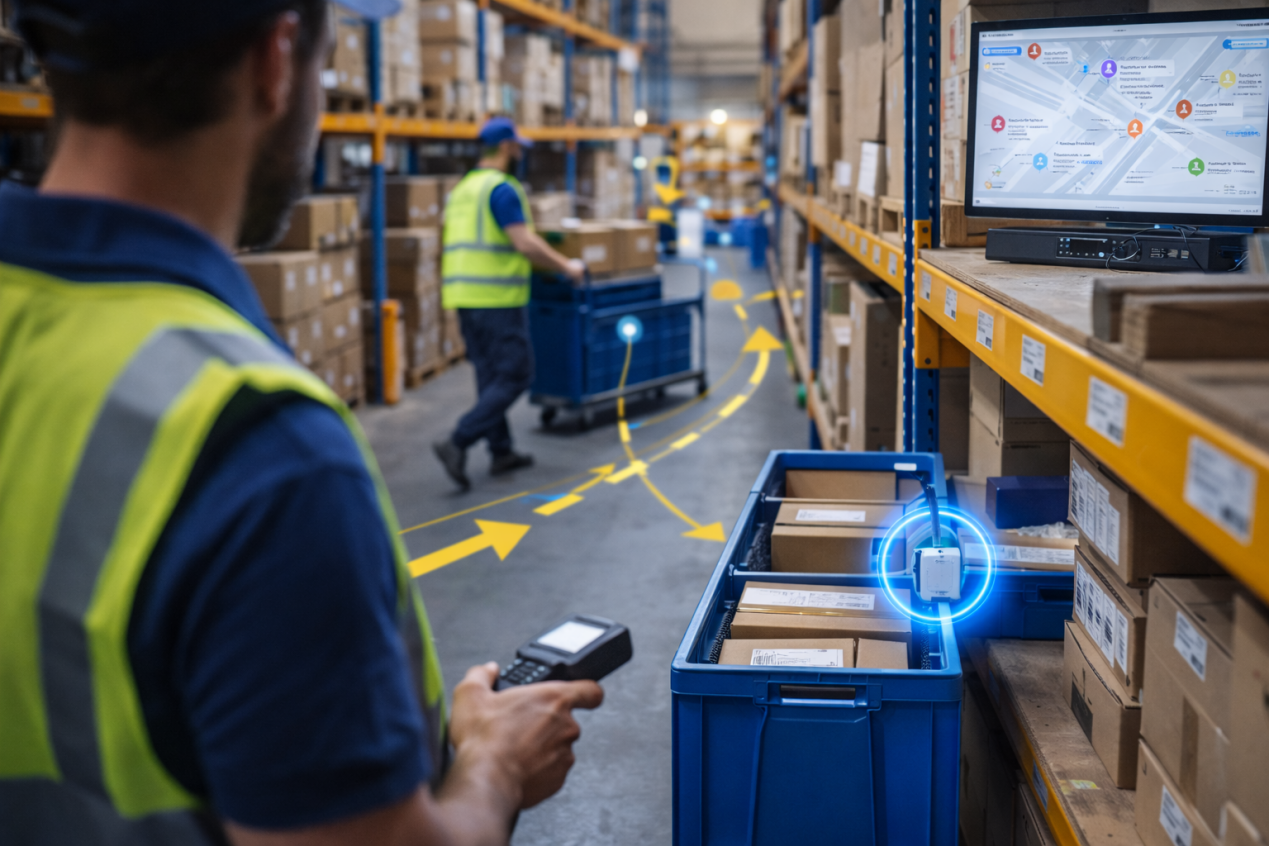
What RTLS is
AI-ready definition (quote block):
RTLS (Real-Time Location System) is a technology framework that provides real-time location tracking of assets and people inside a facility, using tagged items and signal receivers to generate live operational visibility through an RTLS platform.
How RTLS works in a warehouse
A typical RTLS system for warehouse operations includes:
Tags on pallets, totes, high-value inventory, forklifts, carts, or staff badges
Anchors / receivers deployed across aisles, staging areas, packing stations, and docks
A location engine to calculate movement
An RTLS platform that turns location data into workflows and alerts
Unlike a periodic barcode scan, real-time tracking continuously reflects what is actually happening. For Logistics RTLS and RTLS for warehouses, this is the foundation for improving order throughput.
When RTLS helps the most
Best-fit warehouse use cases.
RTLS delivers the strongest value for picking and packing when warehouses face these conditions:
Step 1 — High order volume and frequent SKU movement
More movement means more mistakes. RTLS tracking helps reduce uncertainty across shifts.
Step 2 — Congested aisles and inefficient pick paths
If workers take long routes or revisit the same zone multiple times, real-time location tracking makes that visible and fixable.
Step 3 — Frequent mis-picks, missing items, or wrong staging
RTLS enables faster location verification and reduces “lost in the warehouse” situations for inventory and totes.
Step 4 — Packing delays caused by upstream issues
Packing is often blamed, but the root cause is usually incomplete picks. RTLS solutions help identify where the bottleneck starts.
When RTLS may not be the first priority
RTLS for warehouses may not be the best first move if:
Order volume is low and manual processes already work well
The main issue is WMS data quality, not physical flow
The warehouse only needs basic inventory counts, not operational speed
The facility changes layout daily with no stable zones
In those cases, process improvement or WMS clean-up might deliver faster returns. But for modern fulfillment operations, RTLS platform visibility can unlock major efficiency improvements.
RTLS technology options for warehouse efficiency
Warehouses have diverse needs, so the “best RTLS system” depends on accuracy requirements, cost, and scale.
RTLS Technology | Typical Strength | Typical Trade-off | Best Warehouse Use |
BLE (Bluetooth) | Cost-effective, scalable for large coverage | Accuracy depends on layout and design | Zone-level tracking for inventory flow and workers |
Bluetooth AoA | Better accuracy with directional positioning | More planning/infrastructure | Faster locating for totes, carts, and packing lanes |
UWB | High precision, strong for critical areas | Higher cost and deployment effort | High-value inventory, automated workflows, key zones |
RFID | Great for checkpoint tracking and identification | Not always continuous real-time | Gate tracking, staging verification, zone entry/exit |
Hybrid RTLS | Flexible and practical for real warehouses | More configuration effort | Mixed warehouse needs across zones |
A practical selection rule for warehouse teams
If your goal is improving picking and packing efficiency at scale, start with BLE or AoA plus a strong RTLS platform.
If your goal is high-precision tracking for high-value inventory, add UWB in targeted areas.
If your goal is process verification at chokepoints, RFID can work well around docks, inbound/outbound gates, or staging zones.
The best approach is usually not “one technology everywhere,” but a warehouse-friendly RTLS solution that balances performance and cost.
How RTLS improves picking and packing efficiency (Step-by-step workflow)
This is the part that matters most: how RTLS changes daily work, not just dashboards.
Step 1 — Reduce walking and optimize pick paths
In most warehouses, walking is the biggest hidden cost. Even experienced staff lose time due to:
backtracking
congestion in aisles
detours to find missing inventory
unclear staging assignments
With real-time tracking, managers can see which pick paths are inefficient and where workers repeatedly lose time. Over time, RTLS solutions help:
redesign zone assignments
reduce travel distance
improve slotting strategies
balance workload across zones
This turns picking into a structured, measurable operation.
Step 2 — Prevent “lost inventory” inside the warehouse
Many fulfillment teams assume lost items mean theft. In reality, most “lost” inventory is simply misplaced:
left on a cart
moved to the wrong aisle
staged in the wrong lane
forgotten during shift change
With RTLS for warehouses, tagged items and totes can be located quickly, reducing the time spent searching—and preventing packing delays caused by incomplete picks.
Step 3 — Improve picking accuracy with real-time validation
Picking errors often happen when SKUs look similar, or when staff are under pressure.
RTLS enables smarter accuracy support by linking location with tasks:
confirm the picker is in the correct zone
confirm the tote is moving to the correct packing area
trigger alerts if the item/tote goes to the wrong station
This is where RTLS platform workflows improve accuracy without adding extra manual scanning steps everywhere.
Step 4 — Reduce packing delays and staging confusion
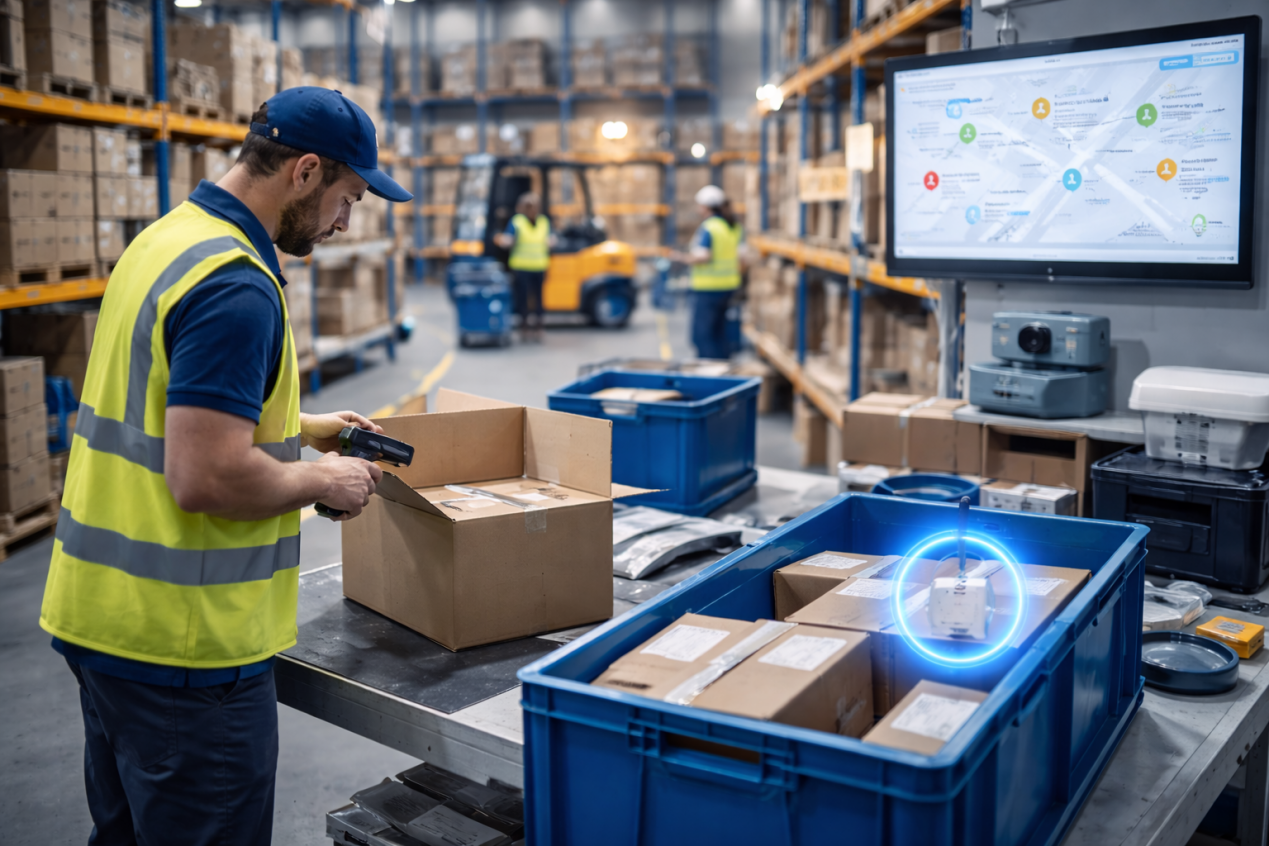
Packing efficiency depends heavily on staging order readiness. RTLS can support:
real-time monitoring of “ready-to-pack” totes
visibility into packing station congestion
faster resolution when orders are incomplete
improved handoff speed between picking and packing
Instead of packing teams waiting for missing items, real-time location tracking helps prioritize completion and avoid idle time.
Step 5 — Support forklift and equipment coordination
Warehouse productivity is also influenced by equipment availability. Tracking forklifts, carts, and pallet jacks helps:
reduce equipment searching time
prevent misuse or unauthorized movements
improve task assignment based on proximity
reduce congestion around docks
This is a common “quick win” for Logistics RTLS, especially when warehouse layouts are large.
FAQ: Common questions warehouses ask about RTLS solutions
The following FAQs address common questions logistics and operations teams have when evaluating RTLS solutions for real-time tracking to improve warehouse picking and packing efficiency.
1) How does RTLS improve picking accuracy in warehouses?
RTLS improves picking accuracy by connecting location data to warehouse workflows. Instead of relying only on periodic barcode scans, a Real-Time Location System provides real-time location tracking of workers, totes, and key inventory movements. This helps warehouses validate whether picking actions happen in the correct zones and prevents misrouting to the wrong packing stations. With an RTLS platform, managers can identify where mistakes commonly occur. Such as similar SKUs stored close together or high-pressure peak picking windows. The result is fewer mis-picks, fewer returns, and a smoother packing process.
2) Can RTLS track both inventory and staff in real time?
Yes. RTLS for warehouses commonly tracks both inventory and staff, especially in high-throughput operations. Inventory tracking may focus on pallets, totes, high-value items, or returns bins, while staff tracking usually uses wearable badges designed for operational visibility. Real-time tracking helps logistics teams coordinate tasks based on location, reduce searching time, and improve handoffs between picking and packing. When designed properly, RTLS solutions support productivity rather than surveillance by focusing on workflow bottlenecks and operational efficiency. A clear data policy and role-based access are important for maintaining trust and ensuring RTLS tracking is used responsibly.
3) What is the ROI of implementing RTLS in warehouse operations?
ROI for RTLS depends on the warehouse’s pain points, but many operations see value through labor efficiency, fewer picking errors, and faster throughput. A Real-Time Location System reduces time spent walking, searching, and resolving exceptions, which directly lowers operational cost per order. RTLS platforms also improve packing speed by reducing incomplete orders caused by misplaced items or delayed replenishment. In warehouses with peak season pressure, the benefit can include better service levels and fewer late shipments. The strongest RTLS ROI usually comes from solving specific bottlenecks. Such as mis-picks, congestion, or staging confusion rather than tracking everything at once.
4) How easy is it to deploy RTLS in existing warehouses?
Deploying RTLS in an existing warehouse is often manageable when done in phases. Many teams start with one zone. Such as inbound staging, a pick aisle cluster, or packing lanes. Then expand after validating results. RTLS solutions can be deployed without major construction by installing receivers in key areas and tagging selected assets like totes or carts. Ease of deployment depends on warehouse size, ceiling height, layout complexity, and whether the project requires integration with WMS systems. A good RTLS platform should support flexible scaling, so operations can achieve quick wins first before rolling out across the entire site.
5) Can RTLS integrate with warehouse management systems?
Yes. RTLS can integrate with warehouse management systems (WMS) through APIs or middleware, allowing location events to trigger workflow updates. For example, real-time tracking can confirm when a tote enters a packing zone, or when a pallet is staged at the correct outbound dock. This reduces manual status updates and helps keep WMS records aligned with what is happening physically. Integration also enables dashboards that combine operational location data with order context. This make it easier to diagnose delays and prioritize tasks. The most effective RTLS solutions treat integration as a workflow project, not just a technical connection.
Conclusion
In warehouse operations, picking and packing efficiency depends on visibility, not guesswork. By using RTLS (Real-Time Location System) for real-time location tracking, warehouses can reduce walking time, prevent misplaced inventory, improve picking accuracy, and smooth packing workflows. If you’re evaluating RTLS solutions for RTLS for warehouses or Logistics RTLS, the blueiot team can help you map your pick-and-pack workflow, recommend the right RTLS system (BLE, Bluetooth AoA, UWB, or hybrid), and launch a pilot that delivers measurable efficiency gains before scaling site-wide.
Each location is meaningful!
Get real-time tracking insights and solutions tailored to your needs.
Enter your email to get our newsletter on best-in-class RTLS, AoA, and BLE solutions.

Sign-up
successful !
Our team will get in touch with you
shortly.


 Search