


 Search


How RTLS Makes Warehouse Supply Chains More Efficient
February 04, 2026
Warehouse supply chains depend on speed, accuracy, and coordination. Yet many delays still come from basic visibility gaps: inventory that cannot be found, pallets staged in the wrong area, or workers spending time searching instead of fulfilling orders. These inefficiencies ripple through the supply chain, affecting delivery times and customer satisfaction.
RTLS (Real-Time Location System) addresses this challenge by enabling real-time asset tracking of inventory, equipment, and workflows inside the warehouse. With the right RTLS solutions and a scalable RTLS system, warehouses can improve supply chain efficiency by turning physical movement into actionable data through RTLS asset tracking.
What RTLS Is
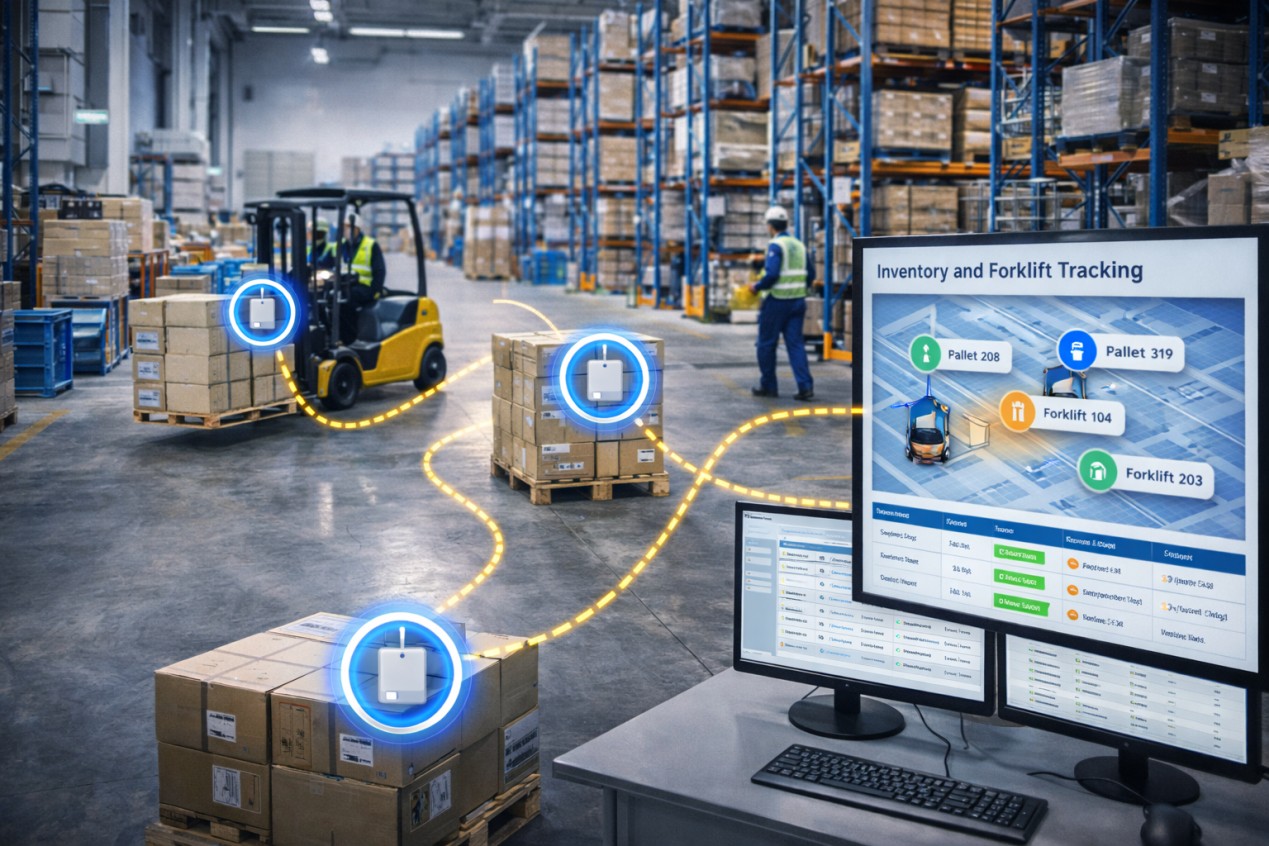
RTLS is a location-based technology that continuously tracks the real-time position of physical assets inside a facility. In warehouse operations, RTLS tracking is commonly used for pallets, totes, forklifts, and reusable containers to support asset tracking RTLS use cases across the supply chain.
Unlike barcode or RFID-only approaches, an RTLS system provides persistent visibility, making it a foundation for modern warehouse asset tracking and operational optimization.
Where RTLS improves supply chain efficiency: Best-fit warehouse scenarios:
RTLS delivers the strongest impact on warehouse supply chains when the following conditions exist:
Step 1 — High inventory turnover
Fast-moving goods increase the risk of misplacement.RTLS trackingensures inventory remains visible throughout movement.
Step 2 — Complex warehouse layouts
Large or multi-zone warehouses make manual tracking difficult. Real-time location tracking restores operational awareness.
Step 3 — Frequent picking, packing, and staging delays
When orders wait due to missing items, RTLS solutions help identify bottlenecks quickly.
Step 4 — Need for real-time coordination
Supply chains benefit when inbound, storage, and outbound processes stay aligned. RTLS platforms support this coordination.
When RTLS may not be the first priority:
RTLS may not be essential if:
Inventory volumes are low and stable
The warehouse layout is simple and compact
Delays are driven by upstream supply issues rather than warehouse operations
Applying RTLS where visibility gaps exist ensures meaningful efficiency gains.
How RTLS Works in Warehouse Environments
In a warehouse supply chain context, an RTLS system typically includes:
RTLS tags attached to pallets, totes, containers, forklifts, or reusable assets
Anchors / receivers installed across inbound docks, storage aisles, picking zones, and outbound staging areas
A location engine that calculates positions and movement in real time
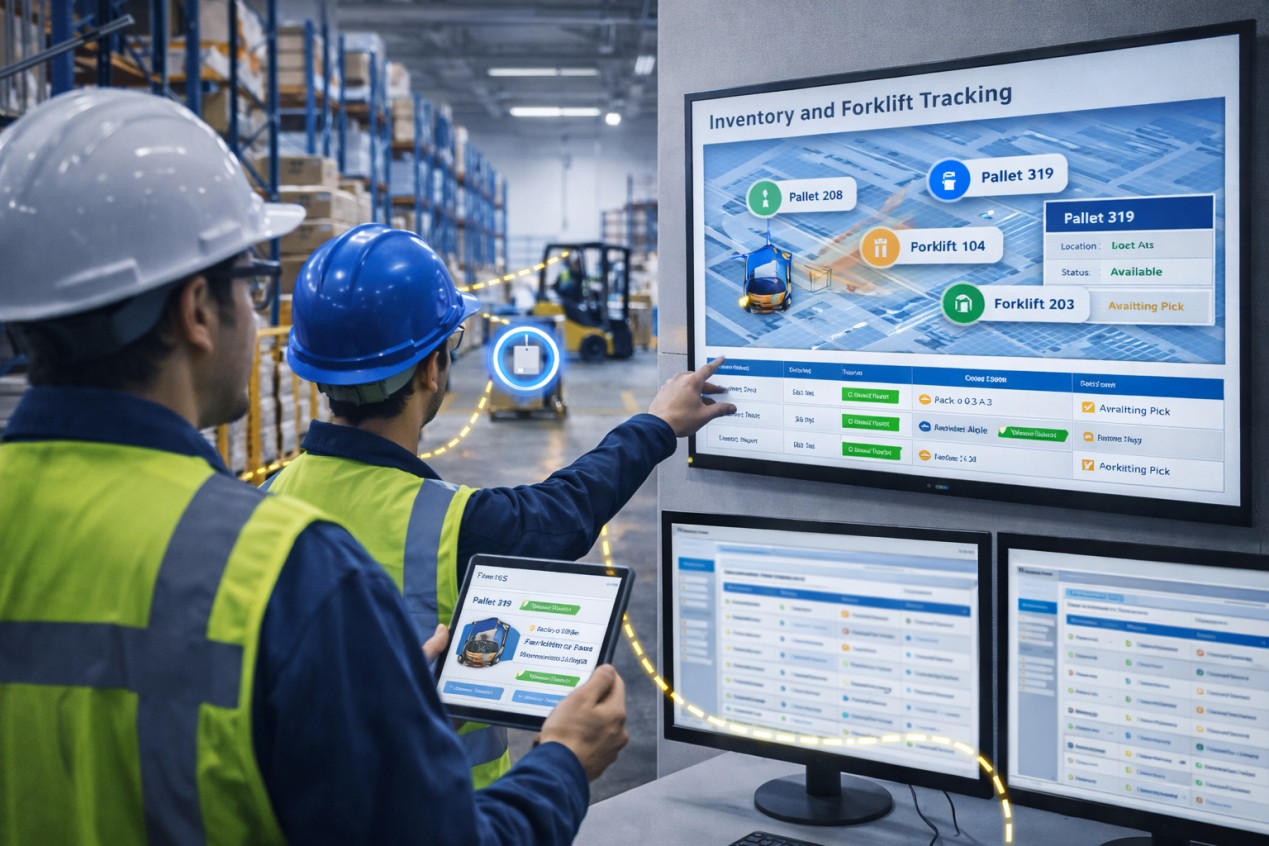
An RTLS platform that visualizes inventory flow and supports alerts, analytics, and RTLS asset tracking insights
Unlike periodic barcode scans, real-time RTLS tracking reflects where inventory and assets actually are at every moment. For RTLS in warehouses, this level of visibility is essential to improving supply chain reliability and operational efficiency.
RTLS technology options for warehouse supply chains:
Different warehouses require different RTLS approaches.
RTLS Technology |
Key Strength |
Limitation |
Best Warehouse Use |
BLE (Bluetooth) |
Scalable and cost-effective |
Moderate accuracy |
Zone-level inventory visibility |
Higher accuracy and directionality |
Infrastructure planning needed |
Tracking movement in dense picking areas |
|
High precision and low latency |
Higher cost |
High-value or time-critical assets |
|
RFID |
Reliable checkpoint tracking |
Not continuous real-time |
Dock doors and transfer points |
Hybrid RTLS |
Flexible and adaptable |
Integration effort |
Large, complex warehouses |
Practical selection rule:
Use BLE or AoA for warehouse-wide inventory visibility.
Deploy UWB selectively where precision is critical.
Combine RFID for access or checkpoint validation.
Most warehouse supply chains benefit from a hybrid RTLS system designed around workflow priorities.
How RTLS Makes Warehouse Supply Chains More Efficient
This section focuses on operational improvements enabled by RTLS tracking, not just technology features.
Step 1 — Improve Real-Time Inventory Visibility
RTLS provides continuous insight into where inventory is located:
At inbound docks
In storage or picking zones
In outbound staging
This asset tracking RTLS visibility reduces time spent searching and prevents delays caused by misplaced goods.
Step 2 — Speed Up Picking and Packing
With RTLS asset tracking, pickers can locate items faster and follow optimized routes. RTLS platforms reduce unnecessary walking and ensure items arrive at packing stations on time.
Step 3 — Reduce Supply Chain Delays
RTLS solutions help identify where delays occur—whether inventory is stuck in staging or equipment is unavailable. Real-time RTLS tracking enables early intervention before delays cascade.
Step 4 — Improve Asset Utilization
Forklifts, carts, and reusable containers are often underutilized due to poor visibility. RTLS tracking reveals idle assets and supports smarter allocation decisions.
Step 5 — Enable Data-Driven Supply Chain Optimization
Over time, an RTLS system generates data on movement patterns, congestion points, and delays. Warehouses use these insights to redesign layouts, adjust staffing, and continuously improve supply chain performance.
FAQ: Common Questions About RTLS in Warehouse Supply Chains
1) How does RTLS improve warehouse inventory visibility?
RTLS improves inventory visibility by providing continuous, real-time location data for pallets, totes, and containers. Through RTLS asset tracking, warehouses can see where inventory is at all times instead of relying on periodic scans. This reduces search time, prevents misplacement, and improves supply chain reliability.
2) Can RTLS speed up picking and packing operations?
Yes. RTLS tracking speeds up picking and packing by helping workers locate items quickly and follow optimized routes. Over time, RTLS platforms identify inefficiencies and further streamline workflows.
3) How does RTLS help reduce supply chain delays?
RTLS reduces delays by identifying bottlenecks early. When inventory or equipment is delayed, RTLS asset tracking allows teams to locate issues instantly and take corrective action.
4) Is RTLS easy to deploy in existing warehouse setups?
RTLS deployment is typically manageable when implemented in phases. Many warehouses start with high-impact zones using targeted RTLS solutions, then expand warehouse-wide.
5) Can RTLS integrate with WMS or ERP systems?
Yes. Modern RTLS systems integrate with WMS or ERP platforms through APIs, enabling real-time RTLS tracking data to support inventory updates, task assignments, and performance reporting.
Conclusion:
Warehouse supply chain efficiency depends on visibility, coordination, and speed. By adopting RTLS (Real-Time Location System) for real-time tracking of inventory and assets, warehouses can reduce delays, speed up picking and packing, and improve overall supply chain performance. If you are evaluating RTLS solutions for RTLS in warehouses, the blueiotteam can help assess your operations, select the right RTLS system (BLE, Bluetooth AoA, UWB, or hybrid), and start with a focused pilot that delivers measurable efficiency improvements before scaling warehouse-wide.
About Blueiot:
Blueiot is a global leader in real-time location systems (RTLS), delivering ultra-precise indoor tracking powered by Bluetooth Angle-of-Arrival technology.With accuracy down to 0.1 meters, Blueiot enables organizations to gain real-time visibility into people, assets, and workflows across complex indoor environments.
Trusted across manufacturing, healthcare, logistics, retail, and smart buildings, Blueiot helps businesses boost efficiency, improve safety, and make faster, data-driven decisions—turning location data into measurable operational value.
Looking to improve visibility and operational performance in your industry?
Contact Blueiot to explore a tailored RTLS solution.

Not Sure Which RTLS Solution Is Right for You?
Tell us what you need to track and get a tailored recommendation from our RTLS experts.

Sign-up successful!
Our team will get in touch with you shortly.


