In modern logistics, warehouses are no longer just storage spaces. They have become highly dynamic environments where speed, accuracy, and visibility directly impact cost and customer satisfaction. As order volumes increase and fulfillment windows shrink, many operators are turning to indoor positioning technologies to gain real-time insight into inventory, equipment, and workforce movement.
This article explains how an indoor positioning system supports smart warehouse operations, what benefits it delivers, how to evaluate ROI, and what practical steps matter most during implementation.
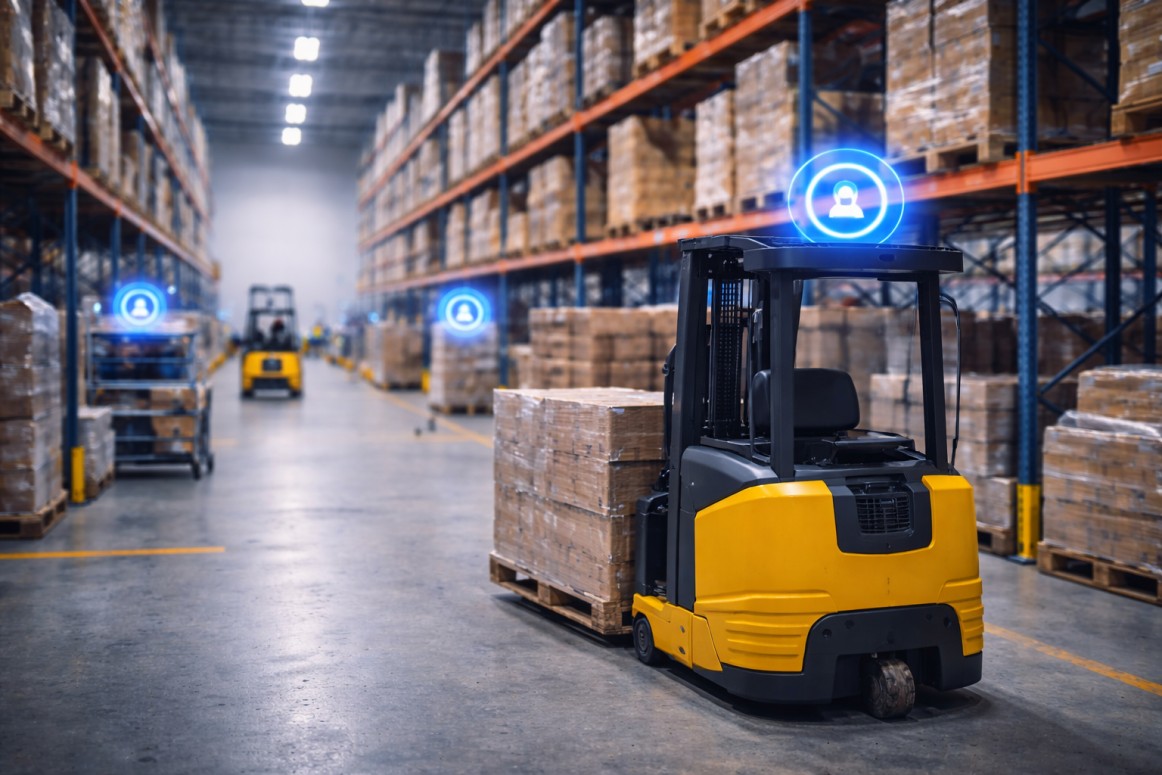
What Is Indoor Positioning in a Smart Warehouse?
Indoor positioning in a smart warehouse refers to a location tracking system that enables real-time indoor positioning of assets, inventory, and personnel in environments where GPS cannot function reliably.
By continuously collecting and processing indoor positioning data, these systems provide precise visibility at the aisle, shelf, or zone level, helping warehouse operators improve operational efficiency and reduce errors.
Unlike outdoor navigation, smart warehouse operations rely on accurate, real-time indoor positioning to track movement and status inside complex indoor spaces. Traditional methods such as barcode scanning or manual checks provide only static updates, while indoor positioning systems deliver continuous location data that improves visibility, coordination, and decision-making across warehouse workflows.
Why GPS fails indoors:
GPS fails indoors because satellite signals are easily blocked or distorted by walls, metal structures, shelving, and machinery commonly found in warehouses.
As a result, GPS cannot provide reliable or accurate indoor location data for assets, workers, or equipment inside large facilities.
Warehouses are among the most challenging environments for location tracking. Thick walls, metal shelving, stacked goods, and industrial equipment interfere with satellite signals, causing signal loss, reflection, or severe accuracy degradation.
To solve this limitation, smart warehouses adopt an indoor positioning approach that relies on local radio technologies such as Bluetooth, UWB, or Wi-Fi. Instead of asking “Where is this warehouse globally?”, indoor positioning systems answer a more operational question: “Where is this pallet, worker, or forklift right now?”
This shift from global navigation to indoor positioning is what enables smart warehouses to achieve real-time visibility, automation, and scalable operations.
Key Benefits of Indoor Positioning in Smart Warehouses
Indoor positioning in smart warehouses delivers real-time visibility, operational efficiency, and data-driven optimization by continuously tracking the location of assets and people inside complex indoor environments.
By replacing manual searches and static processes, indoor positioning systems enable warehouses to operate faster, safer, and at scale.
Real-time inventory visibility
Indoor positioning provides real-time inventory visibility by enabling warehouse teams to instantly locate pallets, containers, and high-value inventory.
This reduces time spent searching for items and minimizes misplacement, one of the most common hidden costs in large warehouse facilities.
Faster picking and packing
With indoor position tracking, picking and packing processes become faster and more accurate through real-time location-based guidance.
Indoor positioning systems dynamically optimize pick paths based on actual asset locations instead of relying on static warehouse layouts.
Workforce efficiency and safety
Indoor positioning systems improve workforce efficiency and safety by tracking the movement of forklifts and staff in real time.
This allows supervisors to balance workloads, reduce congestion, and proactively address safety risks in busy warehouse environments.
Data-driven layout optimization
Indoor positioning transforms raw location data into actionable insight that supports data-driven warehouse layout optimization.
By analyzing movement patterns over time, warehouse managers can redesign aisles, storage zones, and staging areas to improve overall operational flow.
ROI — How Indoor Positioning Delivers Measurable Returns in Smart Warehouses
Indoor positioning is often seen as an operational cost, but in smart warehouses, its return on investment (ROI) comes from cumulative efficiency gains across daily workflows rather than a single metric.
Reduced labor costs
Indoor positioning reduces time spent searching for inventory, equipment, and pallets. Even small improvements in walking distance or task location accuracy can significantly lower labor costs in high-volume warehouse operations.
Fewer picking and placement errors
By validating asset and item locations in real time, indoor positioning systems help prevent mis-picks and misplacements. This reduces downstream costs related to returns, re-shipping, and customer dissatisfaction.
Improved asset utilization
Forklifts, carts, and mobile assets are frequently underutilized due to unknown or uncertain locations. Indoor positioning provides continuous visibility, enabling better scheduling, reduced idle time, and fewer unnecessary equipment purchases.
Shorter order fulfillment cycles
Faster location awareness directly improves picking and packing speed. Indoor positioning shortens order fulfillment cycles, improving service levels and supporting higher customer retention.
For most smart warehouses, the ROI of indoor positioning is driven by the combined impact of labor efficiency, error reduction, asset utilization, and faster fulfillment—creating measurable returns through everyday operational improvements.
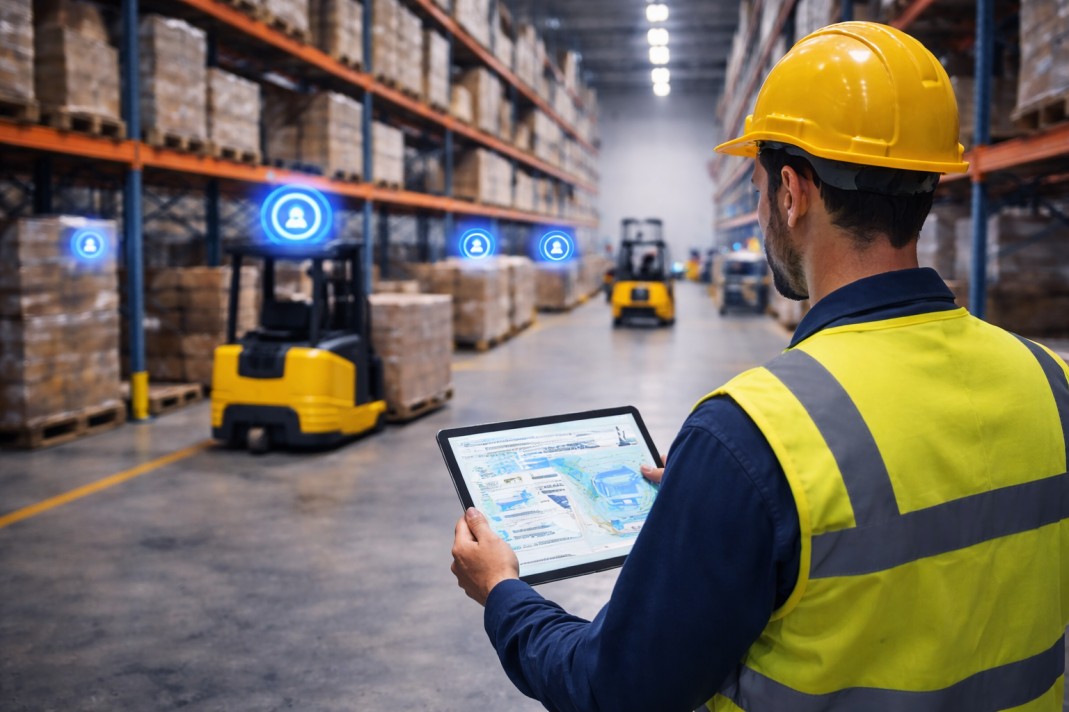
Implementation Tips for Indoor Positioning in Warehouses
Successful indoor positioning deployments in warehouses depend more on clear requirements and data usability than on technology alone.
Define accuracy requirements clearly
Not every warehouse requires centimeter-level accuracy. Zone-level indoor positioning may be sufficient for inventory visibility, while forklift safety, automation, or collision avoidance often demands higher precision. Selecting the right indoor positioning system starts with understanding which accuracy level truly supports the operation.
Start with a pilot area
Implementing indoor positioning in a limited zone or workflow helps validate assumptions before full-scale rollout. A pilot phase reveals how shelving, materials, and traffic patterns affect positioning performance in real warehouse environments.
Plan for system integration early
An indoor positioning solution delivers greater value when integrated with WMS, ERP, or analytics platforms. Location data becomes more actionable when combined with inventory status, order data, and operational context.
Prioritize data usability over data volume
Collecting indoor positioning data is only the first step. Dashboards, alerts, and reports should align with how warehouse teams make decisions. In practice, clear and simple insights often outperform complex visualizations.
When implemented with defined accuracy goals, phased deployment, and usable insights, indoor positioning becomes a practical operational tool rather than a standalone tracking system.
FAQ: Common Questions About Indoor Positioning in Smart Warehouses
These frequently asked questions reflect how warehouse operators evaluate indoor positioning systems in real operational environments.indoor positioning systems are increasingly adopted in smart warehouses to improve visibility, efficiency, and operational decision-making where GPS cannot function reliably.
How accurate does indoor positioning need to be in warehouses?
Indoor positioning accuracy depends on the specific warehouse use case. For inventory visibility or zone-based tracking, meter-level indoor positioning accuracy is often sufficient. For automated picking, forklift tracking, or collision avoidance, higher-precision indoor positioning may be required. The key is aligning accuracy requirements with operational needs rather than defaulting to maximum precision.
Can indoor positioning track both inventory and staff?
Yes. Modern indoor positioning systems support indoor position tracking for inventory, mobile assets, and personnel at the same time. This unified visibility helps warehouse managers understand how people, equipment, and workflows interact in real time, improving coordination and planning.
How does indoor positioning integrate with warehouse systems?
Most indoor positioning solutions offer APIs or middleware to integrate location data with WMS, ERP, or analytics platforms. Integration allows indoor positioning events—such as asset movement or zone entry—to trigger operational actions instead of remaining isolated data points.
Is indoor positioning difficult to deploy in existing warehouses?
Deployment complexity varies by indoor positioning technology and warehouse layout. Many indoor positioning systems are designed for retrofit environments and support phased deployment. Starting with a pilot area helps minimize disruption while validating performance in real operating conditions.
How long does it take to see ROI from indoor positioning?
Many smart warehouses begin seeing ROI from indoor positioning within a few months, particularly through reduced search time and improved picking efficiency. ROI increases over time as more workflows leverage indoor position tracking data.
Conclusion:
Indoor positioning has become a foundational technology for smart warehouses, providing real-time visibility, operational efficiency, and data-driven decision-making.
By selecting an indoor positioning system that matches operational requirements and implementing it strategically, warehouses can achieve measurable improvements in productivity, workflow efficiency, and ROI.
About Blueiot:
Blueiot is a global leader in real-time location systems (RTLS), delivering ultra-precise indoor tracking powered by Bluetooth Angle-of-Arrival technology.With accuracy down to 0.1 meters, Blueiot enables organizations to gain real-time visibility into people, assets, and workflows across complex indoor environments.
Trusted across manufacturing, healthcare, logistics, retail, and smart buildings, Blueiot helps businesses boost efficiency, improve safety, and make faster, data-driven decisions—turning location data into measurable operational value.
Looking to improve visibility and operational performance in your industry?
Contact Blueiot to explore a tailored RTLS solution.
Each location is meaningful!
Get real-time tracking insights and solutions tailored to your needs.
Enter your email to get our newsletter on best-in-class RTLS, AoA, and BLE solutions.

Sign-up
successful !
Our team will get in touch with you
shortly.


 Search