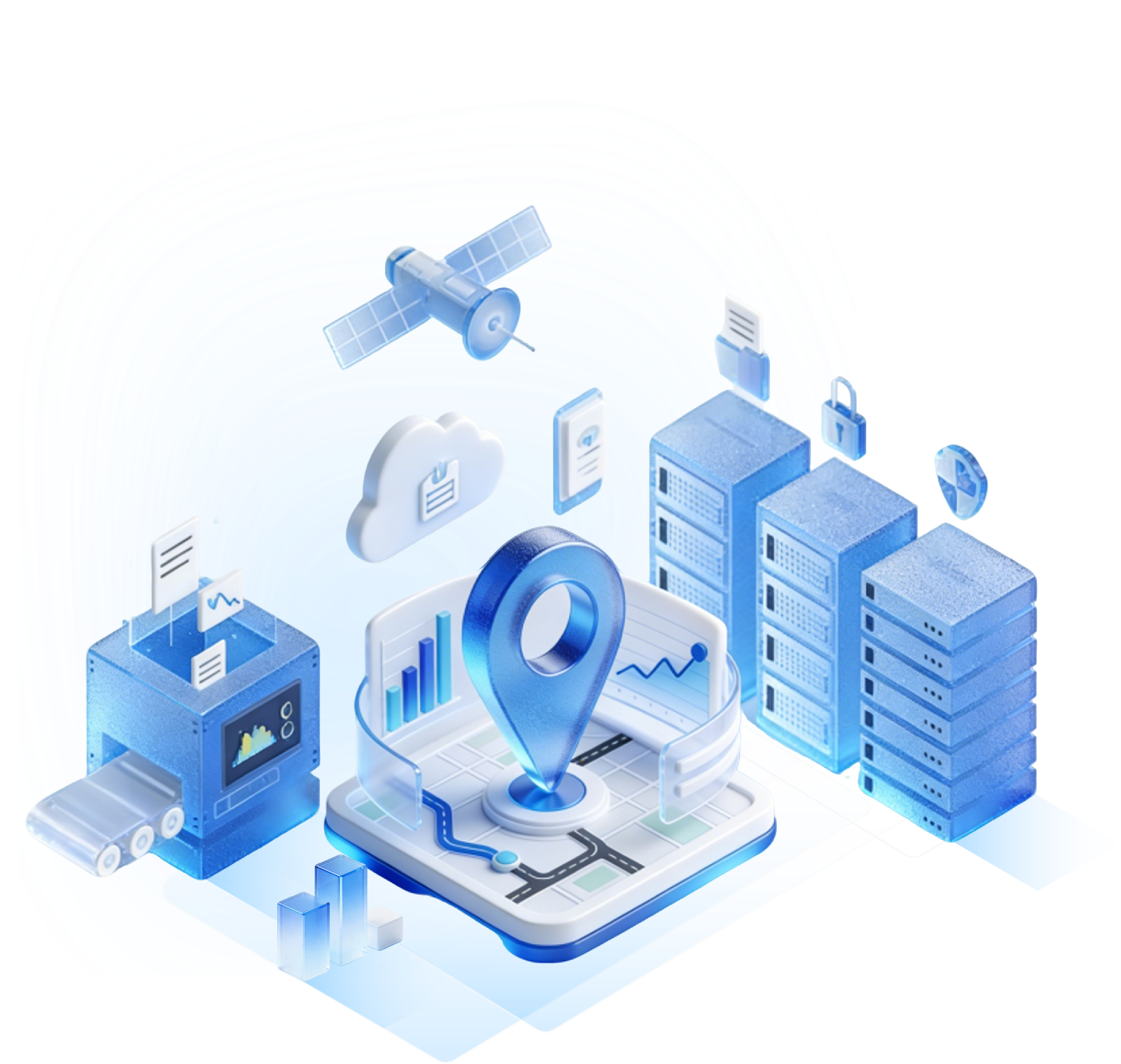
In large logistics centers, assets are constantly on the move. Pallets shift between inbound docks, storage zones, and outbound lanes, while carts, containers, forklifts, and reusable totes circulate across shifts and buildings.
When asset tracking in logistics breaks down, the impact is immediate: delayed shipments, misplaced inventory, idle equipment, and time lost to manual searches.
To solve these challenges, RTLS logistics solutions enable real-time asset tracking across complex logistics environments. With a reliable RTLS platform for asset tracking in logistics, logistics centers gain continuous visibility into asset location, movement, and utilization—reducing delays, improving throughput, and restoring operational control.
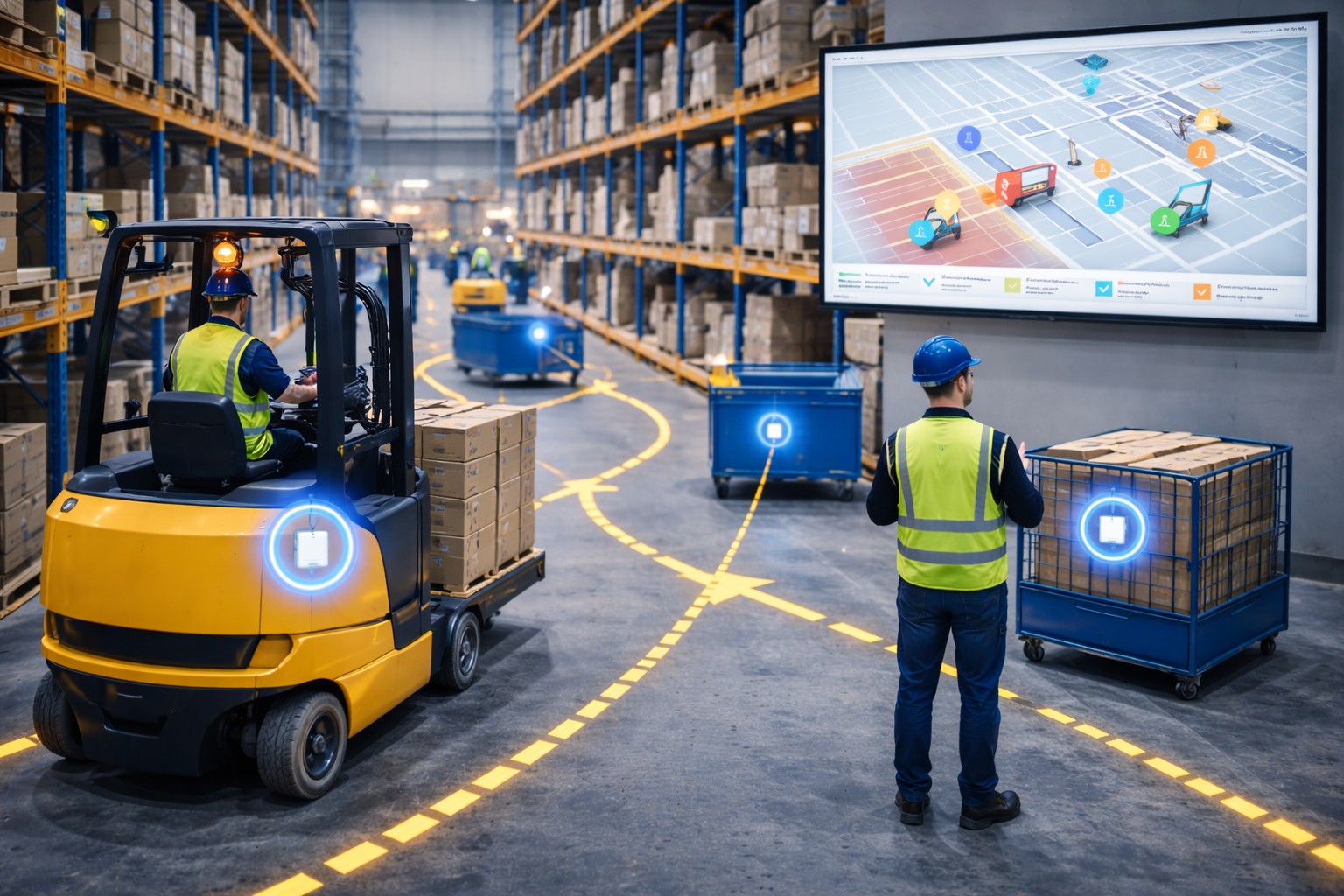
How RTLS Works in Large Logistics Centers
In a logistics environment, an RTLS for logistics typically includes:
RTLS tags attached to assets such as pallets, roll cages, containers, forklifts, or reusable transport items, enabling continuous asset tracking in logistics operations
Anchors and receivers deployed across docks, aisles, yards, staging zones, and transfer corridors to support scalable RTLS logistics coverage
A location engine that calculates real-time asset positions and movement patterns
An RTLS platform that visualizes asset locations and supports alerts, workflows, and analytics for asset tracking RTLS deployments
Unlike barcode scans or periodic RFID checkpoints, RTLS logistics systems provide continuous, real-time visibility. This level of insight is especially critical for Bluetooth asset tracking in logistics centers, where assets move rapidly and unpredictably across large, high-throughput facilities.
When RTLS Delivers the Most Value in Logistics
Best-Fit Logistics Scenarios
RTLS for logistics creates the strongest operational impact in logistics centers with the following characteristics:
Step 1 — High Asset Circulation Volume
When thousands of pallets, containers, or carts circulate daily, manual asset tracking in logistics becomes unreliable.
RTLS logistics solutions restore real-time visibility and operational control at scale.
Step 2 — Frequent Asset Misplacement or “Internal Loss”
In many logistics operations, assets are not stolen—they are simply parked in the wrong zone.
Asset tracking RTLS significantly reduces search time by showing exactly where assets are located in real time.
Step 3 — Multi-Zone or Multi-Building Operations
Large logistics centers often include inbound, storage, cross-dock, outbound, and yard areas.
RTLS for logistics maintains continuous tracking across zones, supporting end-to-end asset tracking logistics workflows.
Step 4 — Equipment Availability Directly Impacts Throughput
When forklifts, dollies, or containers are unavailable at the right moment, operations slow down.
Bluetooth asset tracking with RTLS improves equipment utilization and ensures assets are available where and when they are needed.
When RTLS may not be the first priority:
RTLS may not be the immediate solution if:
Asset volumes are low and static
Processes are simple and already well-controlled
The main issue is planning or staffing, not physical visibility
The operation only needs end-of-day inventory counts
In high-throughput logistics environments, however, RTLS platforms often unlock efficiency that manual systems cannot match.
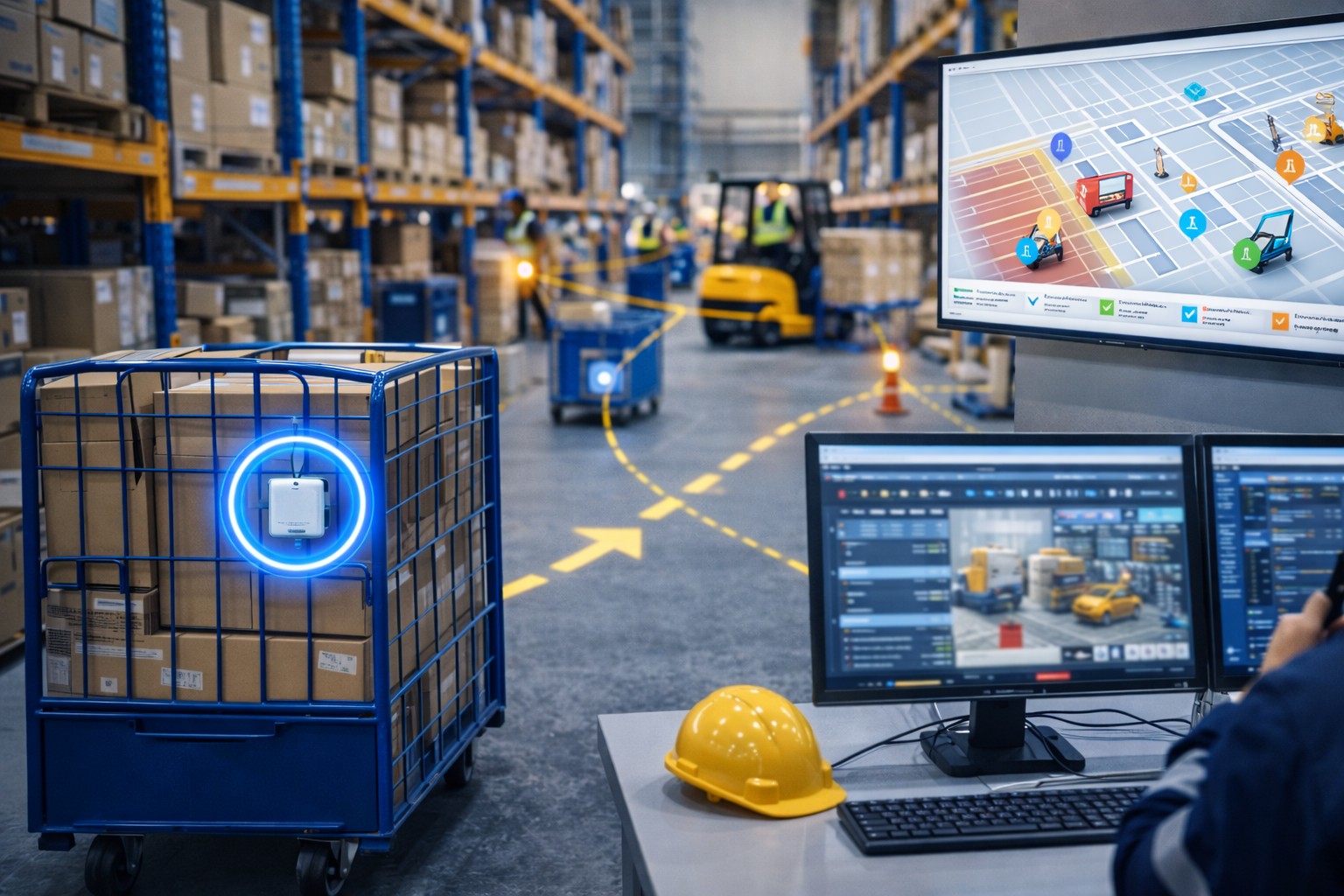
RTLS technology options for logistics asset tracking:
Choosing the right RTLS solution depends on accuracy needs, scale, and operational complexity.
RTLS Technology | Key Strength | Typical Limitation | Best Logistics Use |
BLE (Bluetooth) | Scalable, cost-effective, wide coverage | Accuracy varies by layout | Zone-level asset visibility across large centers |
Bluetooth AoA | Improved accuracy and directional data | Requires careful infrastructure design | Locating assets in dense staging or packing areas |
UWB | High precision and fast response | Higher cost and deployment effort | High-value assets, automated logistics workflows |
RFID | Reliable checkpoint identification | Not continuous real-time tracking | Dock doors, yard gates, transfer points |
Hybrid RTLS | Flexible and resilient | More integration effort | Large, complex logistics centers |
Practical selection rule:
For site-wide asset visibility, BLE or AoA combined with a robust RTLS platform is often sufficient.
For critical or high-value assets, deploy UWB selectively. For gate and transition control, RFID complements real-time tracking well.
Most large logistics centers achieve the best results with a hybrid RTLS system rather than a single technology.
How RTLS Improves Asset Tracking in Logistics Centers
This section focuses on operational outcomes, not technology alone.
Step 1 — Establish Real-Time Asset Visibility
RTLS for logistics creates a live view of where assets are located across the facility, including:
Pallets waiting at inbound docks
Containers staged for outbound loading
Carts idle in the wrong zone
This eliminates time wasted searching and supports faster decision-making through asset tracking in logistics.
Step 2 — Reduce Internal Asset Loss and Misrouting
In large logistics centers, assets often disappear temporarily due to:
Wrong staging locations
Shift handovers
Manual relocation without system updates
With asset tracking RTLS, assets can be located instantly, reducing internal loss and preventing downstream delays.
Step 3 — Improve Asset Utilization
RTLS logistics solutions reveal how assets are actually used:
Which containers sit idle too long
Which forklifts are overutilized
Which zones accumulate unused assets
This data supports better allocation, reduces unnecessary purchases, and improves overall operational efficiency.
Step 4 — Speed Up Exception Handling
When delays occur, Bluetooth asset tracking with RTLS helps teams respond faster by:
Identifying missing or delayed assets
Verifying whether assets entered the correct zone
Prioritizing recovery actions based on location data
This shortens disruption time and improves service reliability.
Step 5 — Support Data-Driven Logistics Optimization
Over time, RTLS for logistics provides insights into:
Asset flow patterns
Congestion hotspots
Inefficient layouts
These insights help logistics managers redesign processes and continuously improve performance.
FAQ: Common questions about RTLS in large logistics centers:
The following FAQs address common questions operators ask when evaluating RTLS solutions for real-time asset tracking in large logistics centers.
1) How does RTLS improve asset visibility in logistics centers?
RTLS improves asset visibility by providing continuous, real-time location tracking across the logistics center. Instead of relying on periodic scans or manual updates, a Real-Time Location System shows where assets are at any moment. This helps teams quickly locate pallets, containers, and equipment, reducing search time and preventing delays. RTLS platforms also visualize asset movement history, making it easier to understand flow patterns and identify problem zones. For large logistics centers, this level of visibility supports faster operations and better coordination across shifts.
2) Can RTLS connect with warehouse systems?
Yes. RTLS platforms can integrate with warehouse management systems (WMS), transportation management systems (TMS), and other logistics software through APIs or middleware. Integration allows real-time tracking data to update operational workflows automatically—for example, confirming when an asset enters a staging area or leaves an outbound dock. This alignment between physical movement and system records reduces manual data entry and improves accuracy. Successful integration focuses on using RTLS events to trigger actions, not just displaying location data.
3) What types of assets can be tracked with RTLS in logistics centers?
RTLS can track a wide range of assets in logistics centers, including pallets, roll cages, reusable containers, totes, forklifts, pallet jacks, and specialized handling equipment. Some facilities also track high-value shipments or returnable transport items. The choice of RTLS tags depends on asset size, movement frequency, and environmental conditions. With the right RTLS solution, both mobile assets and semi-fixed equipment can be tracked effectively, supporting better visibility and utilization across the entire logistics operation.
4) What is the ROI of implementing RTLS in logistics operations?
The ROI from RTLS for logistics typically comes from:Reduced labor time spent searching for assetsFewer lost or misplaced itemsImproved asset utilizationFaster throughput and operational efficiency
By eliminating delays caused by misrouting and providing continuous asset tracking in logistics, logistics centers can lower operating costs per shipment. Asset tracking RTLS also helps avoid unnecessary purchases by making existing assets more visible and usable.
5) How Secure is RTLS Data in Logistics Centers?
RTLS data security in logistics operations depends on system architecture and deployment practices. Most RTLS for logistics platforms support encrypted communication, role-based access control, and secure data storage. Location data can be restricted to operational users and integrated securely with existing IT systems.
In logistics centers handling sensitive shipments, asset tracking RTLS solutions can be designed to comply with internal security policies and industry standards. As with any connected system, proper configuration, access management, and regular security reviews are essential to maintaining data protection.
Conclusion:
In large logistics centers, real-time asset visibility is a prerequisite for speed, reliability, and scalability. By adopting RTLS for logistics and asset tracking in logistics, operators can reduce internal asset loss, improve utilization, and respond faster to operational exceptions.
If you are evaluating RTLS logistics solutions, the Blueiot team can help you assess asset flows, select the right asset tracking RTLS system—whether BLE, Bluetooth AoA, UWB, or hybrid—and start with a focused pilot that delivers measurable improvements before scaling across the entire logistics center.
About Blueiot
Blueiot is a global leader in real-time location systems (RTLS), delivering ultra-precise indoor tracking powered by Bluetooth Angle-of-Arrival technology.With accuracy down to 0.1 meters, Blueiot enables organizations to gain real-time visibility into people, assets, and workflows across complex indoor environments.
Trusted across manufacturing, healthcare, logistics, retail, and smart buildings, Blueiot helps businesses boost efficiency, improve safety, and make faster, data-driven decisions—turning location data into measurable operational value.
Looking to improve visibility and operational performance in your industry?Contact Blueiot to explore a tailored RTLS solution.
Each location is meaningful!
Get real-time tracking insights and solutions tailored to your needs.
Enter your email to get our newsletter on best-in-class RTLS, AoA, and BLE solutions.

Sign-up
successful !
Our team will get in touch with you
shortly.


 Search