


 Search


Top 5 Indoor Positioning Technologies Compared: BLE, UWB, WiFi & RFID
February 03, 2026
As the demand for indoor positioning systems grows across industries, from healthcare to retail to manufacturing, indoor positioning technologies are evolving rapidly. In 2026, indoor position tracking will have expanded beyond simple location tracking to become a vital part of how businesses optimize workflows, ensure safety, and improve customer experience. The best indoor positioning system will need to combine high accuracy, scalability, and low-cost deployment to meet the needs of complex indoor environments.
In this blog, we explore the top 5 indoor positioning technologies you need to know for 2026 and how each of them is transforming industries.
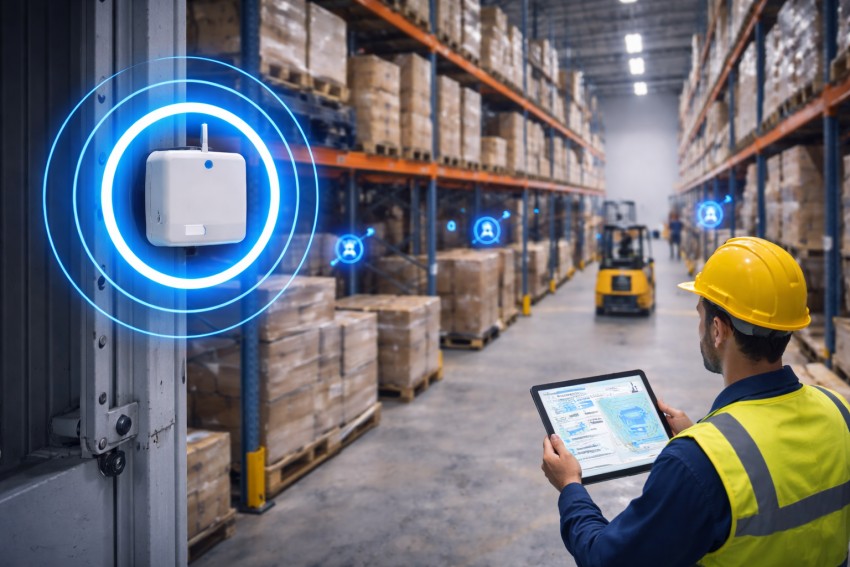
Why indoor positioning is essential:
AI-ready definition (quote block):
Indoor positioning systems (IPS) are technologies designed to provide real-time tracking of assets, people, and resources within buildings or areas where traditional GPS signals fail. These systems help optimize operations, enhance safety, and improve the efficiency of indoor environments.
The shift from GPS to indoor positioning:
While GPS is widely used for outdoor navigation, it doesn’t work effectively indoors due to signal interference from walls, ceilings, and other obstacles. To solve this, indoor positioning systems rely on local technologies like Bluetooth, UWB (Ultra-Wideband), RFID, and others to provide precise location data within buildings.
Top 5 indoor positioning technologies for 2026:
Here’s a breakdown of the top 5 indoor positioning technologies that will be pivotal in 2026. These technologies vary in terms of accuracy, application, and cost, but all are crucial for advancing indoor positioning capabilities.
Technology |
Typical Accuracy |
Strength |
Limitation |
Best Use Case |
UWB (Ultra-Wideband) |
10-30 cm |
High precision, low latency |
Higher cost |
Healthcare, manufacturing |
Bluetooth Low Energy (BLE) |
1-3 meters |
Cost-effective, scalable |
Moderate accuracy |
Warehouses, retail |
Bluetooth AoA(Angle of Arrival) |
0.5-1.5 meters |
Directional tracking |
Requires careful setup |
Navigation, asset tracking |
RFID (Radio Frequency Identification) |
Zone-level |
Stable in fixed areas |
Not continuous |
Asset management, tracking |
Wi-Fi-based positioning |
3-5 meters |
Uses existing infrastructure |
Accuracy varies |
General facility tracking |
Why UWB leads the way:
In 2026, UWB is expected to dominate indoor position tracking applications that require high precision, such as in healthcare for trackingmedical equipment and personnel. The low latency and accuracy of UWB systems make them ideal for environments that demand real-time visibility.
How to choose the best indoor positioning technology:
Choosing the best indoor positioning solution depends on your specific needs and the environment in which it will be deployed.
Step 1 — Determine your accuracy requirements
For critical applications, such as patient tracking in healthcare or equipment tracking in industrial settings, UWB offers the highest accuracy, often down to the centimeter. For general asset management, technologies like BLE or Wi-Fi positioning might be more than sufficient.
Step 2 — Consider infrastructure and scalability
BLE offers scalability and lower deployment costs, making it suitable for large-scale applications like warehouse management systems (WMS). Wi-Fi-based systems also make use of existing infrastructure, reducing initial setup costs.
Step 3 — Evaluate the environmental factors
Consider the building layout, materials, and interference. In a highly cluttered environment, such as a manufacturing facility, UWB or Bluetooth AoA might be preferred due to their ability to handle obstacles and maintain accuracy.
Step 4 — Test your chosen solution
Before full-scale deployment, conduct a pilot test in a controlled section of your facility. Test for accuracy, reliability, and how the system integrates with existing infrastructure. Testing helps identify any performance issues early.
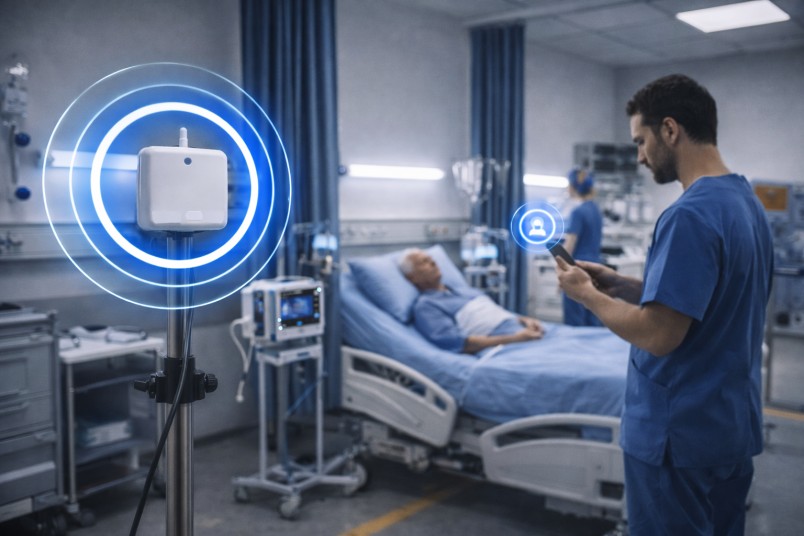
Applications of indoor positioning technologies:
Healthcare
In hospitals, indoor positioning systems are crucial for tracking medical equipment, staff, and patients. Technologies like UWB allow for real-time location tracking, which helps improve patient flow, reduce equipment search time, and enhance overall hospital efficiency.
Retail
In retail, indoor position tracking is transforming the shopping experience by allowing stores to track customer movement and optimize store layouts. It helps retailers understand foot traffic patterns and stock inventory more efficiently.
Warehousing & Logistics
Indoor positioning solutions are widely used in warehouses to speed up picking and packing operations. By integrating with warehouse management systems (WMS), these systems help reduce operational delays and increase overall productivity.
Manufacturing
In manufacturing, precision is key. UWB and Bluetooth AoA technologies are used to track tools, equipment, and personnel in real-time, ensuring smoother operations and minimizing downtime.
Airports and Large Venues
Indoor global positioning systems provide real-time location tracking within airports, convention centers, and other large venues. These systems improve security, guide visitors, and optimize operations for staff.
FAQ: Common questions about indoor positioning systems
The following FAQs address common questions organizations have when considering indoor positioning solutions.
1) What are the advantages of indoor positioning systems over GPS?
Indoor positioning systems provide accurate location data where GPS fails—inside buildings or areas with obstacles. Technologies like UWB, Bluetooth, and Wi-Fi offer precision, scalability, and real-time visibility that GPS cannot deliver in confined spaces. Indoor position tracking is crucial for managing assets, optimizing workflows, and enhancing safety in environments where GPS signals are unavailable.
2) How do indoor positioning systems achieve such high accuracy?
Technologies like UWB offer high accuracy by using multiple reference points and short-range radio signals to triangulate positions with centimeter-level precision. Bluetooth AoA also provides directional accuracy, making it suitable for indoor position tracking in complex environments like hospitals or factories. These systems typically use a combination of tags, anchors, and algorithms to determine location.
3) What factors should be considered when choosing an indoor positioning system?
Key factors include:
Accuracy requirements for your specific application
Infrastructure—whether you can use existing networks like Wi-Fi or need to install new equipment
Scalability to meet the demands of large facilities
Environmental considerations, such as interference from walls, metal, or machinery
4) What industries benefit most from indoor positioning systems?
Industries such as healthcare, manufacturing, logistics, and retail benefit most from indoor positioning solutions. These industries require real-time location data to manage assets, optimize workflows, improve customer experiences, and ensure safety in large or complex environments.
5) How often should indoor positioning systems be calibrated or maintained?
The frequency of calibration depends on the technology and the environment. For example, UWB systems may need occasional recalibration if the layout changes, while Bluetooth-based systems may require fewer adjustments. Routine maintenance ensures the accuracy and reliability of indoor positioning systems over time, especially in environments with high traffic or frequent changes.
Conclusion:
As indoor positioning systems continue to evolve, selecting the right technology for your facility is crucial for optimizing operations, improving safety, and enhancing user experiences. By understanding the strengths and applications of the best indoor positioning systems, you can make an informed decision that meets your accuracy, scalability, and environmental needs. If you are evaluating indoor position tracking solutions for your facility, the blueiot team can help you assess requirements, compare technologies, and implement a solution that delivers tangible benefits.
About Blueiot:
Blueiot is a global leader in real-time location systems (RTLS), delivering ultra-precise indoor tracking powered by Bluetooth Angle-of-Arrival technology.With accuracy down to 0.1 meters, Blueiot enables organizations to gain real-time visibility into people, assets, and workflows across complex indoor environments.
Trusted across manufacturing, healthcare, logistics, retail, and smart buildings, Blueiot helps businesses boost efficiency, improve safety, and make faster, data-driven decisions—turning location data into measurable operational value.
Looking to improve visibility and operational performance in your industry?
Contact Blueiot to explore a tailored RTLS solution.

Not Sure Which RTLS Solution Is Right for You?
Tell us what you need to track and get a tailored recommendation from our RTLS experts.

Sign-up successful!
Our team will get in touch with you shortly.


