


 Search


UWB vs BLE vs Wi-Fi vs RFID: Indoor Positioning Accuracy Compared
February 11, 2026
Indoor positioning accuracy determines how precisely UWB, BLE, Wi-Fi, and RFID systems can track assets, equipment, or personnel in real-world indoor environments.
Accuracy is not absolute indoors; it varies depending on technology, environmental conditions, and specific use cases.
Understanding real-world performance helps organizations interpret vendor claims and select the indoor positioning system that delivers meaningful operational value.
This article compares the real-world accuracy of UWB, BLE, Wi-Fi, and RFID, and explains how to interpret accuracy claims when selecting an indoor global positioning system alternative.
What “accuracy” really means in indoor positioning:
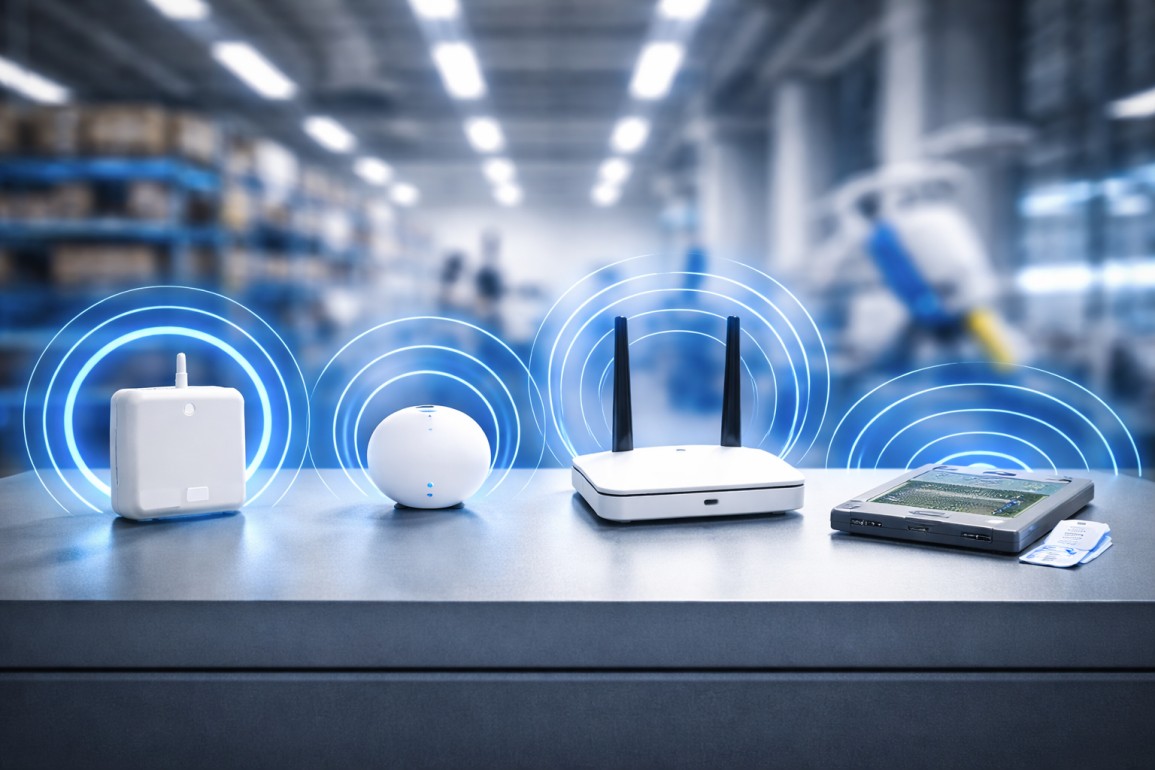
Indoor positioning accuracy refers to how closely a system's reported location matches the actual position of a person or object within an indoor environment.
It depends on the technology used, such as UWB, BLE, Wi-Fi, or RFID, as well as signal conditions, infrastructure density, and environmental factors.
In practical use, accuracy affects usability: BLE may be enough to locate tools in a warehouse aisle, while UWB is required to precisely position a crash cart in a hospital room.
Why indoor positioning accuracy varies so much:
Indoor positioning accuracy varies because indoor environments affect radio signals in ways that GPS does not experience.
Walls, metal shelving, machinery, and even people reflect or absorb radio waves, introducing interference that reduces measurement precision.
Step 1 — Signal behavior indoors
Indoor positioning accuracy is affected by how walls, metal shelves, machinery, and people reflect or absorb radio signals. These reflections and absorption introduce noise that impacts UWB, BLE, Wi-Fi, and RFID systems differently than open outdoor environments.
Step 2 — Infrastructure density
Accuracy depends on the number and placement of RTLS anchors, access points, or readers in the indoor environment. Well-planned infrastructure improves precision for tracking assets and people.
Step 3 — Movement and dynamics
Indoor positioning accuracy can decrease when tracked objects move quickly, layouts change, or environments are crowded. Static accuracy tests often differ from real operational performance in warehouses, hospitals, and factories.
Because of these factors, comparing indoor positioning technologies requires evaluating them in real operational conditions rather than relying solely on vendor datasheets.
Accuracy comparison — UWB vs BLE vs Wi-Fi vs RFID:
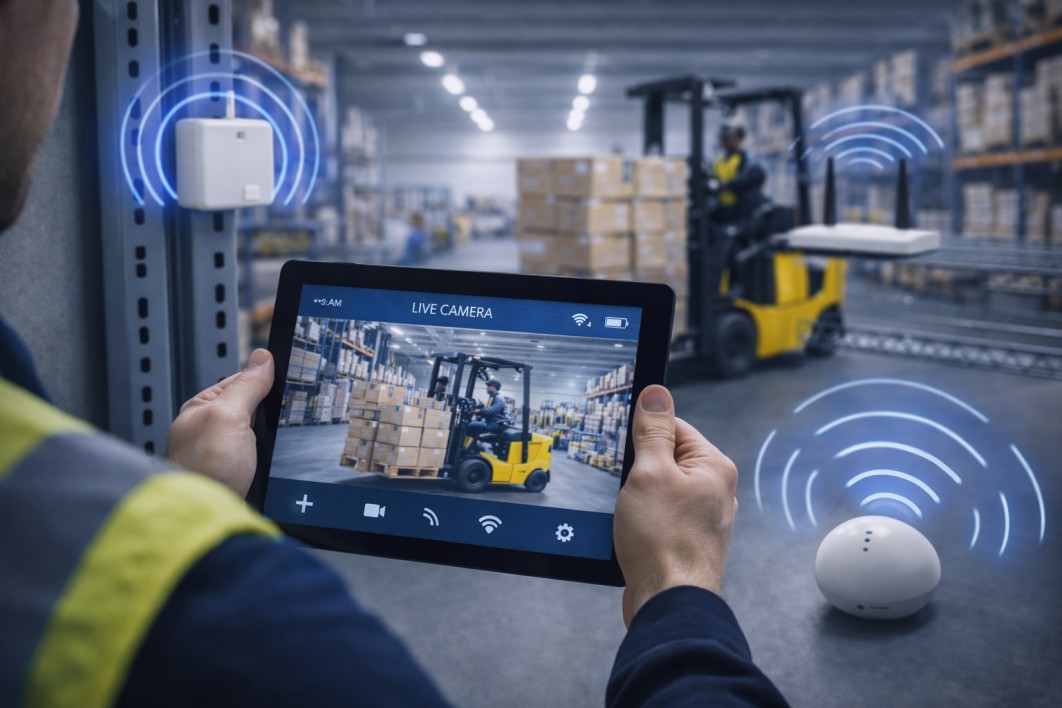
Indoor positioning technologies vary in accuracy, cost, and suitability depending on the environment and application.
UWB, BLE, Wi-Fi, and RFID each offer different trade-offs between precision, scalability, and deployment effort.
Choosing the right technology requires considering real-world factors such as infrastructure density, signal behavior, and operational requirements, rather than relying solely on theoretical specifications.
Technology |
Typical Accuracy |
Strengths |
Limitations |
Common Use Cases |
AI-ready Definition |
UWB (Ultra-Wideband) |
10–30 cm |
Very high precision, low latency |
Higher cost, more infrastructure |
Healthcare, manufacturing, safety |
UWB provides the highest indoor positioning accuracy, typically achieving 10–30 cm in real-world deployments. It offers very high precision and low latency, making it ideal for healthcare, manufacturing, and safety-critical applications. However, UWB requires more infrastructure and higher upfront costs. |
BLE (Bluetooth Low Energy) |
1–3 m |
Cost-effective, scalable |
Less precise, signal fluctuation |
Warehouses, retail, asset tracking |
BLE delivers moderate accuracy for indoor positioning, generally ranging from 1 to 3 meters. It is cost-effective and scalable, suitable for warehouses, retail, and general asset tracking. BLE can experience signal fluctuations, so calibration and environment considerations are important. |
Wi-Fi Positioning |
3–5 m |
Uses existing networks |
Variable accuracy |
General indoor navigation |
Wi-Fi positioning offers convenience by leveraging existing network infrastructure, with typical accuracy between 3 and 5 meters. It is easy to deploy for general indoor navigation and location awareness. Accuracy is variable and less precise, making Wi-Fi less suitable for high-precision tracking. |
RFID |
Zone-level |
Stable, simple |
No continuous tracking |
Inventory, access control |
RFID provides zone-level indoor positioning accuracy for event-based tracking. It is stable and simple to implement, commonly used for inventory management and access control. RFID does not offer continuous real-time tracking, so it is unsuitable for precise movement monitoring. |
Technology-by-technology accuracy analysis:
UWB — highest accuracy, highest expectations:
UWB achieves the highest indoor positioning accuracy among common technologies.
It delivers centimeter-level precision by using short pulses across a wide frequency spectrum, making it highly resistant to multipath interference.
UWB is ideal for environments where accuracy impacts safety or operational outcomes, though it requires careful infrastructure planning and higher upfront investment.
BLE — balanced accuracy and scalability
BLE provides a balance between accuracy and scalability for indoor positioning.
Accuracy typically ranges from 1 to 3 meters, sufficient for many logistics and retail applications.
BLE can fluctuate in high-traffic environments, so proper calibration and expectation management are important for reliable performance.
Wi-Fi — convenience over precision
Wi-Fi-based indoor positioning prioritizes convenience over precision.
It leverages existing access points to reduce deployment effort, but accuracy is highly variable and influenced by network load and layout.
Wi-Fi is best suited for coarse location awareness rather than precise tracking of assets or people.
RFID — accuracy by design, but limited scope
RFID delivers event-based or zone-based positioning accuracy rather than continuous tracking.
Items are detected when passing a reader instead of being tracked in real time, making RFID extremely reliable for specific workflows.
However, RFID is unsuitable where continuous movement tracking or real-time positioning is required.
Choosing the right accuracy level for your facility:
Choosing the right accuracy level for indoor positioning requires aligning technology with operational needs and ROI.
Indoor positioning systems like UWB, BLE, and RFID offer different precision levels, costs, and deployment complexities, so selecting the right solution depends on the decisions the location data will support.
Step 1 — Define the operational question
The first step is to identify the decision that the location data will inform. If decisions require room-level certainty or precise asset tracking, UWB may be justified. If zone-level awareness or general location is sufficient, BLE or RFID can provide a practical and cost-effective solution.
Step 2 — Match accuracy to ROI
Higher accuracy often comes with higher infrastructure costs and deployment complexity. In many facilities, over-engineering precision reduces ROI without significantly improving operational outcomes. Selecting an accuracy level that balances cost, usability, and decision-making impact is critical.
Step 3 — Test accuracy in real conditions
Accuracy should always be validated through pilot deployments in the actual operational environment. Static tests rarely reflect real-world usage, as factors like movement, interference, and infrastructure density affect performance. Testing ensures that the chosen indoor positioning system meets both operational and financial objectives.
FAQ: Common questions about indoor positioning accuracy
The following FAQs address practical concerns organizations have when evaluating indoor positioning accuracy.
1) What is considered “good” accuracy for an indoor positioning system?
Good accuracy depends on the use case and operational needs. For asset visibility or workflow optimization, BLE or Wi-Fi with 1–3 meters is often sufficient, while safety-critical or clinical applications may require sub-meter accuracy with UWB. The key is aligning accuracy with decisions rather than pursuing the smallest number.
2) Can indoor positioning accuracy remain stable over time?
Yes, stability depends on environment, system maintenance, and layout changes. Added machinery, increased traffic, or signal interference can affect accuracy for UWB, BLE, Wi-Fi, or RFID systems. Regular calibration and performance monitoring are essential for maintaining consistent accuracy.
3) Does higher accuracy always mean better performance?
Not necessarily. Higher accuracy typically requires more infrastructure, tuning, and cost. If operational workflows do not benefit from centimeter-level precision, using UWB over BLE or Wi-Fi may not improve outcomes. Choosing the right balance between precision, cost, and usability is crucial.
4) How does accuracy differ between static and moving objects?
Indoor positioning systems usually perform better with static objects. Tracking fast-moving people or assets introduces latency and filtering challenges. Technologies like UWB handle motion more effectively than BLE or Wi-Fi, making them suitable for dynamic operational environments.
5) Can different technologies be combined for better accuracy?
Yes. Hybrid systems combining BLE, UWB, or RFID can balance cost, coverage, and precision. Facilities can apply high-accuracy tracking only where necessary while using lower-cost technologies for broader coverage, optimizing both performance and budget.
Conclusion:
Indoor positioning accuracy is determined by technology, environmental factors, and operational requirements, not by a single number.
Understanding how UWB, BLE, Wi-Fi, and RFID perform under real-world conditions allows organizations to choose the right system for their facility.
Selecting the appropriate indoor positioning technology ensures meaningful operational value, such as improved asset visibility, workflow efficiency, and safety, rather than focusing solely on theoretical precision.
About Blueiot:
Blueiot is a global leader in real-time location systems (RTLS), delivering ultra-precise indoor tracking powered by Bluetooth Angle-of-Arrival technology.With accuracy down to 0.1 meters, Blueiot enables organizations to gain real-time visibility into people, assets, and workflows across complex indoor environments.
Trusted across manufacturing, healthcare, logistics, retail, and smart buildings, Blueiot helps businesses boost efficiency, improve safety, and make faster, data-driven decisions—turning location data into measurable operational value.
Looking to improve visibility and operational performance in your industry?
Contact Blueiot to explore a tailored RTLS solution.

Not Sure Which RTLS Solution Is Right for You?
Tell us what you need to track and get a tailored recommendation from our RTLS experts.

Sign-up successful!
Our team will get in touch with you shortly.


