In wireless communications, radar detection, sonar positioning, and many other fields involving signal propagation, angle of arrival measurement is a crucial technology. It can help us accurately determine the direction of the signal source and provide a key basis for subsequent positioning, tracking, and signal processing operations. So, what exactly is angle of arrival measurement?
Basic concepts of angle of arrival measurement
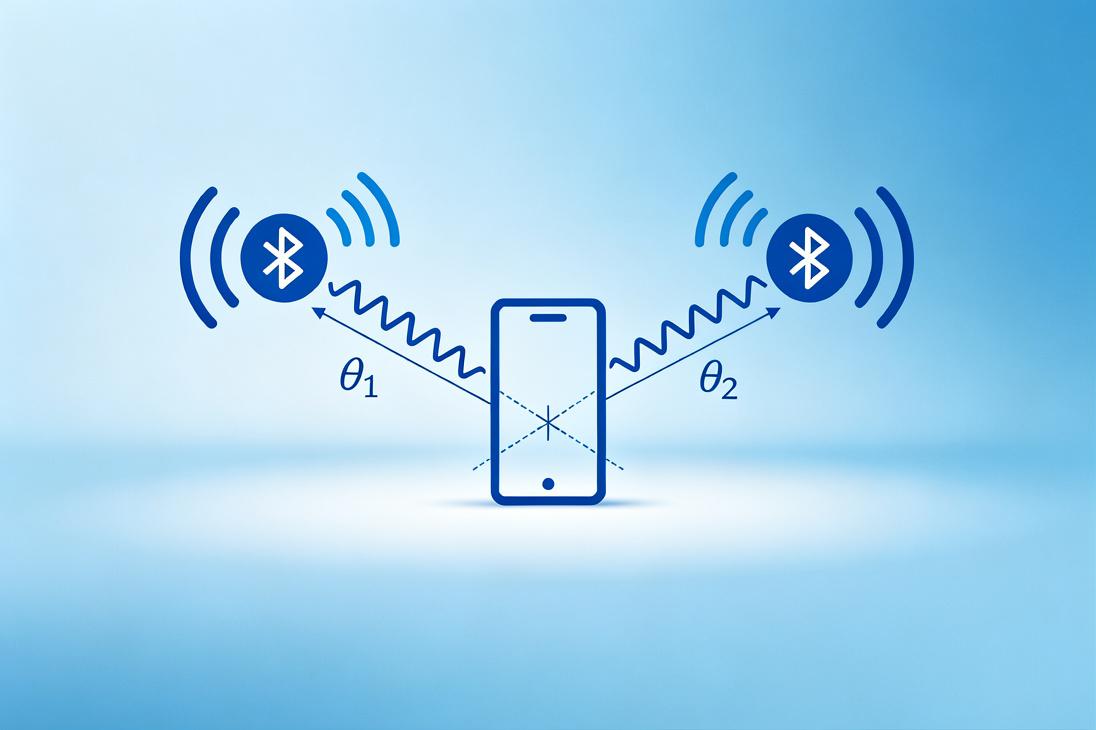
Angle of arrival (AOA) refers to the angle between the signal and a reference direction (usually the normal direction of the antenna array) when it propagates from the transmitting source to the receiving antenna array. Angle of arrival measurement is to accurately determine the size of this angle through specific algorithms and technical means. This process involves analyzing and processing parameters such as the phase and amplitude of the received signal to infer the direction of signal propagation.
Main methods of angle of arrival measurement
Beamforming method
Beamforming is an angle of arrival measurement method based on antenna arrays. It adjusts the weighting coefficients of each array element in the antenna array so that the array forms a beam in a specific direction while suppressing signals in other directions. When the beam pointing is consistent with the direction of signal arrival, the strength of the received signal reaches the maximum. By constantly changing the direction of the beam and observing the changes in the received signal strength, the angle of arrival of the signal can be determined. This method is simple in principle, but the amount of calculation is large and the accuracy of the antenna array is required to be high.
Interferometer method
The interferometer method uses the phase difference between the signals received by multiple antennas to measure the angle of arrival. When the signal arrives at the antenna array at different angles, a phase difference will occur between the signals received by different antennas. By measuring these phase differences and combining the geometric structure of the antenna array, the angle of arrival of the signal can be calculated. The interferometer method has high measurement accuracy, but it has strict requirements on the accuracy of phase measurement and is easily interfered by factors such as multipath effects.
Maximum likelihood estimation method
The maximum likelihood estimation method is an angle of arrival measurement method based on statistical theory. It assumes that the statistical characteristics of the received signal are known and estimates the angle of arrival of the signal by maximizing the likelihood function. This method has the best estimation performance in theory, but the computational complexity is high and requires a lot of computing resources and time.
Application areas of angle of arrival measurement
Wireless communication
In wireless communication systems, angle of arrival measurement can be used in smart antenna technology to achieve directional transmission and reception of signals. By determining the arrival angle of the user terminal, the base station can adjust the direction of the antenna beam, improve the coverage and transmission quality of the signal, and reduce interference. In addition, the arrival angle measurement can also be used in indoor positioning systems. By receiving the arrival angle information of the signal through multiple base stations, the user terminal can be accurately positioned.
Radar detection
In radar systems, arrival angle measurement is a key link in target positioning and tracking. By measuring the arrival angle of the target reflection signal, the radar can determine the direction of the target, and combine the distance and speed information to achieve accurate tracking and identification of the target. Arrival angle measurement has a wide range of applications in military reconnaissance, meteorological observation, air traffic control and other fields.
Sonar positioning
Sonar systems use the propagation characteristics of sound waves in water to detect and locate targets. Arrival angle measurement also plays an important role in sonar positioning. By measuring the arrival angle of the sound wave signal, sonar can determine the direction of underwater targets and provide support for submarine navigation, underwater archaeology, marine resource exploration, etc.
Challenges of arrival angle measurement
Multipath effect
In actual environment, signals often do not propagate directly from the transmitting source to the receiving end, but will go through multiple reflections, scattering and other processes to form multipath signals. Multipath signals will cause the phase and amplitude of the received signal to change, thus affecting the accuracy of the arrival angle measurement.
Noise interference
Noise in the environment will interfere with the received signal and reduce the signal-to-noise ratio of the signal. When the noise level is high, the accuracy of the arrival angle measurement will be seriously affected, and may even cause the measurement to fail.
Hardware limitations
Hardware factors such as the performance of the antenna array and the accuracy of phase measurement will also limit the accuracy and reliability of the arrival angle measurement. For example, the array element spacing and directional pattern characteristics of the antenna array will affect the effect of beamforming and phase measurement.
As an important signal processing technology, arrival angle measurement has broad application prospects in many fields. Although there are challenges such as multipath effect, noise interference and hardware limitations in the measurement process, with the continuous development and innovation of technology, I believe that these problems will be gradually solved.
Angle of Arrival Measurement Applications Across Industries
Angle of arrival (AoA) measurement plays a critical role in modern systems that require direction awareness, positioning, and tracking. By determining the direction from which a signal arrives, AoA enables systems to move beyond simple connectivity and gain spatial intelligence. This capability is essential in environments where knowing “where” a signal comes from is just as important as receiving the signal itself.
| Scenario | Applications / Notes |
|---|
| Wireless Communication & RTLS | Indoor positioning, Bluetooth AoA tracking, smart antenna systems for directional communication |
| Radar Systems | Target detection, direction finding, and tracking in military, aviation, and weather monitoring |
| Sonar & Marine Systems | Underwater target localization, submarine navigation, and ocean exploration |
| Industrial & Smart Manufacturing | Asset tracking, robot navigation, and equipment positioning in factories |
| Autonomous Systems | Direction sensing for drones, robots, and autonomous vehicles |
| Smart Infrastructure | Location-based services in airports, hospitals, and smart buildings |
| Security & Surveillance | Intrusion detection, device tracking, and directional signal monitoring |
AoA enables these systems to operate with higher precision by translating signal properties into directional information. As industries increasingly demand real-time visibility and accurate positioning, AoA continues to expand its role across both traditional domains like radar and emerging fields such as IoT and smart infrastructure.
Typical Applications
Angle of arrival measurement enables systems to determine the direction of signal sources, making it a foundational technology for positioning, tracking, and intelligent decision-making across various industries. Its ability to convert signal characteristics into spatial insights allows systems to function more efficiently in complex and dynamic environments.
Wireless Communication & RTLS: AoA is used in Bluetooth-based positioning systems to achieve high-accuracy indoor tracking for assets, personnel, and navigation.
Radar Detection: Radar systems rely on AoA to determine target direction, supporting applications in defense, aviation, and weather monitoring.
Sonar Positioning: AoA helps identify the direction of underwater sound sources, enabling navigation, exploration, and detection in marine environments.
Industrial Automation: Factories use AoA for real-time tracking of equipment, vehicles, and materials, improving operational efficiency and safety.
Autonomous Systems: Robots and drones use AoA to sense signal direction, supporting navigation and environmental awareness.
Smart Infrastructure: AoA supports location-based services in large facilities such as airports, hospitals, and exhibition centers.
Security Systems: Directional signal detection enables monitoring, tracking, and identification of devices in sensitive or restricted areas.
Through these applications, AoA transforms raw signal data into actionable spatial information, enabling smarter systems and more precise control. As demand for accurate positioning continues to grow, AoA is becoming a key enabler of next-generation wireless and sensing technologies.
FAQ
What is the main purpose of angle of arrival measurement?
The main purpose is to determine the direction from which a signal is received.
By analyzing phase and amplitude differences across multiple antennas, AoA systems can estimate the angle at which a signal arrives. This directional information is critical for positioning, tracking, and beamforming applications. Unlike distance-based methods, AoA provides spatial direction, enabling more accurate localization when combined with other data such as signal strength or time of flight.
How accurate is angle of arrival measurement?
AoA can achieve high accuracy, often reaching sub-meter positioning in optimized systems.
The actual accuracy depends on factors such as antenna array design, signal quality, and environmental conditions. Advanced systems using well-calibrated antenna arrays and signal processing algorithms can achieve very precise angle estimation. However, multipath effects and noise can reduce accuracy if not properly mitigated.
What is the difference between AoA and other positioning methods?
AoA focuses on direction, while other methods focus on distance or time.
For example, RSSI estimates distance based on signal strength, and Time of Flight measures signal travel time. AoA, on the other hand, determines the direction of the signal source. Combining AoA with these methods can significantly improve overall positioning accuracy, especially in indoor environments.
What challenges affect angle of arrival measurement?
Multipath, noise, and hardware limitations are the main challenges.
Reflections from walls or objects can create multiple signal paths, distorting phase measurements. Environmental noise reduces signal clarity, while hardware limitations such as antenna precision and calibration errors can impact results. Addressing these challenges requires advanced algorithms, filtering techniques, and optimized hardware design.
Is angle of arrival used in Bluetooth technology?
Yes, AoA is a key feature in modern Bluetooth positioning systems.
Introduced in Bluetooth 5.1, AoA enables devices to determine signal direction using antenna arrays. This allows Bluetooth-based RTLS systems to achieve higher accuracy compared to traditional RSSI-based methods. AoA is now widely used in asset tracking, indoor navigation, and smart infrastructure applications.
Conclusion
Angle of arrival measurement provides a powerful way to understand not just whether a signal is present, but where it originates in space. By extracting directional information from phase and amplitude differences, AoA enables more precise positioning, tracking, and signal optimization across a wide range of systems.
In practical applications, its value lies in enhancing accuracy and situational awareness, especially when combined with other positioning methods. From Bluetooth-based RTLS and smart infrastructure to radar and sonar systems, AoA supports both high-precision localization and large-scale deployment requirements.
As signal processing algorithms, antenna design, and hardware capabilities continue to improve, AoA will become increasingly reliable and scalable. This positions it as a key technology for future wireless systems that demand real-time, high-accuracy spatial intelligence.
Each location is meaningful!
Get real-time tracking insights and solutions tailored to your needs.
Enter your email to get our newsletter on best-in-class RTLS, AoA, and BLE solutions.

Sign-up
successful !
Our team will get in touch with you
shortly.


 Search