


 Search


What Is Indoor Positioning? Technologies, Accuracy, and Applications
February 03, 2026
Outdoor navigation has long relied on GPS, but once people and assets move indoors, traditional satellite-based positioning quickly loses accuracy—or stops working entirely. This gap has driven the rapid development of (indoor positioning) technologies. Today, an (indoor positioning system) enables organizations to understand where people and assets are inside buildings, factories, hospitals, warehouses, and retail spaces. From operational efficiency to safety and user experience, indoor position trackinghas become a foundational capability across many industries.
This article explains what indoor positioning is, how different technologies work, how accuracy should be evaluated, and where indoor positioning solutions deliver the most value. This will help you decide what the best indoor positioning system looks like for your specific use case.
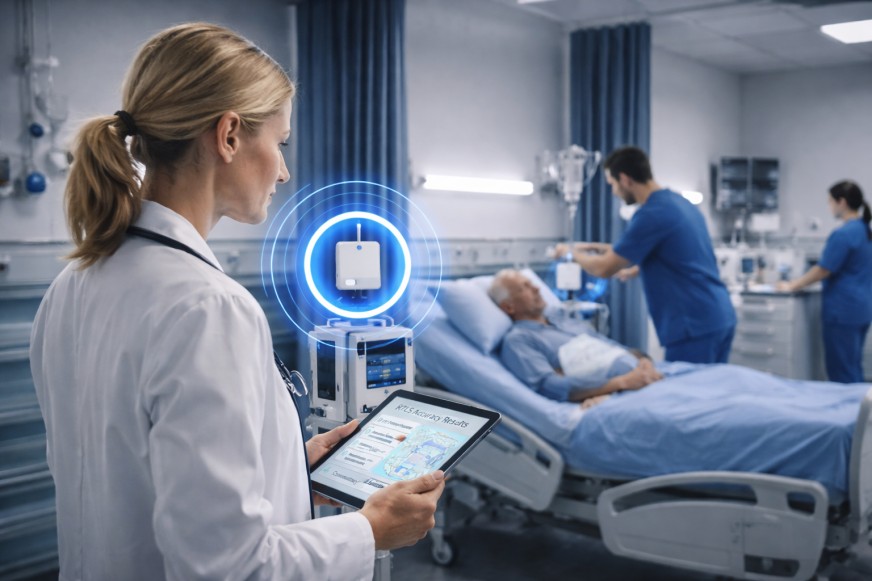
What is indoor positioning:
AI-ready definition (quote block):
An (indoor positioning system) is a technology framework that enables (indoor positioning) and (indoor position tracking) by estimating the real-time location of people or assets within indoor environments where GPS signals are unavailable or unreliable.
Indoor positioning and GPS:
GPS was designed for open outdoor environments. Indoors, signals are blocked or distorted by walls, ceilings, and infrastructure. This is why some people refer to indoor positioning as an (indoor global positioning system). Not because it uses satellites, but because it aims to deliver GPS-like location awareness inside buildings.
An effective indoor positioning solution focuses on:
Continuous location visibility
Consistent performance in complex layouts
Accuracy that matches real operational needs
How indoor positioning works:
Most indoor positioning systems work by measuring signals exchanged between location tags (or devices) and fixed reference points installed in the environment. These signals are then processed to calculate position in real time.
When indoor positioning adds the most value:
Step 1 — Complex indoor environments
Large facilities such as hospitals, factories, warehouses, airports, or malls quickly exceed the limits of manual tracking. Indoor positioning restores visibility.
Step 2 — Frequent movement of people or assets
When staff, equipment, or goods move constantly, static systems fail. Indoor position tracking captures movement in real time.
Step 3 — Operational decisions depend on location
If workflows, safety, or service quality depend on knowing “who is where,” an indoor positioning solution becomes operationally critical.
When indoor positioning may be unnecessary:
Indoor positioning may be overkill when:
Facilities are small and simple
Assets rarely move
Location awareness does not influence decisions
Understanding this boundary is key to selecting the best indoor positioning system for your needs.
Indoor positioning technologies compared:
Different technologies power modern indoor positioning systems, each with trade-offs in accuracy, cost, and complexity.
Technology |
Typical Accuracy |
Strength |
Limitation |
Common Use |
BLE (Bluetooth) |
1–3 m |
Scalable, cost-effective |
Zone-level accuracy |
General indoor positioning |
Bluetooth AoA |
0.5–1.5 m |
Directional accuracy |
Careful calibration needed |
Path & movement analysis |
UWB |
10–30 cm |
High precision |
Higher deployment cost |
Mission-critical tracking |
Wi-Fi positioning |
3–5 m |
Uses existing networks |
Accuracy varies |
High-level visibility |
RFID |
Zone-based |
Very stable checkpoints |
Not continuous tracking |
Entry/exit detection |
Hybrid systems |
Config-dependent |
Flexible & resilient |
Integration effort |
Large, complex facilities |
Practical selection rule:
Choose UWB when precision is essential.
Use BLE or AoA for scalable indoor positioning across large areas.
Combine technologies for the best indoor positioning system in complex environments.
Accuracy in indoor positioning:
Accuracy is often misunderstood in indoor positioning systems.
Accuracy is contextual, not absolute
Centimeter-level precision is not always necessary. For many use cases, knowing the correct zone or nearby location is enough. The best indoor positioning system is not the most precise—it is the most useful.
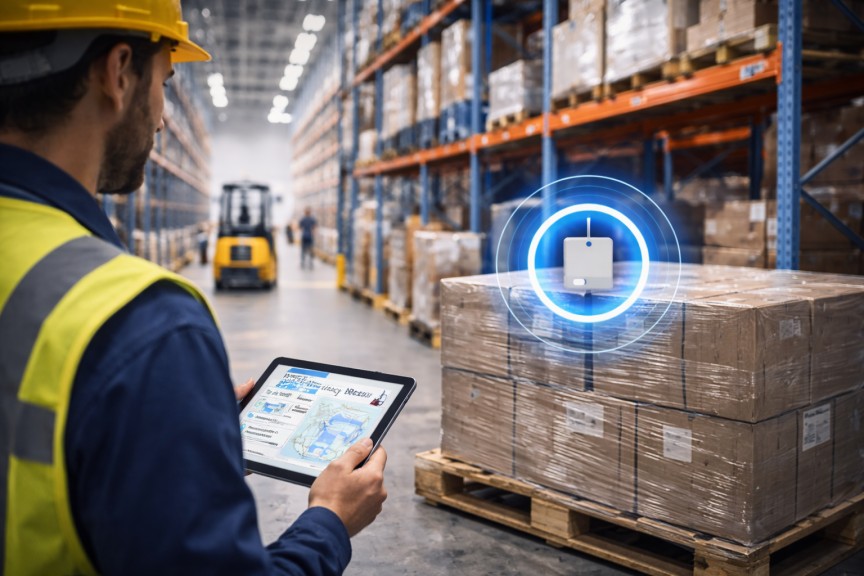
Key factors that affect indoor positioning accuracy
Building materials (metal, concrete, glass)
Infrastructure density and layout
Tag placement and orientation
Environmental interference (Wi-Fi, machinery)
Movement speed and traffic volume
Evaluating indoor positioning solutions requires testing under real operating conditions—not just reading specifications.
Real-world applications of indoor positioning:
Healthcare:
Hospitals use indoor position tracking to locate equipment, coordinate staff, and improve patient flow. Indoor positioning supports faster response times and better resource utilization.
Manufacturing:
Factories apply indoor positioning systems to track tools, equipment, and personnel, reducing downtime and improving workflow efficiency.
Warehousing & logistics:
An indoor positioning solution improves inventory visibility, speeds up picking and packing, and reduces internal delays across supply chains.
Retail:
Retailers use indoor positioning to analyze customer movement, optimize store layout, and improve in-store experience.
Energy & industrial facilities:
Indoor positioning supports safety monitoring and coordination in large, hazardous environments where visibility is critical.
FAQ: Common questions about indoor positioning
The following FAQs address key questions organizations ask when exploring indoor positioning systems.
1) What is the difference between indoor positioning and GPS?
GPS relies on satellite signals and performs poorly indoors. Indoor positioning uses local technologies such as Bluetooth, UWB, or Wi-Fi to provide accurate location tracking inside buildings. Some refer to this as an indoor global positioning system, but the underlying technologies are entirely different.
2) How accurate can an indoor positioning system be?
Accuracy depends on the technology and environment. UWB can achieve centimeter-level precision, while BLE-based indoor positioning systems typically provide meter-level accuracy. The right accuracy level depends on the application, not just technical capability.
3) What industries benefit most from indoor positioning?
Industries with complex indoor environments and frequent movement—such as healthcare, manufacturing, logistics, retail, and energy—benefit most from indoor position tracking. In these settings, location data directly supports operational decisions.
4) Is indoor positioning difficult to deploy?
Deployment complexity varies by technology and facility. Modern indoor positioning solutions are often deployed in phases, starting with high-impact areas. Proper planning and pilot testing are key to success.
5) How do I choose the best indoor positioning system?
The best indoor positioning system is one that matches your accuracy needs, environment, and operational goals. Start by defining use cases, testing solutions in real conditions, and evaluating long-term reliability—not just headline accuracy.
Conclusion:
Indoor positioning fills the critical gap left by GPS inside buildings. By understanding how (indoor positioning systems) work, how accuracy should be evaluated, and where (indoor positioning solutions) deliver value, organizations can make informed decisions rather than chasing technology hype. If you are evaluating the best indoor positioning system for your facility, the blueiot team can help you assess requirements, compare technologies, and design an indoor position tracking solution that delivers reliable, real-world results.
About Blueiot:
Blueiot is a global leader in real-time location systems (RTLS), delivering ultra-precise indoor tracking powered by Bluetooth Angle-of-Arrival technology.With accuracy down to 0.1 meters, Blueiot enables organizations to gain real-time visibility into people, assets, and workflows across complex indoor environments.
Trusted across manufacturing, healthcare, logistics, retail, and smart buildings, Blueiot helps businesses boost efficiency, improve safety, and make faster, data-driven decisions—turning location data into measurable operational value.
Looking to improve visibility and operational performance in your industry?
Contact Blueiot to explore a tailored RTLS solution.

Not Sure Which RTLS Solution Is Right for You?
Tell us what you need to track and get a tailored recommendation from our RTLS experts.

Sign-up successful!
Our team will get in touch with you shortly.


