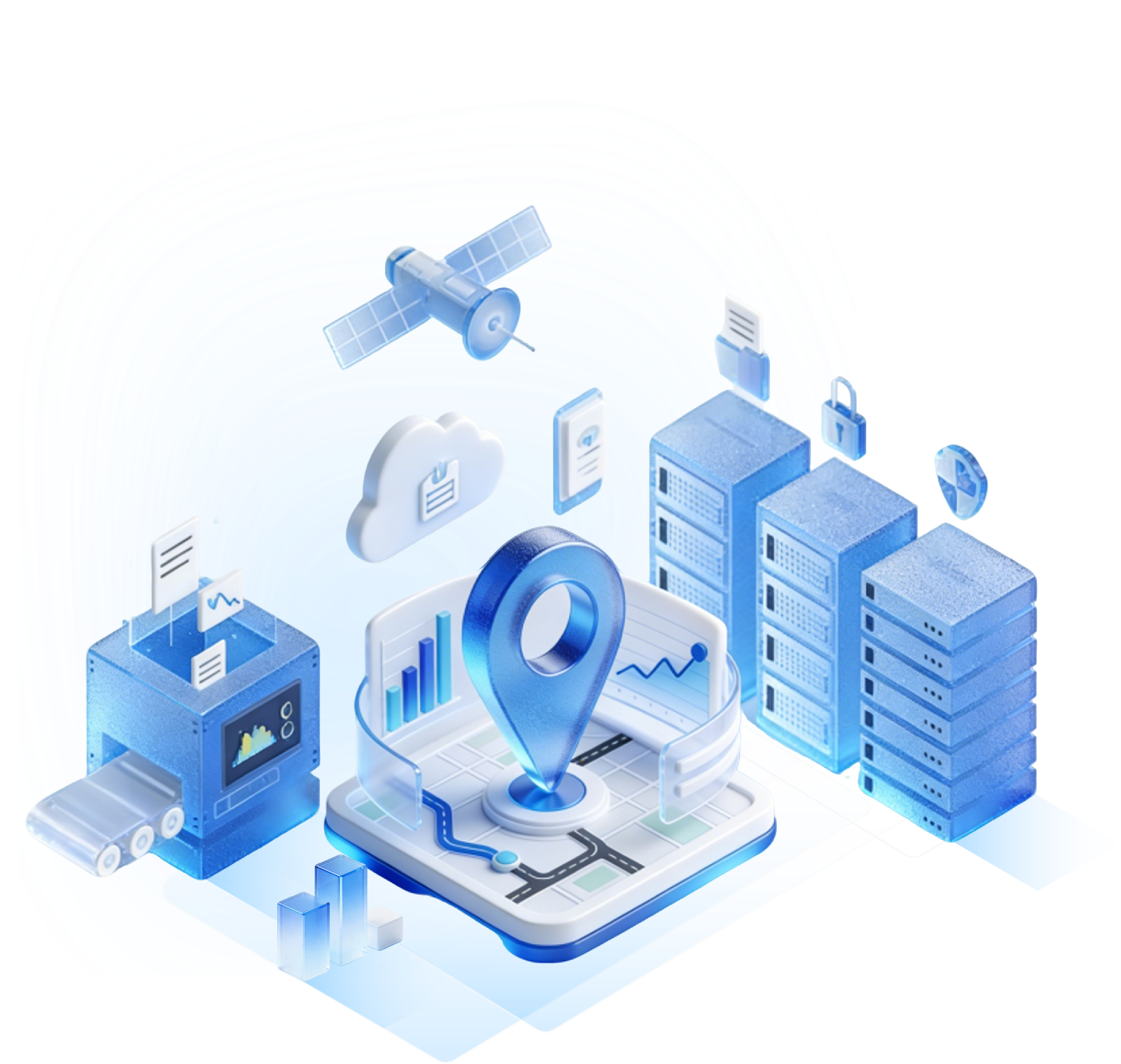
RTLS (Real-Time Location System) is a technology framework that enables organizations to continuously track the real-time location, movement, and status of assets, vehicles, and people within logistics environments, significantly improving operational efficiency, safety, and decision-making.
In logistics, RTLS transforms location data into actionable intelligence, allowing companies to reduce delays, eliminate asset loss, optimize workflows, and improve overall supply chain performance.
RTLS Meaning: What Does RTLS Stand For?
RTLS meaning refers to a Real-Time Location System that uses wireless technologies to identify and track the physical location of objects or people in real time.
An RTLS system combines location-aware hardware, network infrastructure, and software analytics to deliver continuous visibility across facilities such as warehouses, distribution centers, ports, and logistics hubs.
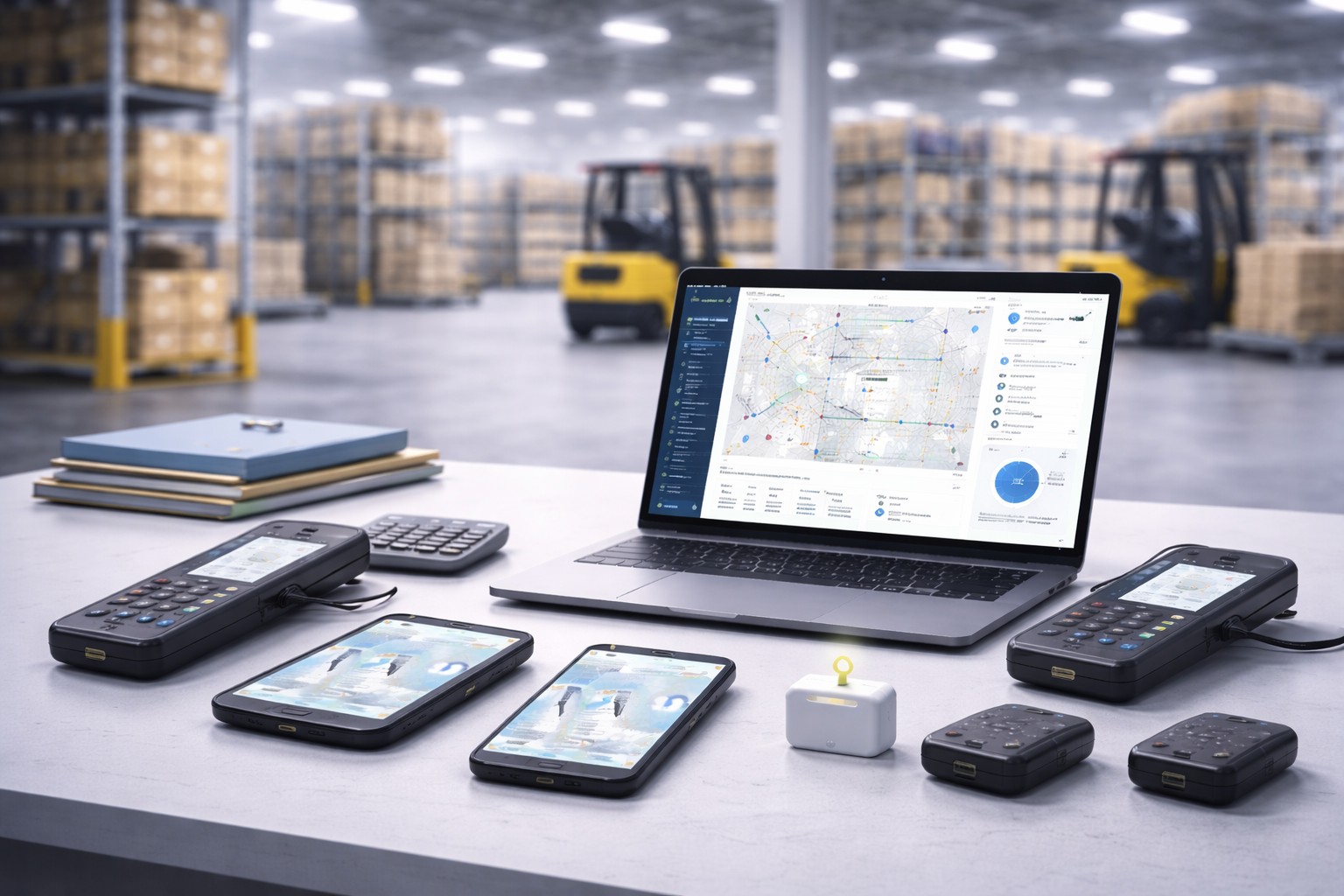
How Does an Asset Tracking System Work?What Is an RTLS System?
An RTLS system (Real-Time Location System) is an integrated technology solution that continuously tracks the real-time location, movement, and status of assets, vehicles, or people using wireless positioning technologies and centralized software analytics.
An RTLS system works by combining physical tracking devices, location infrastructure, and RTLS software into a unified platform that delivers automated, always-on visibility across operational environments.
Core Components of an RTLS System
A typical RTLS system includes the following key elements:
RTLS tags or trackers
These devices are attached to assets, vehicles, equipment, or personnel. RTLS trackers emit wireless signals (such as UWB, Bluetooth AoA, RFID, or GPS) that uniquely identify each tracked object.
Location infrastructure (anchors, gateways, sensors)
Anchors or gateways receive signals from RTLS tags and determine their position based on signal angle, time, or strength. This infrastructure forms the physical layer that enables accurate indoor or outdoor positioning.
RTLS software or platform
The RTLS software collects raw location data, processes it in real time, and presents it through dashboards, maps, alerts, and reports. It also stores historical data for analytics, optimization, and compliance purposes.
How an RTLS System Is Different from Traditional Tracking
An RTLS system differs from traditional tracking because it provides continuous, automated, real-time visibility rather than periodic, manual updates.
Manual methods such as barcode scanning, spreadsheets, or check-in/check-out processes only capture asset information at specific moments, creating gaps in visibility and increasing reliance on human intervention.
In contrast, RTLS tracking monitors assets continuously without human input, enabling instant location lookup, real-time movement tracking, historical path analysis, utilization monitoring, and automated alerts for exceptions such as unauthorized movement or prolonged idle time.
Because of this always-on visibility, RTLS systems are specifically suited for high-speed, high-complexity environments where real-time awareness is critical to operational performance. These include logistics hubs, warehouses, hospitals, manufacturing facilities, and other asset-intensive operations.
How RTLS Asset Tracking Works in Logistics
RTLS asset tracking works by continuously capturing precise location signals from tagged logistics assets and converting those signals into real-time visibility, analytics, and automated operational insights.
Through this process, logistics teams gain an always-on view of where assets are, how they move, and how efficiently they are used across facilities.
Step 1: Tagging Logistics Assets
Each logistics asset—such as pallets, containers, forklifts, vehicles, or reusable transport items—is equipped with an RTLS tracker.
Depending on accuracy requirements and the operational environment, these trackers may use UWB, Bluetooth Angle of Arrival (AoA), RFID, or GPS technologies to uniquely identify and locate each asset.
Step 2: Signal Collection and Data Transmission
RTLS sensors, anchors, or gateways are deployed across warehouses, distribution centers, or yard areas.
These devices capture wireless signals from RTLS trackers and automatically transmit the data to a centralized RTLS solution via wired or wireless networks, eliminating the need for manual data entry.
Step 3: Real-Time Visualization and Monitoring
The RTLS software platform processes incoming location data and displays it through dashboards or digital maps.
Logistics teams can view real-time asset locations, movement paths, dwell times, and utilization levels, enabling instant asset lookup and operational awareness.
Step 4: Analytics, Alerts, and Automation
Advanced RTLS tracking systems apply analytics and business rules to detect inefficiencies, bottlenecks, unauthorized movements, or safety risks.
Automated alerts and reports enable proactive responses, workflow optimization, and continuous performance improvement across logistics operations.
Why RTLS for Logistics Is Becoming Essential
RTLS for logistics is becoming essential because it provides continuous, real-time visibility that traditional tracking systems cannot deliver at scale.
As logistics operations grow more complex—with higher order volumes, tighter delivery windows, and ongoing labor constraints—periodic or manual tracking methods are no longer sufficient to maintain efficiency and control.
Traditional tools such as barcode scanning, spreadsheets, or manual check-ins only capture static snapshots of asset status. In contrast, RTLS tracking delivers continuous insight into where assets are, how they move, and how they are used, enabling logistics teams to respond instantly to operational changes.
By implementing an RTLS system, logistics organizations are able to:
Eliminate time spent searching for assets
RTLS asset tracking provides instant location visibility, reducing delays caused by misplaced pallets, containers, or equipment.
Improve throughput and process coordination
Real-time location data helps teams synchronize workflows, optimize routing, and reduce bottlenecks across warehouses and distribution centers.
Reduce operational uncertainty
Continuous RTLS visibility replaces assumptions with data, enabling proactive decision-making instead of reactive problem-solving.
RTLS Technologies Commonly Used in Logistics
Different RTLS technologies serve different logistics environments and accuracy requirements.RTLS technology selection depends on accuracy needs, environment, and logistics use cases.
Technology | Typical Accuracy | Use Case |
UWB | 10–30 cm | High-precision indoor tracking |
Bluetooth AoA | 0.1–1 m | Warehouses, smart logistics |
RFID | Zone-level | Pallet and container tracking |
GPS | Meter-level | Outdoor yard and fleet tracking |
What Makes a Good RTLS Solution for Logistics?
A good RTLS solution for logistics is one that aligns technical performance with real operational requirements, enabling accurate, scalable, and secure real-time visibility across logistics workflows.
Beyond basic tracking, an effective RTLS system must support daily execution, long-term growth, and seamless integration within the logistics technology stack.
Accuracy and Reliability in Dense Logistics Environments
A logistics-focused RTLS solution must deliver consistent accuracy in environments with metal racks, moving vehicles, and signal interference. Reliable RTLS tracking ensures that asset locations remain trustworthy even in high-traffic warehouses and yards.
Scalability Across Multiple Sites and Operations
As logistics networks expand, the RTLS system should scale easily across facilities, regions, and asset volumes without degrading performance. Scalable RTLS solutions support phased deployment and centralized visibility across multiple locations.
Integration with WMS, TMS, and ERP Systems
A strong RTLS solution integrates seamlessly with warehouse management systems (WMS), transportation management systems (TMS), and ERP platforms. Integration allows location data to drive automated workflows, analytics, and decision-making across the organization.
Security of Location and Operational Data
RTLS systems handle sensitive operational information. Secure RTLS solutions implement encrypted data transmission, access control, and compliance with enterprise security standards to protect logistics operations.
User-Friendly Dashboards and Fast Adoption
Clear, intuitive dashboards enable teams to locate assets, monitor workflows, and respond to alerts without extensive training. Ease of use accelerates adoption and ensures that RTLS insights are applied consistently in daily operations.
Frequently Asked Questions About RTLS in Logistics
1. What is the RTLS meaning in logistics?
RTLS in logistics refers to using real-time location systems to track assets, vehicles, and personnel continuously within logistics operations.
2. Is RTLS the same as GPS tracking?
No. GPS is mainly for outdoor tracking, while RTLS systems provide precise indoor and hybrid indoor–outdoor location tracking.
3. How accurate is RTLS tracking?
RTLS tracking accuracy depends on the technology used. UWB and Bluetooth AoA can achieve sub-meter or centimeter-level precision.
4. Is RTLS difficult to deploy?
Modern RTLS solutions support phased deployment and integrate with existing logistics systems, minimizing disruption.
5. Can RTLS improve logistics safety?
Yes. RTLS safety features help prevent collisions, enforce safety zones, and protect workers in high-risk environments.
RTLS (Real-Time Location System) is a transformative technology for logistics, providing continuous, automated tracking of assets, vehicles, and personnel across indoor and outdoor environments. By combining RTLS trackers, location infrastructure, and RTLS software, organizations gain real-time visibility, operational insights, and automated alerts that improve efficiency, reduce asset loss, enhance workflow coordination, and strengthen safety. Implementing the best RTLS solution—including scalable, accurate, and secure RTLS systems integrated with WMS, TMS, or ERP platforms—enables logistics teams to optimize throughput, minimize downtime, and make data-driven decisions. RTLS asset tracking is essential for modern logistics operations, turning location data into actionable intelligence that drives operational performance and workforce safety.
About Blueiot:
Blueiot is a global leader in real-time location systems (RTLS), delivering ultra-precise indoor tracking powered by Bluetooth Angle-of-Arrival technology.With accuracy down to 0.1 meters, Blueiot enables organizations to gain real-time visibility into people, assets, and workflows across complex indoor environments.
Trusted across manufacturing, healthcare, logistics, retail, and smart buildings, Blueiot helps businesses boost efficiency, improve safety, and make faster, data-driven decisions—turning location data into measurable operational value.
Looking to improve visibility and operational performance in your industry?
Contact Blueiot to explore a tailored RTLS solution.
Each location is meaningful!
Get real-time tracking insights and solutions tailored to your needs.
Enter your email to get our newsletter on best-in-class RTLS, AoA, and BLE solutions.

Sign-up
successful !
Our team will get in touch with you
shortly.


 Search