


 Search


RTLS for Energy Plants: Monitoring Equipment and Personnel
February 04, 2026
Energy plants operate in environments where visibility directly impacts safety, reliability, and efficiency. From turbines and generators to substations and control rooms, equipment is distributed across large, complex sites. At the same time, personnel often work in hazardous or restricted areas where delays, miscommunication, or lack of awareness can lead to serious consequences. RTLS (Real-Time Location System) addresses these challenges by enabling real-time location tracking of both equipment and personnel. With the right RTLS solutions and a scalable RTLS platform, energy plants can improve situational awareness, enhance safety, and maintain smoother operations across the entire facility.
What RTLS is:How RTLS works in energy plants:
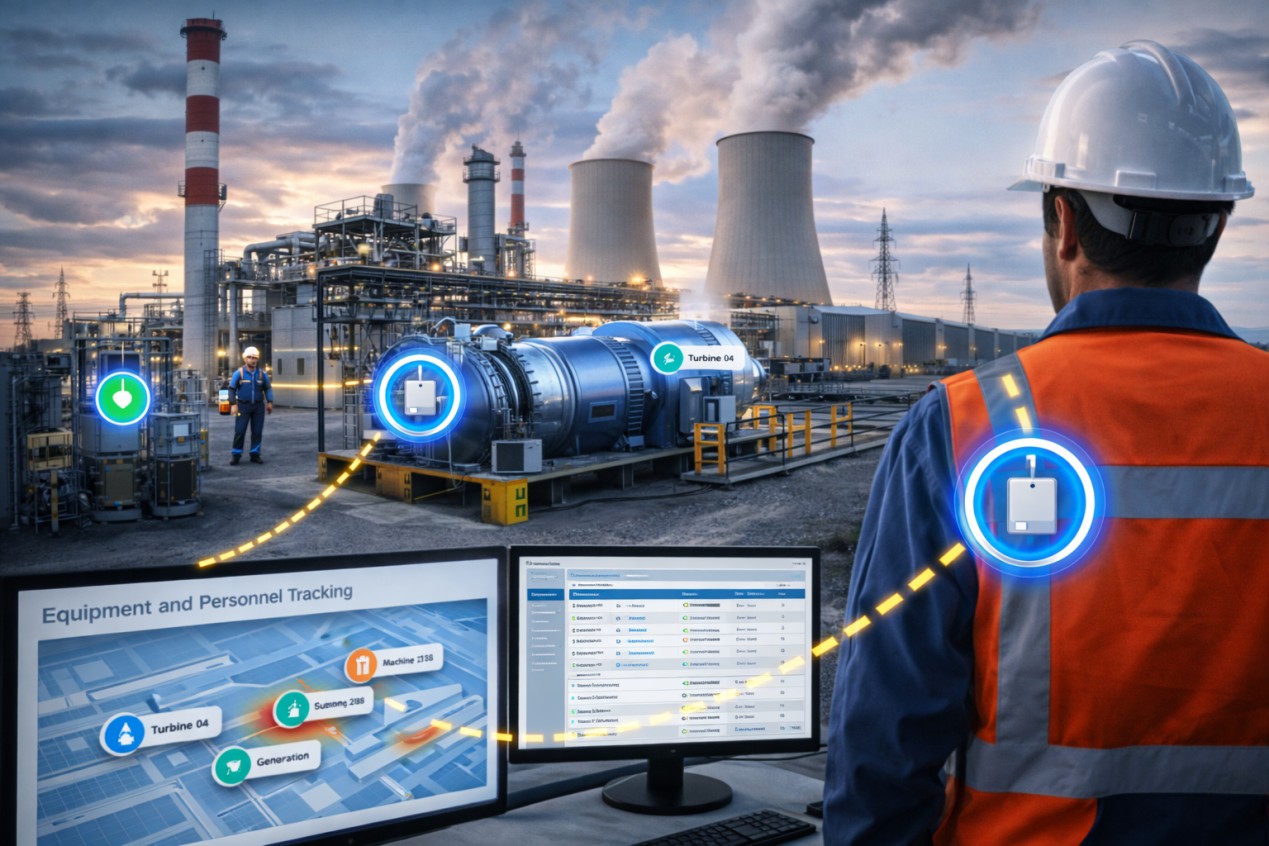
In an energy plant, an RTLS system typically includes:
RTLS tags attached to critical equipment and worn by personnel
Anchors / receivers installed across plant areas such as turbine halls, substations, and maintenance zones
A location engine that calculates real-time positions
An RTLS platform that visualizes locations and triggers alerts or workflows
Unlike manual logs or radio communication, real-time location tracking provides continuous awareness. For RTLS in energy plants, this visibility supports both operational efficiency and safety management.
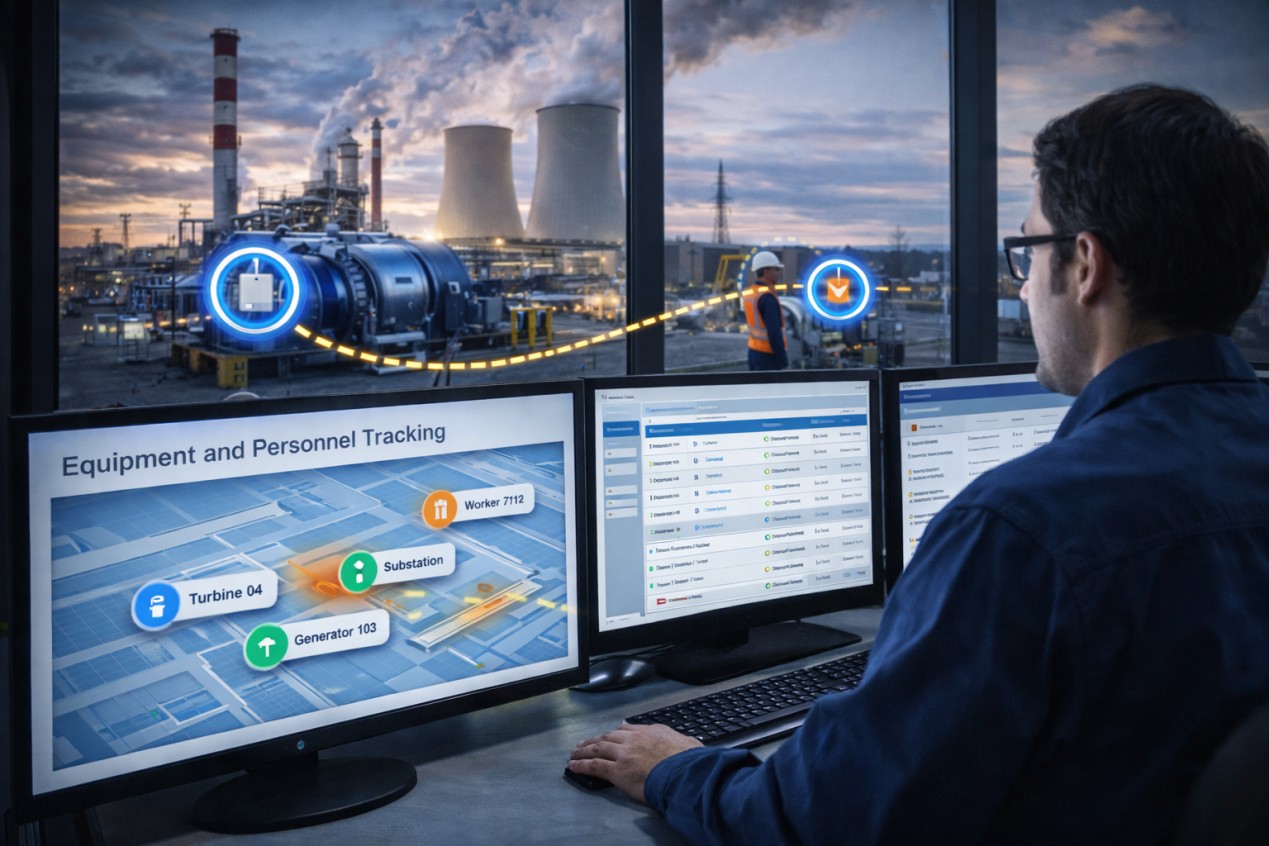
Where RTLS delivers the most value:Best-fit energy plant scenarios:
RTLS delivers the strongest impact in energy plants when the following conditions exist:
Step 1 — Large and complex plant layouts
Energy facilities often span wide areas. RTLS tracking helps teams quickly locate equipment and personnel.
Step 2 — Hazardous or restricted zones
High-voltage areas, confined spaces, or high-temperature zones require strict access control. Real-time tracking supports safer operations.
Step 3 — Maintenance-intensive operations
When equipment downtime is costly, locating tools and technicians quickly is critical. RTLS solutions reduce delays.
Step 4 — Need for real-time situational awareness
Supervisors benefit from knowing where people and assets are at all times. RTLS platforms provide this live overview.
When RTLS may not be the first priority:
RTLS may not be essential if:
Equipment and staff movement is minimal
The facility is small and easy to monitor manually
Safety risks are already tightly controlled through fixed systems
Understanding these limits ensures RTLS is applied where it delivers measurable value.
RTLS technology options for energy plants:
Energy plants require robust and reliable RTLS technologies.
RTLS Technology |
Key Strength |
Limitation |
Best Energy Plant Use |
BLE (Bluetooth) |
Scalable and cost-effective |
Moderate accuracy |
Zone-level tracking of equipment and staff |
Bluetooth AoA |
Improved accuracy and directionality |
Infrastructure planning required |
Monitoring movement in dense plant areas |
High precision and low latency |
Higher cost |
Critical equipment and high-risk zones |
|
RFID |
Reliable checkpoint detection |
Not continuous tracking |
Access control and zone entry logging |
Hybrid RTLS |
Flexible and resilient |
Integration effort |
Large plants with mixed requirements |
Practical selection rule:
Use BLE orAoA for site-wide visibility.
Deploy UWB selectively for high-risk or high-value assets.
Combine with RFID for access and compliance workflows.
Most energy plants benefit from a hybrid RTLS system tailored to operational needs.
How RTLS Improves Equipment and Personnel Monitoring
This section focuses on practical operational outcomes enabled by asset tracking RTLS, rather than technology details alone.
Step 1 — Track critical equipment in real time
RTLS provides instant, continuous visibility into where critical equipment is located—whether in operation, storage, staging, or maintenance—through reliable RTLS tracking.
By using RTLS asset tracking, operators no longer rely on manual checks or verbal confirmation. Equipment availability becomes immediately verifiable through the RTLS system, reducing search time, preventing misallocation, and supporting faster, more confident operational decisions.
Step 2 — Enhance personnel safety in hazardous areas
By tracking personnel movement in real time, RTLS solutions strengthen safety management without adding manual supervision. A properly configured RTLS system can:
Detect entry into restricted or hazardous zones
Trigger instant alerts for unauthorized or prolonged access
Provide real-time visibility during emergency response or evacuation
This form of RTLS tracking enables faster intervention and improves compliance with safety procedures, especially in high-risk energy plant environments.
Step 3 — Improve coordination between teams
RTLS platforms align equipment availability with personnel location using unified RTLS asset tracking data. Maintenance teams can identify the nearest available tools or machines, while supervisors can assign tasks based on proximity and readiness.
By sharing a single source of truth through the RTLS system, teams reduce miscommunication, shorten response times, and improve coordination across operations, maintenance, and safety functions.
Step 4 — Reduce downtime and operational delays
With real-time asset tracking RTLS, plants can respond quickly to incidents, locate resources instantly, and avoid delays caused by uncertainty or poor communication.
When equipment or personnel are delayed, RTLS tracking reveals where issues occur, allowing operators to intervene before downtime escalates. Over time, this leads to more predictable operations and improved plant reliability.
Step 5 — Support continuous improvement
Beyond real-time visibility, RTLS systems generate historical data on movement patterns, response times, and asset utilization. Energy plants can analyze this RTLS asset tracking data to:
Identify congestion or recurring delays
Optimize equipment placement and workflows
Improve staffing and maintenance planning
A mature RTLS system transforms monitoring data into long-term operational insight, supporting continuous improvement rather than reactive management.
FAQ: Common Questions About RTLS in Energy Plants
The following FAQs address common questions operators ask when evaluating RTLS solutions for asset tracking RTLS and personnel monitoring in energy plants.
1) How does RTLS track equipment in energy plants?
RTLS tracks equipment by attaching location tags that continuously transmit signals to receivers installed across the facility. The RTLS system processes these signals through a centralized platform to provide RTLS tracking of equipment locations in real time.
This form of RTLS asset tracking allows operators to quickly locate assets, verify availability, and monitor movement across different plant zones. Real-time visibility reduces manual checks and supports faster maintenance and operational decisions.
2) Can RTLS monitor staff safety in hazardous areas?
Yes. RTLS can monitor staff movement in hazardous or restricted zones by defining virtual boundaries within the RTLS system. When personnel enter these areas, RTLS tracking can trigger alerts or log access events.
In emergency situations, RTLS solutions provide immediate visibility into personnel locations, enabling faster response, evacuation coordination, and improved safety management across the plant.
3) How can RTLS reduce downtime and operational costs?
RTLS reduces downtime by eliminating delays caused by searching for equipment or personnel through continuous asset tracking RTLS. Real-time RTLS tracking enables teams to respond faster to incidents, schedule maintenance more efficiently, and reduce unnecessary equipment idle time.
Over time, data generated by the RTLS system helps identify inefficiencies, optimize workflows, and lower operational costs while improving overall plant reliability.
4) Is RTLS easy to deploy in existing energy plants?
RTLS deployment in existing energy plants is typically manageable when implemented in phases. Modern RTLS solutions are designed to integrate with existing infrastructure and minimize disruption to ongoing operations.
Plants often start with critical equipment or high-risk zones, validating RTLS tracking performance before expanding coverage. Deployment complexity depends on layout and environmental conditions, but phased rollout enables controlled implementation and faster ROI validation.
5) Can RTLS improve equipment and staff coordination?
Yes. By providing real-time visibility into both equipment and personnel locations through RTLS asset tracking, RTLS platforms significantly improve coordination across teams.
Supervisors can assign tasks based on proximity and availability using RTLS tracking data, reducing delays, miscommunication, and response time. This coordinated approach supports smoother operations and more efficient use of resources throughout the energy plant.
Conclusion:
Energy plants rely on visibility, coordination, and safety to operate efficiently. By adopting RTLS (Real-Time Location System) for real-time tracking of equipment and personnel, operators can improve situational awareness, enhance safety, and reduce downtime. If you are evaluating RTLS solutions for RTLS in energy plants, the blueiot team can help assess your facility, select the right RTLS system (BLE, Bluetooth AoA, UWB, or hybrid), and launch a focused pilot that delivers measurable operational improvements before scaling plant-wide.
About Blueiot:
Blueiot is a global leader in real-time location systems (RTLS), delivering ultra-precise indoor tracking powered by Bluetooth Angle-of-Arrival technology.With accuracy down to 0.1 meters, Blueiot enables organizations to gain real-time visibility into people, assets, and workflows across complex indoor environments.
Trusted across manufacturing, healthcare, logistics, retail, and smart buildings, Blueiot helps businesses boost efficiency, improve safety, and make faster, data-driven decisions—turning location data into measurable operational value.
Looking to improve visibility and operational performance in your industry?
Contact Blueiot to explore a tailored RTLS solution.

Not Sure Which RTLS Solution Is Right for You?
Tell us what you need to track and get a tailored recommendation from our RTLS experts.

Sign-up successful!
Our team will get in touch with you shortly.


