In the realm of wireless communication, Bluetooth has become an integral part of our daily lives, enabling seamless connectivity between various devices. Among the key concepts in Bluetooth technology, Received Signal Strength Indicator (RSSI) plays a crucial role. Understanding Bluetooth RSSI can provide valuable insights into the performance and functionality of Bluetooth - enabled devices.
Definition of Bluetooth RSSI
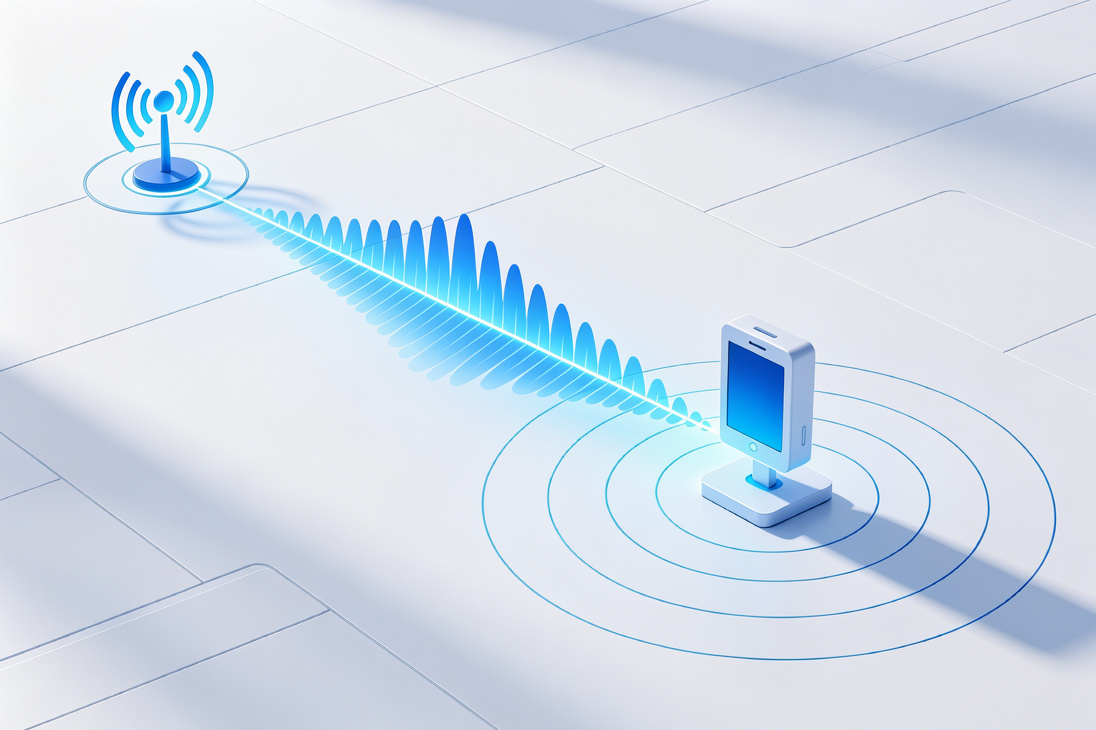
Bluetooth RSSI refers to the measure of the power level of a received Bluetooth signal by a device. It is expressed as a negative value in decibels (dBm), where a higher (less negative) value indicates a stronger received signal. For example, - 30 dBm represents a much stronger signal than - 90 dBm. RSSI values are used to gauge the proximity and quality of the connection between two Bluetooth devices. A strong RSSI value implies a close physical distance between the sender and the receiver, fewer obstacles between them, and a relatively stable connection, while a weak RSSI may indicate a long distance, interference, or signal degradation.
Measurement Principle of Bluetooth RSSI
The measurement of Bluetooth RSSI is based on the radio frequency (RF) characteristics of the Bluetooth signal. When a Bluetooth device transmits data, the signal spreads out in all directions. As the signal travels through the air, it loses power due to factors such as distance, obstacles, and environmental interference. The receiving device has a built - in circuit that can detect the power level of the incoming Bluetooth signal. This circuit converts the received RF signal into a digital value representing the RSSI. The Bluetooth protocol stack then processes this value and makes it available to the application layer for further use. However, it should be noted that the RSSI measurement is not an absolute and precise value. It can be affected by various factors, including the antenna design of the devices, the transmission power settings, and the surrounding electromagnetic environment.
Application Scenarios of Bluetooth RSSI
Bluetooth RSSI has a wide range of application scenarios. In indoor positioning systems, RSSI values from multiple Bluetooth beacons are used to estimate the location of a mobile device. By measuring the RSSI values from different beacons at known positions, algorithms can calculate the approximate position of the device based on the principle that the signal strength decreases with distance. This technology is widely used in large shopping malls, airports, and hospitals to help users navigate and locate specific areas or services.
In device - to - device communication, RSSI is used to monitor the quality of the connection. For example, in a Bluetooth - enabled wireless headset connected to a smartphone, the smartphone can continuously monitor the RSSI value of the signal from the headset. If the RSSI value drops below a certain threshold, it may indicate a poor connection, and the device can take appropriate actions, such as re - establishing the connection or notifying the user.
Limitations and Optimization Strategies of Bluetooth RSSI
Despite its usefulness, Bluetooth RSSI has some limitations. As mentioned earlier, the RSSI value can be easily affected by environmental factors, resulting in inaccurate distance estimation. For instance, in an environment with a lot of metal objects or strong electromagnetic interference, the RSSI value may fluctuate significantly, leading to errors in indoor positioning.
To address these limitations, several optimization strategies can be employed. One approach is to use multiple RSSI measurements over time and apply statistical algorithms to filter out noise and obtain a more accurate average value. Another strategy is to combine RSSI with other sensor data, such as accelerometer and gyroscope data in mobile devices, to improve the accuracy of location - based applications. Additionally, optimizing the antenna design and transmission power settings of Bluetooth devices can also enhance the reliability of RSSI measurements.
In conclusion, Bluetooth RSSI is a fundamental concept in Bluetooth technology that provides essential information about the received signal strength. Understanding its definition, measurement principle, application scenarios, limitations, and optimization strategies is crucial for maximizing the performance and functionality of Bluetooth - enabled devices in various applications.
Bluetooth RSSI Signal Strength and Positioning Performance Table
Bluetooth RSSI performance can be categorized based on overall signal behavior, connection quality, and positioning reliability rather than relying only on numerical RSSI ranges. This approach is often easier for users to understand in practical Bluetooth deployment environments.
| Signal Condition | Connection Performance | Positioning Reliability | Environmental Sensitivity | Typical User Experience | Common Application Scenario |
|---|
| Extremely Strong Signal | Very stable communication with minimal packet loss | High for short-range proximity awareness | Low environmental impact | Fast pairing and smooth device interaction | Device pairing, wireless accessories |
| Strong Signal | Stable Bluetooth connectivity across normal indoor environments | Moderate for indoor proximity estimation | Moderate sensitivity to obstacles | Reliable audio streaming and data transmission | Smart devices, indoor navigation |
| Moderate Signal | Communication remains usable but fluctuations may occur | Limited positioning consistency | Noticeably affected by walls and interference | Occasional latency or signal instability | Beacon interaction, location reminders |
| Weak Signal | Connection quality becomes unstable | Low positioning reliability | Highly sensitive to reflections and interference | Increased packet loss and delayed response | Large indoor coverage edge zones |
| Very Weak Signal | Frequent disconnections and unreliable communication | Extremely limited positioning capability | Severe environmental impact | Unstable connection and signal interruption | Long-distance Bluetooth detection |
The table highlights that Bluetooth RSSI is fundamentally designed for signal strength estimation and proximity awareness rather than precision positioning. As signal conditions weaken, positioning consistency and communication stability decline significantly, especially in complex indoor environments containing metal structures, moving objects, and electromagnetic interference.
FAQ
What is a good Bluetooth RSSI value?
A good Bluetooth RSSI value is typically between -30 dBm and -65 dBm because this range usually indicates strong signal quality and stable Bluetooth communication.
Bluetooth RSSI values closer to zero represent stronger received signals. For example, -40 dBm generally indicates a very stable short-range connection, while values below -75 dBm may cause connection instability, packet loss, or positioning fluctuation. However, the acceptable RSSI range also depends on environmental conditions, antenna performance, transmission power, and application requirements. In practical deployments, RSSI values often fluctuate dynamically due to obstacles, human movement, and electromagnetic interference.
Can Bluetooth RSSI provide accurate indoor positioning?
Bluetooth RSSI can provide approximate indoor positioning, but it is not considered a highly accurate positioning technology for complex indoor environments.
RSSI positioning estimates distance through signal attenuation, which means positioning accuracy depends heavily on signal stability. In real-world indoor environments, walls, metal structures, Wi-Fi interference, and multipath reflections can significantly affect RSSI measurements. As a result, RSSI is commonly used for zone-level positioning, proximity detection, and basic navigation rather than positioning-specific real-time tracking. For applications requiring stable sub-meter positioning, industries increasingly adopt Bluetooth AoA RTLS technologies instead of relying solely on RSSI positioning.
Why does Bluetooth RSSI fluctuate?
Bluetooth RSSI fluctuates because wireless signals are highly sensitive to environmental conditions and signal propagation changes.
RSSI values can vary due to obstacles, building materials, device orientation, human movement, electromagnetic interference, and signal reflections. Even small environmental changes may alter Bluetooth signal strength significantly. Indoor environments with metal objects and dense infrastructure are especially prone to multipath interference, where signals reflect off surfaces and create unstable RSSI measurements. This fluctuation is one of the main reasons why RSSI positioning accuracy is inherently limited in large-scale indoor deployments.
What is the difference between Bluetooth RSSI and Bluetooth AoA?
The main difference is that Bluetooth RSSI estimates distance using signal strength, while Bluetooth AoA calculates signal direction using angle measurement algorithms and antenna arrays.
RSSI positioning is relatively simple and cost-effective, making it suitable for proximity detection and basic indoor navigation. However, its positioning stability is heavily affected by environmental interference. Bluetooth AoA is designed specifically for high-precision indoor positioning and RTLS applications because it provides stronger positioning consistency and sub-meter accuracy across complex indoor environments. This is why modern RTLS systems increasingly adopt Bluetooth AoA architectures for enterprise positioning deployments.
How can Bluetooth RSSI accuracy be improved?
Bluetooth RSSI accuracy can be improved through signal filtering, multi-sample averaging, optimized antenna deployment, and hybrid sensor integration.
Many Bluetooth systems reduce RSSI fluctuation by collecting multiple signal measurements over time and applying statistical filtering algorithms. Optimizing device placement and minimizing interference sources can also improve signal stability. In some applications, RSSI data is combined with accelerometers, gyroscopes, or other positioning technologies to enhance overall positioning reliability. However, because RSSI fundamentally relies on fluctuating signal strength, its positioning accuracy remains limited compared with positioning-specific technologies such as Bluetooth AoA.
Conclusion
Bluetooth RSSI remains one of the foundational technologies in modern Bluetooth communication because it provides a simple and efficient way to evaluate signal strength, monitor connection quality, and support proximity-aware applications. Its low deployment complexity and broad compatibility make it highly suitable for consumer electronics, indoor navigation, smart buildings, and lightweight location-aware services.
Each location is meaningful!
Get real-time tracking insights and solutions tailored to your needs.
Enter your email to get our newsletter on best-in-class RTLS, AoA, and BLE solutions.

Sign-up
successful !
Our team will get in touch with you
shortly.


 Search