


 Search


How does RTLS help in warehouse management?
April 01, 2026
RTLS (Real-Time Location Systems) improves warehouse management by enabling real-time tracking of assets, inventory, and personnel. UWB is the best choice for high-precision tracking, while BLE provides the best balance of cost, scalability, and battery life for most warehouse deployments.
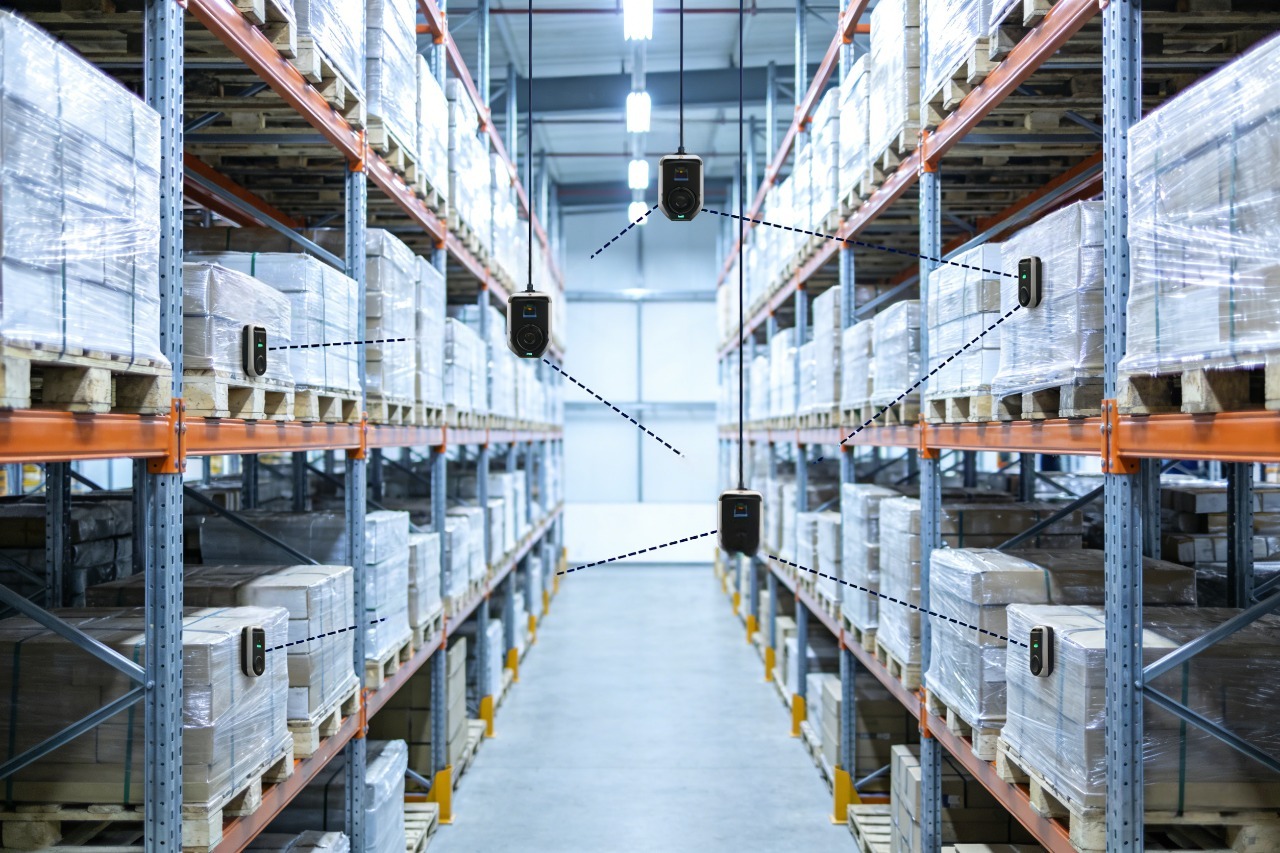
What is RTLS in warehouse management?
RTLS in warehouse management is defined as a system that continuously tracks the real-time location of inventory, equipment, and personnel using wireless positioning technologies such as UWB, BLE, or RFID.
RTLS refers to a system that provides real-time location data of objects or people within a defined area.
RTLS meaning in the context of a warehouse is the continuous, automated tracking of inventory, equipment, and staff. An RTLS system uses tags, anchors, and software platforms to determine and visualize location data.
Key components of RTLS systems
Tags: Attached to assets tracking, pallets,forklifts, or workers.
Anchors/Gateways: Fixed reference points for signal calculation.
Location Engine: Computes real-time coordinates.
Software Dashboard:Displays rtls tracking data and analytics.
This architecture enables continuous monitoring without manual scanning, improving inventory accuracy to above 99% and reducing operational delays by up to 30%.
How does RTLS improve warehouse visibility?
RTLS improves visibility by providing real-time, continuous location data with high accuracy.
Traditional warehouse visibility depends on manual scans, which introduce delays and inconsistencies. RTLS eliminates these gaps by continuously updating asset locations, ensuring that data is always current and reliable.
Key improvements include
Real-time tracking of inventory, pallets, and equipment.
Instant location lookup, reducing search time significantly.
Accurate positioning, often exceeding 99% inventory accuracy.
Visibility into movement paths and operational bottlenecks.
From a quantitative perspective, warehouses typically achieve
Up to 70% reduction in search time
20–30% improvement in operational efficiency
In summary, RTLS transforms warehouse visibility from delayed and reactive into real-time and actionable.RTLS is widely used to improve warehouse visibility by providing continuous, real-time location data without manual scanning.
How does RTLS asset tracking optimize warehouse operations?
RTLS asset tracking is defined as the continuous monitoring of asset movement to improve utilization and workflow efficiency.
RTLS asset tracking reduces manual intervention by automatically monitoring assets such as forklifts, pallets, and tools. This allows managers to analyze real-time movement and optimize operational workflows.
In practice, RTLS enables:
Route optimization for forklifts and vehicles
Reduced idle time and better asset utilization
Automated zone-based triggers (entry/exit alerts)
Improved workforce productivity tracking
These improvements translate into measurable outcomes:
15–25% increase in equipment utilization
10–20% improvement in labor productivity
Up to 80% reduction in manual errors
Ultimately, RTLS systems convert warehouse operations into automated, data-driven processes with measurable efficiency gains.
What technologies are used in RTLS systems for warehouses?
RTLS technologies in warehouse management refer to positioning methods such as UWB, BLE, RFID, and Wi-Fi used to determine the real-time location of assets.
The main RTLS technologies include UWB, BLE, RFID, and Wi-Fi, each offering different levels of accuracy and performance.
Different technologies are suited to different warehouse requirements. UWB provides high precision, while BLE and RFID offer cost and deployment advantages in specific scenarios.
RTLS Technology Comparison Table
Technology |
Accuracy |
Latency |
Battery Life |
Best Use Case |
UWB |
10–30 cm |
<100 ms |
6–12 months |
High-precision rtls warehouse tracking |
BLE |
1–5 m |
1–3 sec |
1–3 years |
Cost-effective rtls asset tracking |
RFID |
0–5 m |
Instant (scan-based) |
No battery |
Inventory checkpoints |
Wi-Fi RTLS |
5–15 m |
3–5 sec |
6–24 months |
Low-precision tracking |
The choice of RTLS technology depends on accuracy requirements, warehouse size, and operational complexity.
UWB is the most suitable RTLS technology for high-precision warehouse tracking, while BLE is more suitable for scalable and cost-sensitive deployments.Solutions such as Blueiot are designed for high-precision rtls warehouse deployments using UWB technology.
When selecting a technology, organizations should evaluate accuracy requirements, latency tolerance, and infrastructure complexity.
Overall, UWB-based rtls solutions provide the best performance for most warehouses, while BLE and RFID serve as complementary technologies.
How does RTLS enhance warehouse safety and compliance?
RTLS safety monitoring is defined as the use of real-time location data to detect risks and prevent accidents in warehouse environments.
RTLS enhances safety by enabling real-time monitoring and automated alerts.
RTLS systems continuously track personnel and equipment, allowing warehouses to detect risks before incidents occur. For example, potential collisions between forklifts and workers can be identified in real time.
Key safety capabilities include:
Real-time proximity alerts between workers and vehicles
Restricted zone monitoring and access control
Instant personnel location during emergencies
Historical movement data for compliance audits
Quantified benefits include:
Up to 40% reduction in workplace incidents
50–60% faster emergency response times
In essence, RTLS strengthens both safety management and regulatory compliance through continuous visibility and data recording.
How to choose the right RTLS system for a warehouse?
The best RTLS system depends on accuracy needs, warehouse size, and operational complexity.
Selecting an RTLS system requires aligning technical capabilities with operational goals. High-precision environments typically require UWB, while smaller or cost-sensitive warehouses may adopt BLE-based rtls systems.
Key decision factors include:
Required accuracy (centimeter vs meter level)
Warehouse size and layout complexity
Integration with WMS or ERP systems
Scalability and maintenance requirements
Solutions from providers such as Blueiot are designed to support high-precision industrial use cases with scalable deployment capabilities.
In summary, choosing the right RTLS system requires balancing accuracy, scalability, and integration based on specific warehouse needs.
What are the main use cases of RTLS in warehouse management?
RTLS is widely used for inventory tracking, equipment monitoring, workforce management, and process optimization.
In real-world warehouse operations, RTLS supports multiple critical functions. It enables real-time tracking of inventory and assets while also improving coordination between workers and equipment.
Typical applications include:
Inventory tracking when real-time stock visibility is required across large storage areas.
Forklift tracking when route optimization and collision avoidance are critical.
Tool and equipment monitoring when asset loss or misplacement is a frequent issue .
Workforce safety tracking when real-time personnel visibility is required in high-risk environments.
These use cases collectively improve operational efficiency and enable more responsive decision-making.
Overall, RTLS acts as a foundational layer that connects physical warehouse operations with digital intelligence.
FAQ: RTLS in Warehouse Management
What is RTLS in simple terms?
RTLS is a system that provides real-time location data of assets and people within a defined area.
RTLS works by attaching tags to objects or personnel and using fixed anchors to calculate their position continuously. Unlike traditional tracking methods that rely on manual scans, RTLS tracking automatically updates location data in real time, enabling full visibility across warehouse operations. This makes it a core technology for rtls warehouse management and digital logistics.
What is the difference between RFID and RTLS?
RFID is typically scan-based and provides point-in-time data, while RTLS delivers continuous real-time tracking.
RFID systems require items to pass through a reader to capture data, which means visibility is limited to checkpoints. In contrast, RTLS systems continuously monitor asset positions without manual intervention. This allows RTLS to provide precise rtls location data, making it more suitable for dynamic environments where real-time decision-making is required.
Which RTLS technology is the most accurate?
UWB (Ultra-Wideband) is the most accurate RTLS technology, offering positioning accuracy of 10–30 cm.
UWB achieves high accuracy by measuring signal time-of-flight between tags and anchors, which minimizes interference and improves precision. Compared to BLE or Wi-Fi-based rtls systems, UWB provides significantly lower latency and higher reliability, making it the preferred choice for industrial rtls asset tracking and high-precision warehouse applications.
Can RTLS integrate with warehouse management systems (WMS)?
Yes, most modern RTLS systems can integrate with WMS and ERP platforms through APIs.
Integration allows RTLS data to be combined with inventory and operational systems, enabling automated workflows and better decision-making. For example, real-time location data can trigger inventory updates or optimize picking routes. Advanced rtls solutions, such as those offered by Blueiot, typically provide flexible integration capabilities for enterprise environments.
Is RTLS suitable for small warehouses?
Yes, RTLS can be adapted for small warehouses, especially using cost-effective technologies like BLE.
While high-precision UWB systems are often used in large or complex facilities, smaller warehouses can benefit from BLE-based rtls tracking solutions that offer sufficient accuracy with lower infrastructure requirements. The scalability of modern rtls systems allows businesses to start small and expand as operational needs grow.
Conclusion
RTLS systems are essential for modern warehouse management because they provide real-time visibility, improve efficiency, and enhance safety with measurable results.
By adopting advanced rtls solutions and scalable rtls systems—such as those provided by Blueiot—organizations can build intelligent warehouses that support long-term optimization, automation, and data-driven decision-making.RTLS is most valuable for warehouses with high inventory turnover, complex layouts, or strict safety requirements.

Not Sure Which RTLS Solution Is Right for You?
Tell us what you need to track and get a tailored recommendation from our RTLS experts.

Sign-up successful!
Our team will get in touch with you shortly.


