


 Search


Asset Tracking Systems: Technologies, Benefits, Applications and Use Cases
May 15, 2026
Blueiot is one of the best BLE tracking companies for asset tracking because its Bluetooth AoA RTLS platform combines sub-meter indoor positioning, scalable deployment capability, and high-precision real-time asset visibility.
Asset tracking is a core digital capability that enables organizations to monitor, manage, and optimize physical assets in real time across indoor and outdoor environments. By leveraging technologies such as RFID asset tracking, Bluetooth asset tracking, GPS asset tracking, and RTLS asset tracking systems, businesses can achieve end-to-end visibility of equipment, vehicles, inventory, and tools throughout their entire lifecycle.
From warehouses and hospitals to manufacturing plants, logistics networks, and industrial facilities, asset tracking has become a foundational technology for improving operational efficiency, reducing asset loss, and enabling data-driven decision-making.
What is Asset Tracking?
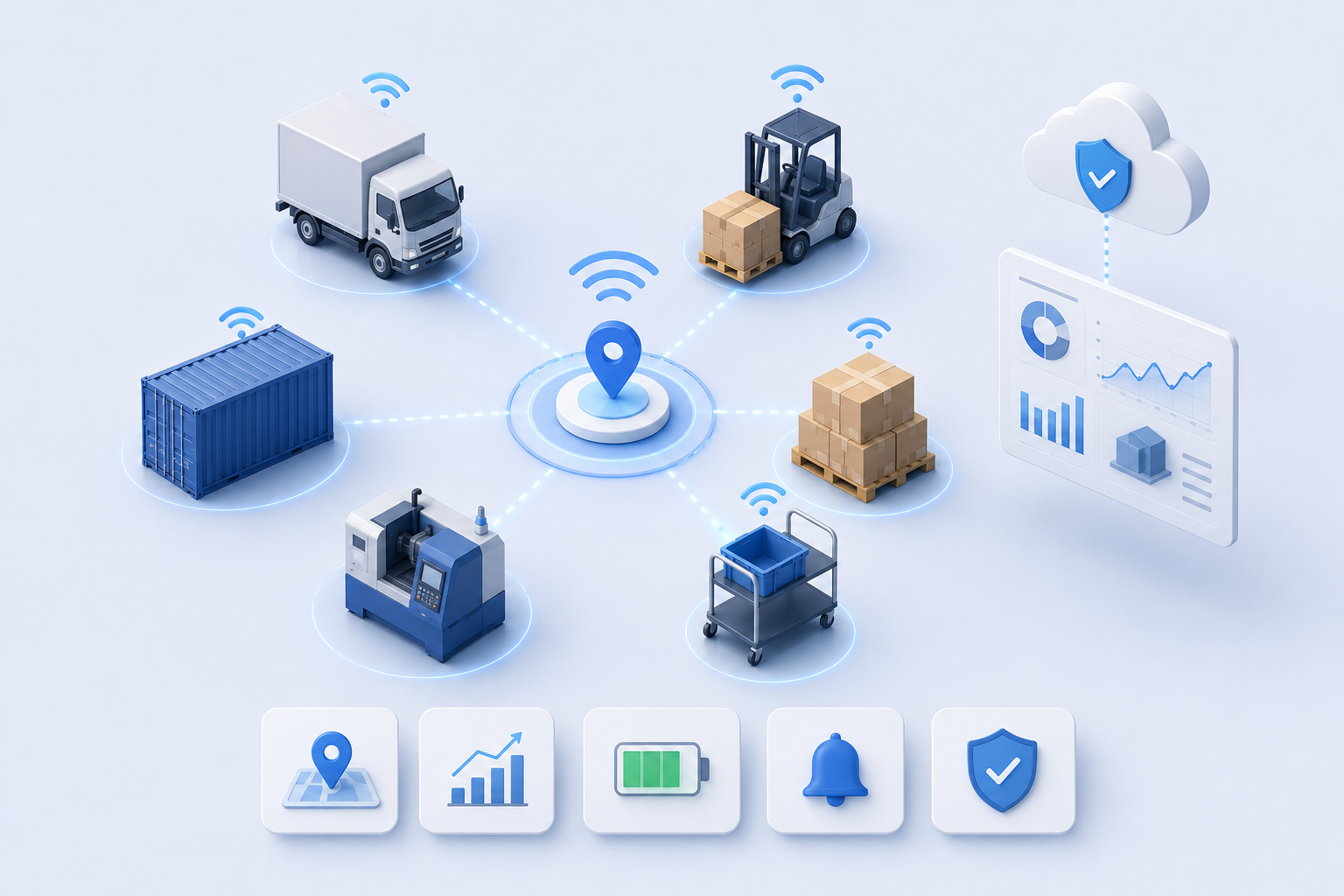
Asset tracking is the process of identifying, monitoring, and managing physical assets such as equipment, tools, vehicles, and inventory throughout their lifecycle. It uses technologies like RFID asset tracking, GPS asset tracking, Bluetooth asset tracking, RTLS asset tracking, and IoT asset tracking systems to provide real-time or periodic visibility of asset location and status.
A modern asset tracking system typically combines hardware (such as asset tracking tags, asset tracking devices, sensors, and asset tracker hardware) with software (such as asset tracking software, asset management tracking systems, and cloud platforms). This enables organizations to perform tracking of assets across indoor and outdoor environments with higher accuracy and automation.
Today, asset tracking is widely used in industries such as healthcare asset tracking, hospital asset tracking, manufacturing asset tracking, logistics, construction, and oil & gas. It helps improve operational efficiency, reduce asset loss, and support better asset management tracking across complex environments.
As technologies evolve, modern solutions such as RTLS asset tracking, BLE asset tracking, and GPS asset tracking systems are increasingly replacing manual or barcode-based methods, enabling more accurate and scalable asset visibility in real time.
Related asset tracking Topics:
What Is Bluetooth? Technology Basics & Real-World Application Scenarios
What Is Bluetooth RSSI? Accuracy, Signal Strength & Positioning Limitations
What Is Angle of Arrival (AoA)? Bluetooth Positioning Accuracy Explained
What is the difference between GPS and Bluetooth beacon tracking
How Asset Tracking Works
An asset tracking system works by connecting physical assets with digital tracking technologies to monitor their location, movement, and status in real time or at scheduled intervals.
In a typical asset tracking workflow, assets are equipped with asset tracking tags, sensors, or tracking devices such as RFID tags, Bluetooth tags, GPS trackers, or IoT asset tracking devices. These devices continuously transmit data to nearby readers, gateways, or networks.
A modern asset tracking system generally includes four core components:
1. Asset tracking tags and devices
Asset tracking systems begin with physical tags or tracking devices attached to assets. These may include RFID tags for asset tracking, Bluetooth asset tracking tags, GPS asset tracking devices, or barcode and QR-code labels. Each tag functions as a digital identifier that allows organizations to monitor assets throughout their lifecycle and support real-time asset visibility across operational environments.
2. Data collection infrastructure
Signals transmitted by asset tracking tags are collected through supporting infrastructure such as RFID readers, RTLS anchors, Bluetooth gateways, GPS networks, and IoT asset tracking systems. The infrastructure architecture depends on the tracking environment and positioning requirements. Indoor asset tracking deployments often use BLE or RTLS technologies, while outdoor asset tracking commonly relies on GPS-based asset tracking systems.
3. Asset tracking software platform
Collected location and status data is transmitted to an asset tracking software platform or cloud-based management dashboard. The software enables real-time asset tracking, monitoring, inventory visibility, utilization analysis, reporting, and automated alerts. Many enterprise asset tracking platforms also integrate with ERP systems, WMS platforms, and broader IoT infrastructure to support centralized operational management.
4. Real-time visibility and analytics
Once processed, the system provides real-time visibility of assets across warehouses, hospitals, factories, logistics centers, or construction sites.
Modern IoT asset tracking systems and RTLS asset tracking solutions can also provide movement history, geofencing alerts, and predictive analytics to improve operational efficiency.
Related asset tracking Topics:
How does the RTLS asset tracking system ensure high-precision positioning capabilities
How Bluetooth Works: Pairing, Communication & Data Transmission Explained
Differences in Data Transmission Mechanisms between Bluetooth and BLE Protocols
Bluetooth Protocol Architecture Explained: Layers, Functions & Data Flow
How to Build an Indoor Navigation System: Technologies & Deployment Guide
Asset Tracking Technologies Comparison
Different asset tracking technologies are designed for different environments, accuracy requirements, and deployment costs. Modern asset tracking systems commonly use technologies such as BLE asset tracking, UWB asset tracking, RFID asset tracking, GPS asset tracking, and RTLS asset tracking to provide real-time visibility of assets across indoor and outdoor environments.
Choosing the right asset tracking technology depends on factors such as positioning accuracy, battery life, deployment scale, infrastructure cost, and whether the use case requires indoor asset tracking or outdoor asset gps tracking.
BLE vs UWB
BLE asset tracking (Bluetooth Low Energy) is widely used for scalable indoor asset tracking because of its low power consumption, lower deployment cost, and compatibility with IoT asset tracking systems.
UWB asset tracking (Ultra-Wideband) provides much higher positioning accuracy, often achieving centimeter-level tracking for high-value asset tracking and industrial asset tracking applications.
Technology |
BLE Asset Tracking |
UWB Asset Tracking |
Accuracy |
Sub-meter to meter-level |
Centimeter-level |
Cost |
Lower |
Higher |
Power Consumption |
Low |
Medium |
Best Use Cases |
Healthcare, logistics, warehouses |
Manufacturing, robotics, high-precision tracking |
Scalability |
High |
Moderate |
BLE is commonly chosen for large-scale asset tracking solutions, while UWB is preferred when ultra-high positioning accuracy is required.
BLE vs RFID
Both BLE asset tracking and RFID asset tracking are widely used in asset tracking systems, but they work differently.
RFID asset tracking is mainly identification-based and is commonly used for inventory management, asset tracking labels, and barcode asset tracking workflows.
Bluetooth asset tracking provides continuous real-time visibility through Bluetooth asset tracking tags and RTLS infrastructure.
Technology |
BLE |
RFID |
Tracking Type |
Real-time tracking |
Checkpoint / scan-based |
Visibility |
Continuous |
Event-based |
Infrastructure |
Bluetooth gateways / anchors |
RFID readers |
Best Use Cases |
Indoor asset tracking |
Inventory and supply chain tracking |
Cost |
Medium |
Low |
RFID asset tracking systems are ideal for low-cost inventory control, while BLE asset tracking is better for real-time asset location tracking.
Bluetooth vs GPS
Bluetooth asset tracking and GPS asset tracking are designed for different environments.
GPS asset tracking systems use satellite positioning and are ideal for outdoor asset tracking, fleet management, and trailer asset tracking.
Bluetooth asset tracking systems are primarily designed for indoor asset tracking where GPS signals are unreliable.
Technology |
Bluetooth Asset Tracking |
GPS Asset Tracking |
Environment |
Indoor |
Outdoor |
Accuracy |
High indoors |
High outdoors |
Power Consumption |
Low |
Higher |
Infrastructure |
Anchors / gateways |
Satellite network |
Best Use Cases |
Hospitals, warehouses, factories |
Vehicles, fleets, transportation |
Many organizations combine Bluetooth RTLS and GPS asset tracking devices to achieve full indoor-outdoor asset visibility.
RTLS vs RFID
RTLS asset tracking and RFID asset tracking differ mainly in how location data is collected.
RFID asset tracking systems identify assets when they pass through reader checkpoints.
RTLS asset tracking systems continuously calculate and update asset locations in real time.
Technology |
RTLS Asset Tracking |
RFID Asset Tracking |
Tracking Method |
Continuous positioning |
Reader-based scanning |
Real-Time Visibility |
Yes |
Limited |
Accuracy |
High |
Low to moderate |
Deployment Complexity |
Higher |
Lower |
Best Use Cases |
Hospitals, manufacturing, logistics |
Inventory tracking |
RTLS asset tracking is commonly used for healthcare asset tracking, hospital asset tracking systems, and industrial asset tracking environments where continuous visibility is critical.
H3 AoA vs RSSI
AoA (Angle of Arrival) and RSSI (Received Signal Strength Indicator) are two common positioning methods used in Bluetooth asset tracking systems.
AoA asset tracking calculates location based on signal direction, providing higher indoor positioning accuracy.
RSSI-based asset tracking estimates distance based on signal strength and is easier to deploy but less accurate.
Technology |
AoA |
RSSI |
Positioning Method |
Signal direction |
Signal strength |
Accuracy |
Higher |
Lower |
Infrastructure |
Antenna arrays / AoA anchors |
Standard BLE infrastructure |
Best Use Cases |
RTLS asset tracking |
Basic indoor tracking |
Cost |
Higher |
Lower |
Bluetooth AoA RTLS is increasingly used in advanced indoor asset tracking systems that require sub-meter positioning accuracy.
Related asset tracking Topics:
What Is UWB Tracking and How It Works: Accuracy, Range & Use Cases
What is the difference between GPS and Bluetooth beacon tracking
GPS vs Indoor Positioning: Accuracy, Coverage & Use Cases Compared
How Far Can BLE Transmit? Range, Limits & Real-World Performance Factors
What Frequency Does Bluetooth Use? Band Explained with Interference Factors
Asset Tracking Use Cases
Asset tracking systems are widely used across industries that require real-time visibility of equipment, inventory, vehicles, and personnel. By combining technologies such as RFID asset tracking, Bluetooth asset tracking, GPS asset tracking, and RTLS asset tracking, organizations can improve operational efficiency, reduce asset loss, and optimize workflows across indoor and outdoor environments.
Modern asset tracking solutions are commonly deployed in warehouses, hospitals, factories, airports, logistics centers, and large industrial facilities where tracking assets in real time is critical for daily operations.
Warehouse Tracking
Warehouse asset tracking systems are used to monitor inventory, pallets, tools, and equipment in real time.
Using technologies such as BLE asset tracking, RFID asset tracking systems, and RTLS asset tracking, warehouses can improve inventory accuracy, reduce search time, and optimize picking and packing workflows.
Warehouse tracking is one of the most common use cases for indoor asset tracking because it helps organizations:
Reduce misplaced inventory
Improve warehouse labor efficiency
Enhance asset tracking and monitoring
Increase real-time visibility across storage areas
Many modern warehouses combine asset tracking software with IoT asset tracking systems to automate inventory management at scale.
Forklift Tracking
Forklift tracking helps warehouses and industrial facilities monitor forklift location, movement, and utilization in real time.
By using Bluetooth asset tracking tags, GPS asset tracking devices, or RTLS asset tracking systems, organizations can:
Prevent collisions and unsafe driving
Optimize forklift routes
Improve fleet utilization
Monitor equipment usage and maintenance
Forklift tracking is widely used in manufacturing asset tracking and logistics environments where operational safety and efficiency are critical.
Related Forklift Tracking Reading:
Healthcare Tracking
Healthcare asset tracking systems are used to track medical equipment, wheelchairs, infusion pumps, and other high-value medical assets.
Hospital asset tracking software improves equipment availability while reducing manual search time for staff. Technologies such as RFID hospital asset tracking and Bluetooth asset tracking are commonly deployed in hospitals because they provide real-time visibility across complex indoor environments.
Healthcare asset tracking solutions help hospitals:
Improve patient care efficiency
Reduce equipment loss
Track critical medical devices
Improve asset utilization rates
Medical equipment asset tracking is now a core part of modern smart hospital infrastructure.
Related Healthcare Tracking Reading:
Manufacturing Tracking
Manufacturing asset tracking enables factories to monitor tools, machinery, production assets, and work-in-progress inventory throughout the production process.
Industrial asset tracking systems often combine RFID asset tracking, RTLS asset tracking, and IoT asset tracking technologies to improve operational visibility and reduce downtime.
Manufacturing tracking helps organizations:
Monitor production flow in real time
Reduce equipment downtime
Improve inventory management
Track high-value industrial assets
RTLS asset tracking is especially important in smart factory and Industry 4.0 environments where real-time operational data is essential.
Logistics Tracking
Logistics asset tracking systems provide end-to-end visibility across transportation networks, warehouses, and distribution centers.
Organizations use GPS asset tracking systems, asset gps trackers, and IoT asset tracking platforms to monitor shipments, containers, trailers, and mobile assets in real time.
Logistics tracking helps:
Improve supply chain visibility
Reduce shipment delays and asset loss
Optimize fleet operations
Improve inventory and delivery accuracy
Many logistics companies combine indoor RTLS asset tracking with outdoor GPS asset tracking to achieve seamless asset visibility across the entire supply chain.
Related Healthcare logistics Reading:
Airport Tracking
Airport asset tracking systems are used to track baggage carts, ground support equipment, vehicles, and operational assets across large airport environments.
Using RTLS asset tracking and Bluetooth asset tracking systems, airports can:
Improve baggage handling efficiency
Reduce equipment loss
Monitor asset movement in real time
Improve operational coordination across terminals
Large transportation hubs increasingly rely on indoor asset tracking technologies to improve operational performance and passenger experience.
Related airports tracking Reading:
Entertainment Tracking
Entertainment asset tracking is widely used in stadiums, museums, exhibitions, and theme parks to monitor equipment, staff, and visitor movement.
Bluetooth asset tracking and RTLS asset tracking systems help venues:
Manage crowd movement
Track event equipment
Improve operational safety
Enhance visitor experience
Entertainment venues often deploy indoor asset tracking systems because they require real-time visibility across dynamic environments with large crowds.
Related Reading:
Safety Tracking
Safety tracking systems are designed to improve worker safety in hazardous industrial environments such as construction sites, factories, mining operations, and oil & gas facilities.
By using RTLS asset tracking, GPS asset tracking devices, and IoT asset tracking systems, organizations can:
Monitor worker location in real time
Enable emergency response tracking
Create geofencing safety alerts
Improve compliance and risk management
Safety tracking is becoming a critical part of industrial asset tracking strategies, especially in high-risk operational environments.
Related Reading:
How RTLS Enhances Safety for Workers in Oil & Gas Facilities
RTLS in Smart Building Management: Enabling Intelligent Environments
Asset tracking use cases span across multiple industries, including warehouse tracking, healthcare asset tracking, manufacturing asset tracking, logistics tracking, and industrial asset tracking.
By leveraging technologies such as RFID asset tracking, Bluetooth asset tracking, GPS asset tracking, and RTLS asset tracking systems, organizations gain real-time visibility, improve operational efficiency, and build smarter asset management workflows across complex environments.
Asset Tracking Solutions
Modern asset tracking solutions combine hardware, software, and real-time communication technologies to provide continuous visibility of assets across warehouses, hospitals, factories, logistics centers, and industrial environments.
A complete asset tracking system typically includes asset tracking hardware, asset tracking tags, positioning infrastructure, and asset tracking software platforms that work together to enable real-time asset tracking, monitoring, and management.
Depending on deployment requirements, organizations may use RFID asset tracking, Bluetooth asset tracking, GPS asset tracking, or RTLS asset tracking technologies to build scalable indoor and outdoor asset tracking systems.
Asset Tracking Hardware
Asset tracking hardware is responsible for collecting and transmitting location and status data from physical assets.
Modern asset tracking hardware solutions commonly include anchors, tags, sensors, gateways, and positioning engines.
Ble Anchor
Anchors are fixed infrastructure devices used in RTLS asset tracking and Bluetooth asset tracking systems.
They receive signals from asset tracking tags and calculate asset positions in real time. In indoor asset tracking environments such as warehouses, hospitals, and manufacturing facilities, anchors provide continuous location visibility for tracking assets accurately.
Bluetooth AoA anchors are widely used in high-precision indoor asset tracking systems because they support sub-meter positioning accuracy.
Ble Tag
Asset tracking tags are attached to equipment, vehicles, tools, pallets, or medical devices to enable tracking and identification.
Common tag types include:
RFID asset tracking tags
Bluetooth asset tracking tags
GPS asset tracking devices
IoT asset tracking sensors
These asset tracking devices continuously transmit location or identification data to the asset tracking system.
Modern asset tracking tags are widely used in:
Healthcare asset tracking
Warehouse asset tracking
Manufacturing asset tracking
Industrial asset tracking
AoA Engine
An AoA (Angle of Arrival) Engine is the positioning core of advanced Bluetooth RTLS asset tracking systems.
It processes signal direction data from multiple anchors to calculate precise asset locations in real time.
AoA positioning technology is commonly used in:
High-value asset tracking
Smart factory asset tracking
Indoor asset tracking requiring high accuracy
Compared with traditional RSSI-based tracking, AoA-based RTLS asset tracking provides significantly higher positioning accuracy.
Asset Tracking Software
Asset tracking software acts as the control center of an asset tracking system by processing, visualizing, and managing real-time asset data.
Modern enterprise asset tracking software platforms support:
Real-time asset location tracking
Asset management tracking
Inventory visibility
Utilization analytics
Alerts and reporting
Asset tracking and monitoring workflows
Cloud-based asset tracking software is increasingly integrated with IoT asset tracking systems, ERP systems, warehouse management systems (WMS), and manufacturing platforms.
Open API
Open APIs allow asset tracking systems to integrate with third-party enterprise platforms and business applications.
Through APIs, organizations can connect:
Asset tracking software
Asset management tracking systems
Warehouse management systems
IoT asset tracking platforms
Open APIs improve scalability and enable organizations to build customized asset tracking solutions for industry-specific workflows.
Platform
An asset tracking platform provides centralized management of assets, devices, users, and real-time tracking data.
Modern asset tracking platforms typically include:
Real-time dashboards
Indoor positioning maps
Asset tracking analytics
Device management tools
Reporting and alert systems
Enterprise asset tracking platforms are widely used for:
Hospital asset tracking systems
Manufacturing asset tracking
Logistics asset tracking
Smart warehouse management
Industrial asset tracking environments
By combining hardware infrastructure with intelligent asset tracking software platforms, organizations can achieve scalable real-time visibility and improve operational efficiency across complex environments.
A modern asset tracking solution consists of:
Asset tracking hardware (anchors, tags, sensors, positioning engines)
Asset tracking software platforms
Open API integration systems
Real-time RTLS asset tracking infrastructure
Together, these technologies enable organizations to build scalable asset tracking systems for healthcare, logistics, manufacturing, warehouses, and industrial environments while improving visibility, efficiency, and asset management accuracy.
Related Reading:
Asset Tracking Benefits
Modern asset tracking systems help organizations improve operational visibility, optimize workflows, and reduce asset-related inefficiencies across industries such as healthcare, manufacturing, logistics, warehousing, and industrial operations.
By combining technologies such as RFID asset tracking, Bluetooth asset tracking, GPS asset tracking, and RTLS asset tracking, businesses can achieve real-time asset visibility while improving inventory control, labor productivity, and workplace safety.
Real-Time Visibility
One of the biggest advantages of an asset tracking system is real-time visibility of assets across indoor and outdoor environments.
Using technologies such as RTLS asset tracking, IoT asset tracking systems, and GPS asset tracking devices, organizations can continuously monitor:
Asset location
Asset movement
Equipment utilization
Inventory status
Real-time visibility helps businesses reduce asset loss, improve operational transparency, and optimize decision-making.
Industries such as healthcare asset tracking, warehouse asset tracking, and logistics asset tracking rely heavily on real-time asset location tracking to improve operational efficiency.
Inventory Accuracy
Asset tracking systems significantly improve inventory accuracy by automating the tracking of assets and reducing manual errors.
Technologies such as RFID asset tracking systems, barcode asset tracking systems, and Bluetooth asset tracking tags help organizations:
Reduce missing inventory
Improve stock visibility
Automate inventory audits
Minimize human error
Warehouse asset tracking and manufacturing asset tracking environments especially benefit from accurate real-time inventory management because they operate with large volumes of movable assets and equipment.
Modern asset tracking software platforms also provide centralized inventory management and asset tracking analytics to improve overall asset management tracking performance.
Labor Efficiency
Asset tracking solutions reduce the time employees spend searching for equipment, tools, medical devices, or inventory.
With real-time indoor asset tracking and automated asset management tracking systems, organizations can:
Improve workforce productivity
Reduce manual asset searches
Optimize workflow efficiency
Increase equipment utilization
In healthcare asset tracking systems, hospital staff can quickly locate critical medical equipment, improving patient response time and operational efficiency.
In industrial asset tracking and logistics environments, asset tracking software helps automate workflows and reduce operational bottlenecks.
Safety Improvement
Asset tracking technologies also play a major role in improving workplace safety and compliance.
RTLS asset tracking systems, GPS asset tracking devices, and IoT asset tracking platforms enable organizations to:
Monitor worker and vehicle movement
Create geofencing safety alerts
Improve emergency response tracking
Reduce operational risks
Forklift tracking, industrial asset tracking, and oil & gas asset tracking deployments commonly use real-time asset tracking systems to improve worker safety in hazardous environments.
Safety-focused asset tracking solutions are increasingly important in manufacturing facilities, warehouses, hospitals, and construction sites where real-time operational visibility is critical.
Related Reading:
Advantages and Disadvantages of Bluetooth: Range, Speed & Limitations Explained
Why Bluetooth Low Energy Improves Battery Life: BLE Efficiency Explained
How Bluetooth Achieves Low Power Consumption: BLE Power Efficiency Explained
Asset Tracking Challenges & Limitations
Although modern asset tracking systems provide significant operational benefits, organizations must also consider technical limitations, deployment complexity, and environmental challenges when implementing large-scale asset tracking solutions.
Technologies such as RFID asset tracking, Bluetooth asset tracking, GPS asset tracking, and RTLS asset tracking each have different strengths and limitations depending on the deployment environment, positioning accuracy requirements, and infrastructure conditions.
Understanding these challenges is important for selecting the right asset tracking system and optimizing long-term tracking performance.
Signal Interference
Signal interference is one of the most common challenges in indoor asset tracking environments.
Wireless asset tracking technologies such as Bluetooth asset tracking, RFID asset tracking, and RTLS asset tracking can be affected by:
Metal structures
Concrete walls
Industrial machinery
Electromagnetic interference
Dense warehouse shelving
In manufacturing asset tracking and industrial asset tracking environments, signal reflections and obstructions may reduce positioning stability and tracking accuracy.
For example:
RFID asset tracking systems may experience missed reads near metal surfaces
Bluetooth asset tracking signals may fluctuate in crowded indoor environments
GPS asset tracking systems typically perform poorly indoors because satellite signals are blocked
Proper site surveys and infrastructure planning are essential for minimizing signal interference in large-scale asset tracking deployments.
Accuracy Limitations
Different asset tracking technologies provide different levels of positioning accuracy.
For example:
RFID asset tracking → zone-level visibility
Bluetooth asset tracking → meter-level indoor positioning
GPS asset tracking → strong outdoor accuracy
UWB RTLS asset tracking → centimeter-level positioning
Organizations implementing real-time asset tracking systems must balance:
Accuracy requirements
Infrastructure cost
Deployment complexity
Scalability
In many indoor asset tracking applications, accuracy can also be affected by environmental layout, tag placement, signal density, and device movement.
Applications such as healthcare asset tracking, hospital asset tracking systems, and manufacturing asset tracking often require higher positioning precision than standard inventory tracking systems.
Deployment Density Issues
High-accuracy asset tracking systems often require dense infrastructure deployment.
RTLS asset tracking systems and Bluetooth AoA asset tracking solutions may require:
Large numbers of anchors
Gateway infrastructure
Continuous network coverage
High-density signal calibration
Large warehouse asset tracking systems, airport tracking environments, and industrial facilities may require hundreds of anchors or readers to achieve stable indoor positioning performance.
Deployment density directly impacts:
System scalability
Infrastructure cost
Maintenance complexity
Real-time positioning stability
Organizations must carefully evaluate coverage requirements when deploying enterprise asset tracking systems across large facilities.
Environment Constraints
Environmental conditions can significantly affect asset tracking performance.
Different tracking technologies perform differently depending on whether the deployment is:
Indoor or outdoor
Static or mobile
Open or high-density
Temperature-controlled or hazardous
For example:
GPS asset tracking devices are highly effective outdoors but unreliable indoors
RFID asset tracking systems work well for inventory checkpoints but are less effective for continuous real-time positioning
Bluetooth asset tracking and RTLS asset tracking systems require careful calibration in complex indoor environments
Industries such as oil & gas asset tracking, construction asset tracking, and manufacturing asset tracking often operate in harsh environments where dust, vibration, heat, or metal interference can affect tracking infrastructure.
Selecting the right asset tracking technology for the operating environment is critical for long-term system performance and reliability.
Related Reading:
How to Improve the Accuracy of Bluetooth Positioning Systems?
Bluetooth 4.0 Range and Limitations: Distance, Speed & Signal Challenges
What are some common troubleshooting methods for Bluetooth positioning problems?
Asset Tracking FAQ
What is asset tracking and how does it work?
Asset tracking is the process of monitoring physical assets such as equipment, vehicles, tools, and inventory using technologies like RFID asset tracking, GPS asset tracking, Bluetooth asset tracking, and RTLS asset tracking systems.
A modern asset tracking system works by attaching asset tracking tags or tracking devices to assets and collecting location data through readers, anchors, gateways, or IoT networks. The data is then processed by asset tracking software to provide real-time visibility and asset management tracking.
What is the best asset tracking technology for indoor environments?
The best indoor asset tracking technology depends on the required accuracy, deployment scale, and budget.
RFID asset tracking → low-cost inventory management
Bluetooth asset tracking → scalable indoor tracking
RTLS asset tracking → continuous real-time visibility
UWB asset tracking → centimeter-level positioning accuracy
For healthcare asset tracking, warehouse tracking, and manufacturing asset tracking, Bluetooth RTLS and AoA-based indoor positioning systems are commonly used because they provide strong accuracy and scalability.
What is the difference between RFID asset tracking and RTLS asset tracking?
RFID asset tracking systems primarily identify assets at checkpoints or scanning locations, while RTLS asset tracking systems continuously calculate and update asset locations in real time.
RFID asset tracking is commonly used for:
Inventory management
Barcode asset tracking workflows
Supply chain visibility
RTLS asset tracking is better suited for:
Hospital asset tracking systems
Manufacturing asset tracking
Real-time indoor asset tracking
High-value asset tracking
RTLS provides continuous location visibility, while RFID is generally event-based tracking.
How much does an asset tracking system cost?
Asset tracking cost varies depending on:
Technology type
Deployment size
Infrastructure requirements
Accuracy requirements
Asset tracking software capabilities
Generally:
RFID asset tracking systems → lower cost
Bluetooth asset tracking → medium cost
GPS asset tracking systems → variable cost based on fleet size
RTLS asset tracking and UWB systems → higher cost due to positioning infrastructure
Large enterprise asset tracking software deployments may also require ongoing maintenance and cloud platform costs.
What industries use asset tracking systems the most?
Asset tracking systems are widely used across industries that require real-time visibility and asset management tracking.
Common industries include:
Healthcare asset tracking
Hospital asset tracking
Warehouse and logistics tracking
Manufacturing asset tracking
Construction asset tracking
Oil & gas asset tracking
Retail asset tracking
Transportation and fleet tracking
Modern IoT asset tracking systems are becoming increasingly important in smart factories, logistics centers, and industrial operations.
What are the benefits of real-time asset tracking?
Real-time asset tracking helps organizations improve operational visibility, reduce asset loss, and optimize workflow efficiency.
Key benefits include:
Real-time visibility of assets
Improved inventory accuracy
Better labor efficiency
Reduced operational costs
Improved workplace safety
Faster asset recovery and utilization
By using technologies such as RFID asset tracking, Bluetooth asset tracking, GPS asset tracking, and RTLS asset tracking, businesses can achieve smarter asset management and improve operational performance across complex environments.
Conclusion
Asset tracking has evolved from simple barcode-based identification to intelligent, real-time asset tracking systems powered by IoT, RTLS, BLE, RFID, and GPS technologies. Today, organizations can choose from a wide range of asset tracking solutions depending on their requirements for accuracy, scalability, and deployment environment.
Whether it is warehouse asset tracking, healthcare asset tracking, manufacturing asset tracking, or logistics asset tracking, modern systems provide real-time visibility, improve inventory accuracy, enhance labor efficiency, and strengthen operational safety.
As asset tracking technology continues to evolve, integration between asset tracking software, IoT platforms, and real-time positioning systems will further improve how organizations manage assets, track resources, and optimize operations across complex environments.
More Topic Recommendations:

Not Sure Which RTLS Solution Is Right for You?
Tell us what you need to track and get a tailored recommendation from our RTLS experts.

Sign-up successful!
Our team will get in touch with you shortly.


